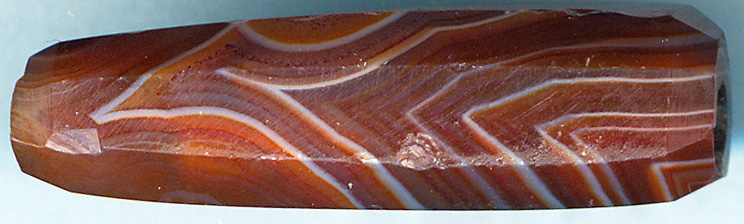
|
|
ANCIENT
CARNELIAN BEADS
Reflecting on Etymology
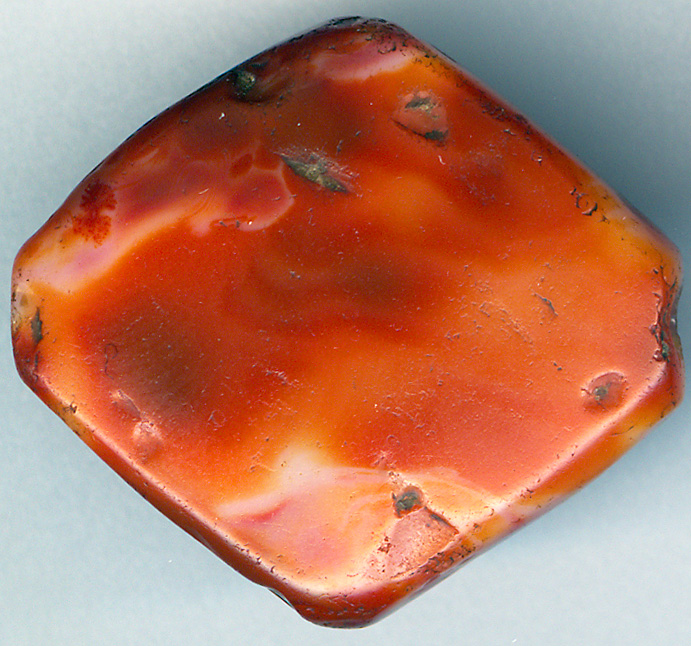
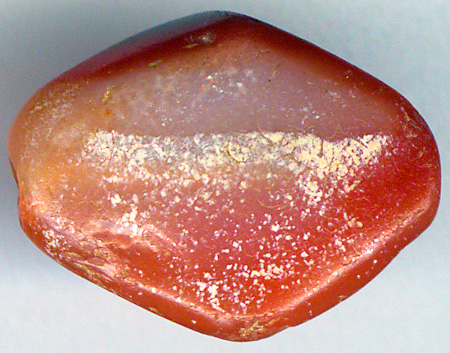
The term 'carnelian'
is widely believed to originate from the Latin word
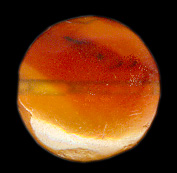
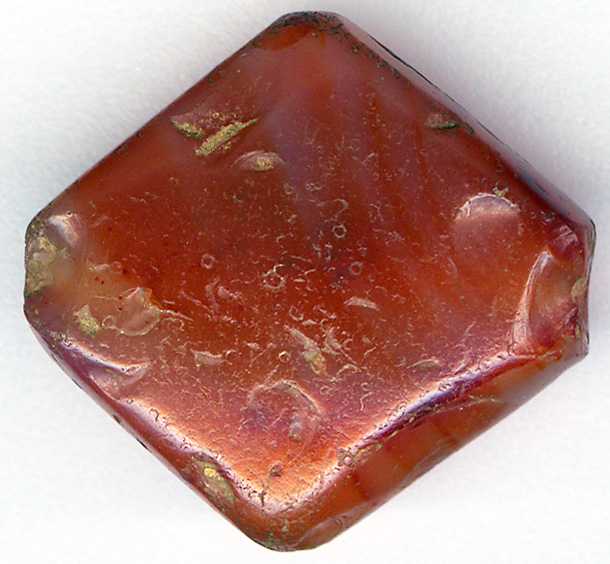
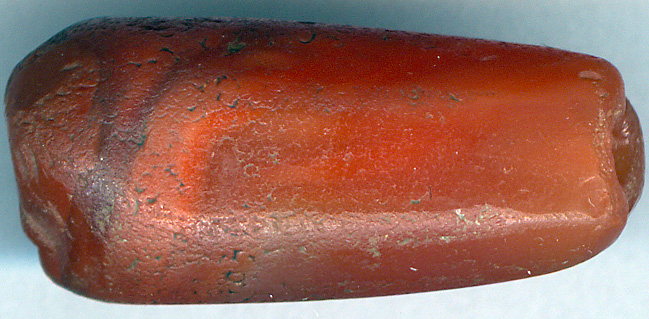
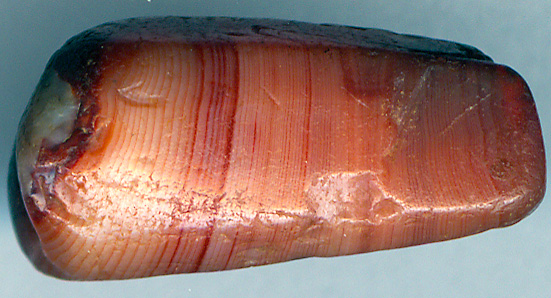
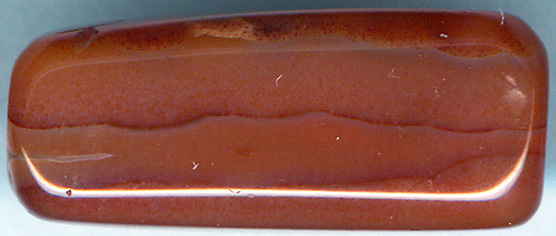
'Carne,' which translates to 'flesh.' A look at the
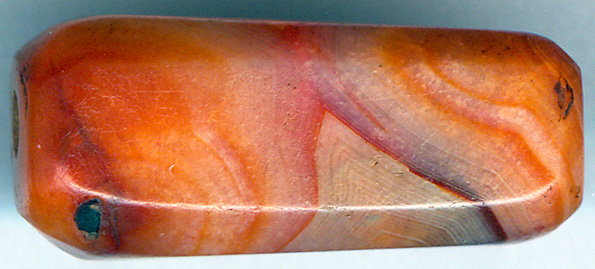
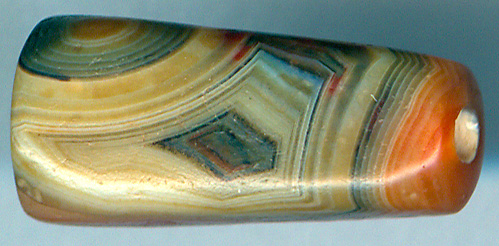
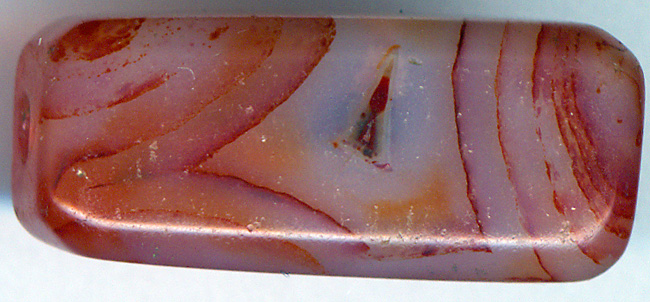
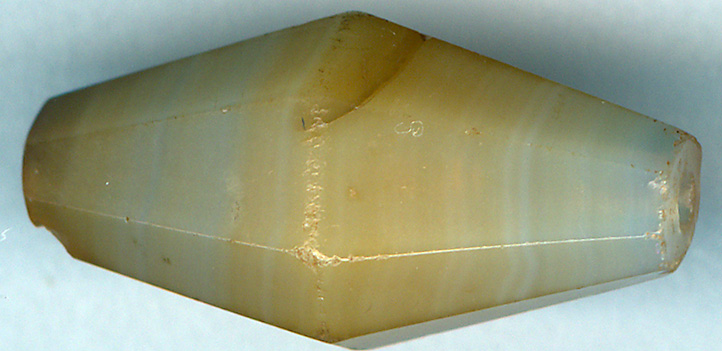
semi-precious stone displayed above offers a clear
understanding of why the ancient Romans opted for this
descriptor for this member of the cryptocrystalline
agate family.
Carnelian has been revered as a cherished gemstone since
the Neolithic period.
Evidence of carnelian ornaments and beads can be traced
back to the Bronze Age, with discoveries in the Indus
Valley, Mesopotamia, and Egypt. Subsequently, the
Persians, Greeks, and Romans utilized the stone,
particularly for seal engravings. The stone's enduring
appeal continued into the Medieval period, where the
mystic Hildegard von Bingen extolled its healing
virtues. She proposed that the name 'carnelian' was
derived from cornel cherries, attributing this to the
similarity in color. While Hildegard and others who
support the cherry connection are justified within their
local contexts, the idea of assigning a globally
esteemed stone, treasured since the Neolithic era, a
name derived from cornel cherries seems somewhat amusing
to me.
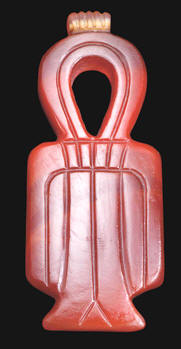
Egyptian carnelian Tet Amulet
New Kingdom Dynasty - XIX-XX,
1307-1070 B.C.
The Egyptian Book of the Dead signified red as a
representation of blood, and therefore, life and
vitality. The Isis girdle/knot-amulet, known as Tet
(Tyet), was crafted from carnelian and invoked with the
phrase: "Oh, blood of Isis." This amulet was buried with
the deceased and was typically made from a red
semi-precious stone like carnelian or red jasper. In
this context, the Tet amulet was symbolic of the blood,
power, and strength of the goddess Isis. It was believed
to offer protection against all forms of evil and aid
the deceased in their journey through the underworld.
Delving Deeper into the Historical Symbolism
As we trace our steps back through history, symbolic
interpretation becomes paramount. In a world shaped by
magical thinking and analogies, the connections between
the hues of carnelian and blood are compelling and
intuitive. It wouldn't be surprising if the ancient
civilizations of India and Mesopotamia held similar
beliefs, or at the very least, were submerged in similar
layers of Bronze Age symbolic connotations. However, it
was the Romans who coined the term 'carne,' not these
ancient cultures.
The Romans built their civilization extensively on the
foundation of Greek and Greco-Egyptian cultures. Within
this context, it's noteworthy that Isis was the most
widely revered Egyptian deity exported to the
Greco-Roman world. Consequently, it's not inconceivable
that the term 'carne' and the deeper meaning behind it
could have been influenced by the cult of Isis, and by
extension, the ancient river cultures that preceded
them.
Even from a chemical perspective, the association
between 'carne' and carnelian holds water. Iron oxides,
which impart color to both blood and carnelian in the
form of hemoglobin and hematite, draw a clear
connection. If we were to apply
Occam's razor to the world of etymology, the
derivation of carnelian from 'carne' emerges as a
plausible choice.
The European localized cherry could have been an apt
metaphor for Hildegard von Bingen, but even if it were
the true origin of the naming of carnelian, it would
carry many neo-colonial implications. A potentially
incorrect but more historically symbolic, respectful,
and less Eurocentric name might be more appropriate.
This isn't an attempt to introduce 'wokeness' into the
realm of bead study, but a touch of provocative
inspiration from diverse and seemingly unconventional
ideologies can sometimes spark enlightening discourse
Exploring Variations in Appearance and Color
Carnelian, however, isn't just confined to the color
red. It can be found in a myriad of shades, spanning
from yellow to orange to darker shades of red, and even
brown. The luster of the stone can vary as well, ranging
from a waxy or resinous sheen to a creamy or vitreous
gloss. Translucent carnelian is a rarity and is often
highly prized for its unique appeal.
The Significance of Indian Carnelian
Carnelian has been sourced from numerous locations
worldwide, including Australia, Europe, and America.
However, some of the most exquisite carnelian pieces are
believed to have originated from India, a claim
supported by the stunning beads on display here. India
has a long history of shaping carnelian into valued art
objects, a tradition that dates back to the Neolithic
era. This practice did not diminish with the advent of
the Mughals in India.
|
Source:
The Gods
and symbols of ancient Egypt
Thames &
Hudson
Manfred Lurker
Amulets of
ancient Egypt
Andrews
British
Museum Press |
|
|
|
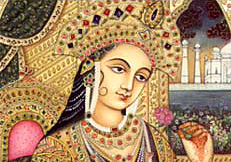
Local folklore in Agra suggests that carnelian was the
favorite gemstone of the beautiful Queen Mumtaz, the
beloved wife of the Mughal Emperor Shah Jehan. When she
passed away, he commissioned the creation of the Taj
Mahal as her mausoleum. In the intricate semi-precious
stone inlay work found within the inner sanctum of the
Taj Mahal, only the finest quality of red carnelian was
used.
Carnelian also plays a central role in the
Pietra
Dura
inlays, found in the white
Makrana
marble used in the construction of the Taj Mahal and the
Red Fort. An example of this artistry can be observed in
the Butterfly Pavilion within the Red Fort in New
Delhi:,
where the vibrant carnelian creates an impactful visual
against the stark white marble.
|
|
|
|
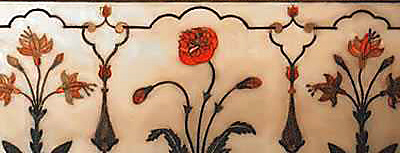
Illustration 1
|
Understanding Carnelian's Mineralogy
The rich and varied colors that carnelian presents
are a result of the incorporation of various iron oxides
and/or hydroxides within its structure. These iron
compounds, particularly those belonging to the hydroxide
group, exist in a multitude of chemical variations. The
relationship between oxygen and hydrogen in these
compounds lends itself to the broad spectrum of color
variations found in carnelian.
Influence of Hematite
Hematite, an oxide of trivalent iron (Fe2O3), is
particularly influential in giving the stone its vibrant
red color. Observe the color similarity between the
hematite-colored bead shown below and the pietre dure
inlay mentioned above.
|
|
|
|
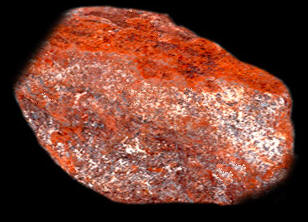
Hematite mineral
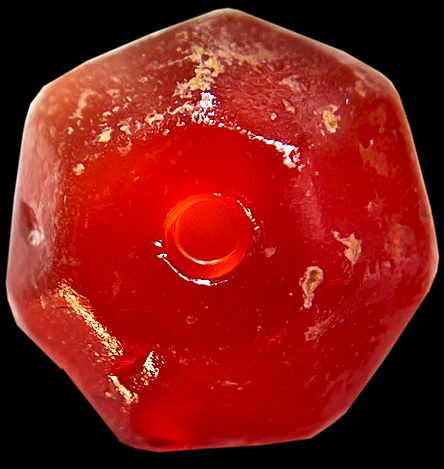
A hematite-carnelian beauty
Read more about this
unique bead here.
|
Decoding Limonite's Role
Limonite, a widely prevalent variation of iron
hydroxide in carnelian, takes on the chemical formula
FeO(OH)·nH2O. Limonite and other hydrous iron oxides can
significantly influence the color spectrum of carnelian.
Their presence results in hues that span from yellow and
rusty, to distinctively brown. So, the variety of tones
that carnelian possesses, ranging from yellowish to deep
reddish-brown, can often be attributed to the presence
of limonite.
|
|
|
|
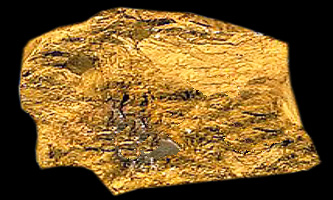
Limonite
mineral
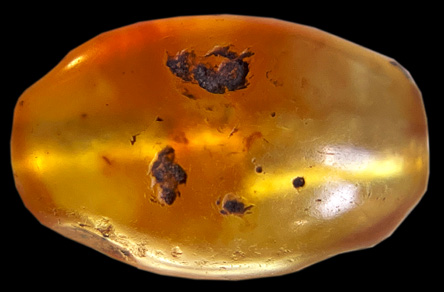
A limonite-carnelian bead
|
|
Carnelian, in its pure and natural form, can be
discovered showcasing a wide array of colors, including
yellow, orange, red, and brown. However, in contemporary
times, discovering natural deep red or orange carnelian
has become somewhat of a rarity. This scarcity is
primarily due to the immense popularity these stones
have enjoyed since the Neolithic era.
Intense red and orange hues in carnelian are typically
associated with hot climate zones. It is in these
regions that nature's own heat treatment, occurring over
millennia, has gradually transformed the original
hydroxy-based colors into a rusty-looking hematite
carnelian. This is particularly true for Indian
carnelian. Over countless centuries, exposure to the
scorching sun slowly facilitated the conversion of iron
hydroxide into iron oxide, leading to the highly
sought-after red coloration. Thus, it could be said that
the Indian carnelian simply 'rusted' over time.
Intriguingly, carnelian seems to uniquely possess this
quality among the varieties of cryptocrystalline quartz,
becoming more vibrant and attractive when subjected to
heat.
However, by the late Bronze Age, the escalating demand
had started depleting the natural reserves of red
carnelian. This led to the development of techniques to
artificially heat suitable stones to achieve the desired
coloration. In fact, the demand for this captivating
blood-colored stone was so high that natural sun-baked
carnelian became difficult to acquire, even in its place
of origin, India. Consequently, the ingenious
inhabitants of the Indus Valley developed the technique
of transforming chalcedony into carnelian through heat
treatment.
In today's context, when we examine an ancient carnelian
bead, it is virtually impossible to ascertain whether
the stone has undergone heat treatment or not.
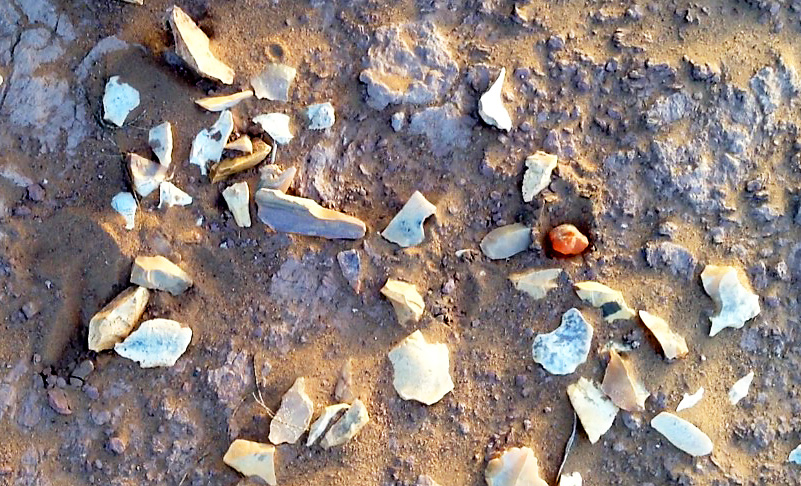
A brief enchantment with Carnelian
Observe the photograph below, a tableau I chanced upon
in the Moroccan Sahara, close to Hamid. Here, remnants
of Neolithic flint tools are scattered across the
hardened crust of the desert. Among them is a seemingly
out-of-place stone, a small carnelian piece that appears
to be part of the assemblage of flint scrapers. These
tools were crafted and used by ancient humans at a time
when the Sahara teemed with life, verdant and lush.
Interestingly, this piece of carnelian is strikingly
similar to high-quality carnelian pebbles I've seen from
Lothal,
India.. This leaves us
with a tantalizing question: could there have been an
ancient trade network stretching from Africa to India,
even during these primitive times? Or was this simply a
result of the relentless Saharan heat working its
alchemy on the stones?
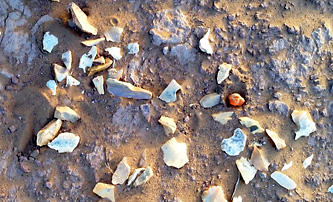
Click on the picture for a larger version
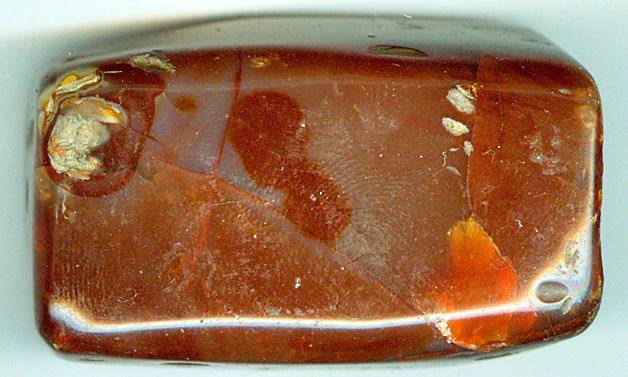
Carnelian of a deep Red-Orange Translucent and
Homogenous color
It's worth noting that there is
considerable variation in the quality of carnelian. Stones that are
translucent and exhibit a uniform color have been most highly prized
since antiquity. The ideal carnelian, be it used for beads or other art
forms, should be free of banding and possess a deep, translucent
red-orange hue. This characteristic is apparent in the ancient bicone
beads from the Indian
Indus Valley,
which are showcased below.
The iron oxides responsible for carnelian's coloring can be uniformly
distributed, as seen in the Indus Valley beads, or they can manifest in
gradients, as shown in the bead pictured above. The iron oxide patterns
can also appear as cloud-like patches, or as reddish specks that are
referred to as 'blood spots' by Tibetans.
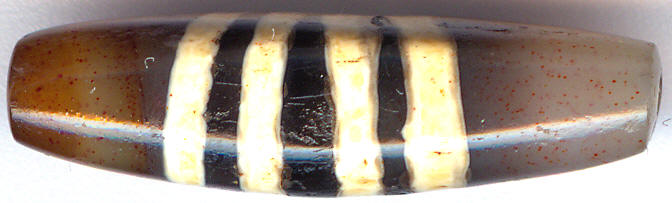
Chung DZI with blood spots
Bead Production in
Cambay
Beads are frequent globetrotters, their journey often
seeming ceaseless. But every bead has an origin, a place
where it was created. A large proportion of ancient
carnelian beads discovered worldwide originate from
India. Bead making was widespread throughout the
continent, with locations of production heavily
dependent on the availability of suitable materials.
While agate and jasper can be found in many parts of
South Asia, the scope, diversity, and abundance of
resources in Gujarat is unparalleled. This could explain
why Gujarat, particularly an area known as
Cambay,
maintains a vibrant bead-making tradition. This locale
is where the skills of ancient bead masters have endured
through the centuries to the present day.
More accurately, it's the nearby region of Lothal, a
Harappan outpost, that has served as a stone-working
center since the Indus Valley people began crafting
beads from the region's abundant deposits of carnelian,
onyx, and agate. Lothal dates back around 4000 years,
but the Indus people started bead making and exporting
over 5500 years ago!
The Splendid Cambay Carnelian
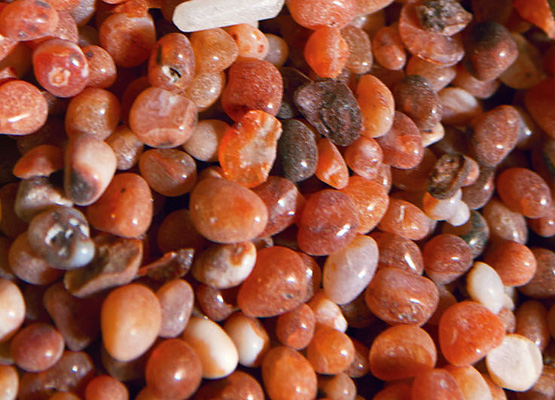
The carnelian from Gujarat, specifically around Cambay, is renowned for
its superb red-orange color, as can be observed even in the small
carnelian pebbles from Lothal depicted above. This is primarily
attributed to the region's high iron content.
Since the Indus period, individuals equipped with rudimentary tools have
been burrowing into the iron-rich Miocene agate formations in the
Babaguru formation.
The striking dark red colors are enhanced by drying the stones in the
sun, followed by
repeated heating. The techniques and tools utilized by Indian
artists have changed little since the time of the Indus Valley culture.
Their beads are entirely handcrafted, which results in less uniformity
in size and shape but infuses each piece with a warmth and beauty
distinctive to handcrafted items. Due to their enduring allure, Cambay
remains one of the world's largest stone manufacturing locations. The
region's primary market has traditionally been Africa.
However, according to my friend and esteemed bead expert,
Sanatan Khavadiya, the
deepest red carnelian originated from Aurangabad in Maharashtra! This
serves as a gentle reminder of how much we still have to learn about
beads and the world at large.
The Global Dissemination of Beads Facilitated by Islam
Starting around AD 1300, the bead-making industry in the Cambay area
began to prosper once again. This resurgence was largely due to the
artisans who crafted Muslim amulets, prayer strands, and a vast quantity
of carnelian beads, primarily for the African and Middle Eastern
markets. These goods were transported by Arab traders to East Africa
aboard monsoon-propelled dhows, or brought to Mecca and Cairo before
reaching West Africa via camel caravans. Consequently, Muslims became
significant transporters of beads, primarily due to the religious
imperative of Hajj, which mandates every Muslim to make a pilgrimage to
Mecca at least once in their lifetime, regardless of their global
location. Beads, being easy to carry and exchange for provisions, were
an ideal commodity for these long, arduous journeys.
Islam, an international religion, served as a significant cultural
phenomenon, with Arabic being the lingua franca. At its zenith, Islam
brought together people from diverse races and cultures, creating an
enormous global melting pot. Once a person converted to Islam, their
skin color and native language became irrelevant. Wherever Islam was
present, beads followed, and they became as intertwined as the people
who wore them.
Prior to the rise of Islam, Buddhism served a similar role, facilitating
the spread of beads in contrast to the more feudal and stationary Hindu
caste culture.
The Holy Bead Man, Baba Ghor
Around 1500, the bead industry in Cambay witnessed further expansion,
reaching unprecedented levels of production. This growth was driven by
Muslim settlers, particularly under the leadership of an Ethiopian saint
known as Baba Ghor, or the "Holy Bead Man." His arrival initiated a
period of mass bead production on a scale that was previously unknown.
Cambay vs.
Idar-Oberstein
The Indian bead industry enjoyed a virtual monopoly
on carnelian bead production for many centuries.
However, this position was challenged in the 19th
century when the city of
Idar-Oberstein in Germany began to carve carnelian
beads and ornaments. Idar-Oberstein was renowned for its
gemstone carving and polishing industries, which took
advantage of the high-quality agates found in the
region.
The skilled craftsmen of Idar-Oberstein were able to
create carnelian beads of exceptional quality and
intricate design, exceeding what was produced in Cambay.
Their superior techniques and the use of water-powered
machines for cutting and polishing gave them a
competitive edge, allowing them to produce a higher
volume of beads more quickly and efficiently.
This competition from Germany was further compounded
when Bohemia (now a part of the Czech Republic), known
for its glass-making industry, began mass-producing
molded glass beads that imitated carnelian. These
imitation beads were cheaper to produce and buy, and
they soon flooded the African market, which had been a
major destination for Cambay's beads.
The Indian bead industry struggled to compete with these
new entrants. The superior quality of Idar-Oberstein's
beads and the cheaper price of the Bohemian glass
imitations significantly impacted the Cambay bead trade,
leading to a significant decline in the region's
bead-making industry.
ANCIENT INDUS
BEADS FROM INDIA VIA
MESOPOTAMIA
The ancient heptagon-shaped carnelian bead shown below
exudes a sense of timeless beauty. Its surface, etched
by the passage of time, bears the resemblance of a face
adorned with a myriad of wrinkles, each one a testament
to its ancient origins. Under the surface, the bead
reveals a deep, rich red hue characteristic of
high-quality carnelian.
Over the centuries, a thick layer of calcification
has formed on its surface, further attesting to its
great age and enduring allure. This layer is hard and
resilient, protecting the precious stone beneath while
also enhancing its ancient charm. Such relics offer us a
tangible connection to the past, providing invaluable
insights into the history and culture of the ancient
civilizations that crafted and used them.
Although originally from India, these ancient carnelian
beads traveled extensively through trade routes, notably
reaching Mesopotamia. The circulation of these beads
evidences the extensive trade networks and cultural
interactions between ancient civilizations.
|
|
|
|
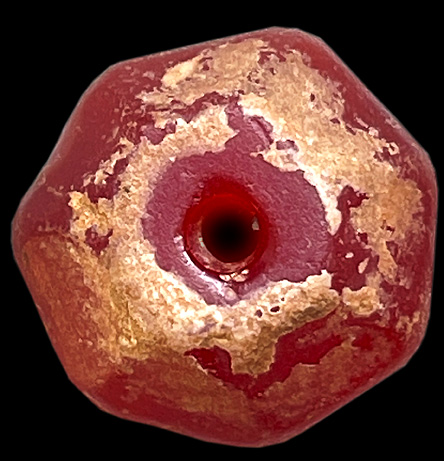
CARN
1 - 15,5 * 10 mm
Here I made a cardinal sin by removing most of the
calcified layers.
By doing so, the inner translucent color-quality of the
carnelian stone is able
to come out. I consider this one of the most beautiful
carnelian stones in
my collection. After this radical cleaning, the bead
shines
with a bright red color even in an ordinary light
setting.
|
The hexagonal beads
showcased here bear the visible markings of substantial
wear and tear, contributing significantly to their
surface alterations. Considering their chemical layers
and wear-induced polish, they stand as some of the most
transformed pieces within my collection. One might
question whether the carnelian from which these beads
were crafted is softer than the average carnelian,
leading to the pronounced changes. However, this seems
unlikely. Instead, their current condition can be best
attributed to substantial age, combined with extensive
use and exposure to natural elements.
The standout deep-red carnelian bead displayed above
holds a unique history. Unearthed by a Danish
archaeology professor during excavation works, it was
found amidst a collection of more primitively shaped
stone beads in a
Neolithic grave located in the Moroccan Sahara.
Given the timeframe of the surrounding settlements —
known to have existed during the Saharan wet period,
dating from 8000 BC up to 3000 BC — this bead is
estimated to be around 5000 years old. As the climate
shifted, the Sahara began its transformation into a
desert around 3000 BC, prompting the resident
hunter-gatherer communities to gradually abandon the
region.
GO2 more Mesopotamian style carnelian beads
|
|
|
|
|
-----
INDUS VALLEY BICONE CARNLIAN BEADS
Displayed below, you will find carnelian beads with a
more orange color. The colors and translucency of these
beads are perfectly homogeneous.
|
|
|
|
NB!
It is here important
to mention that most beads only will reveal
their full
potential when magnified through a macro lens and
illumined with the right
kind of light.
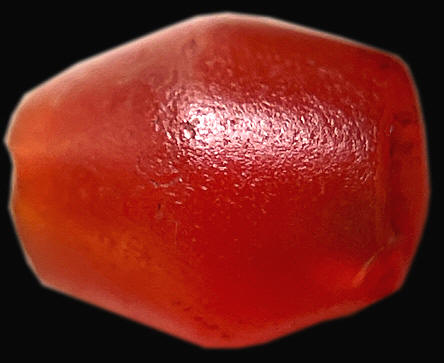
An ancient bead will never show its full luster, colors and
patterns without a magnifying lens and the right light settings.
This is especially true for small beads and beads that
display various degrees of translucency.
Translucent beads have by nature a 'hidden' world
inside the stone material of the bead itself, that only
can be fully exposed through extra light sources.
The inner translucency of a bead will only reveal a
minimum of its beauty in an ordinary
light set and setting.
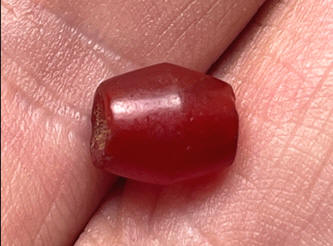
Same bead as above
I have in the exhibition below tried to make a compromise
between the inner and outer life of the beads.
In this way of capturing the beads, imperfections
will be largely exaggerated, as when compared to how the
bead will look in your hand.
I know this will scare away the eastern collector going
for impossible perfection. However, a western conditioned
mind seems to have a liking for 'broken
beauty'.
As a western collector of ancient beads, I share that liking.
Also, bear in mind that the beads appear relatively bigger on
this display.
You can always ask for a more 'realistic' photo taken from my
iPhone.
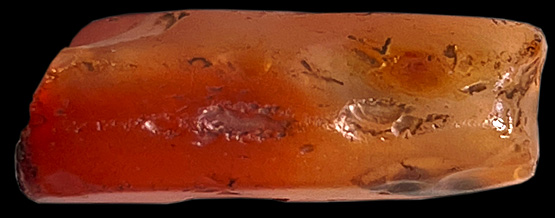
24,5 * 8,5 mm
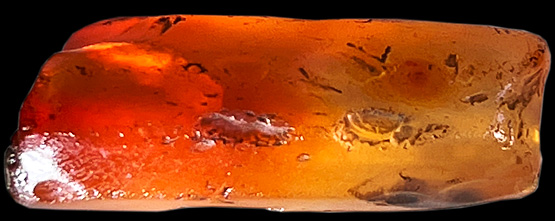
Displayed above you can observe the radical difference
the light setting is for photographing translucent
carnelian beads. In the right light the high quality carnelian
beads will reveal a deep red color, not visible in ordinary
daylight. Hence most of the beads bead displayed below
are much more orange and/or red-colored than what meets
the daylight eye.
|
Displayed below, you will find carnelian beads with a
more orange color. The colors and translucency of these
beads are perfectly homogeneous.
|
|
|
|
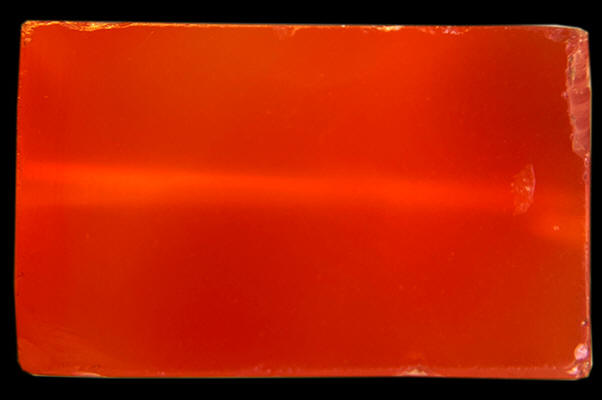
The design of this bead is not particular exiting.
It is the carnelian material itself that takes the price!
|
Below you can see a more yellowish, golden variation of
translucent carnelian.
|
|
|
|
|
|
|
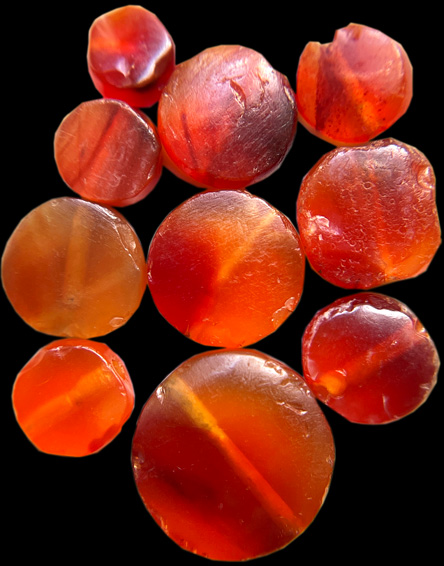
| Displayed below you can see wonderful fiery translucent
multicolored colored red-yellow-orange carnelian beads.
Such color-variations are a result of various blends of
iron oxides and hydroxides. |
|
|
|
|
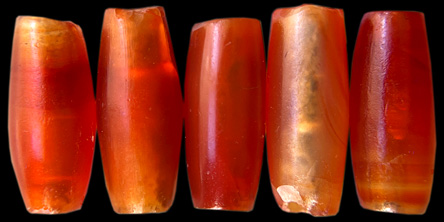
Small top quality carnelian beads
The small ancient beads displayed below are
naturally marked by time. However, the quality of the
carnelian with its deep uniform transparent orange-red
color is still second to none. Such ideal carnelian is
mostly found in smaller pieces.
|
|
|
|
|
However, in rare cases, we can find larger beads with a
unique homogeneous deep red luster, as seen in the, by
now famous specimen below
|
|
|
|
|
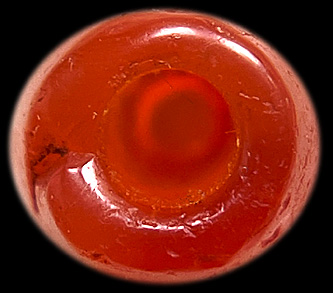
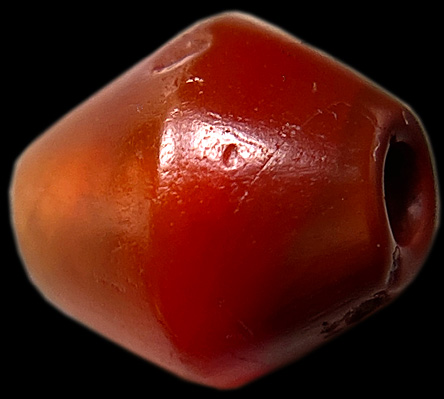
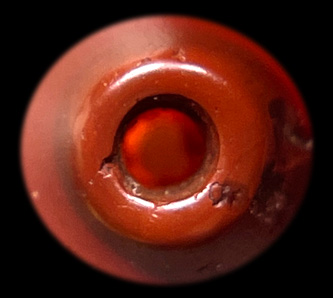
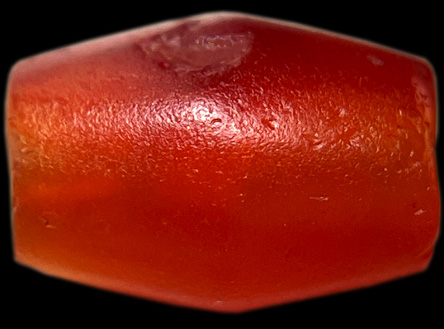
SMALL BICONICAL INDUS VALLEY CARNELIAN BEADS
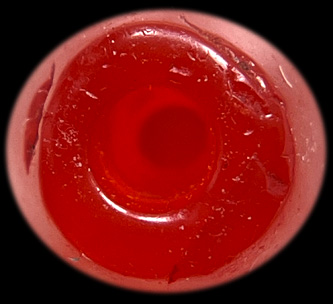
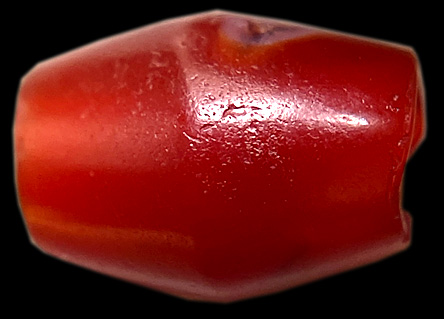
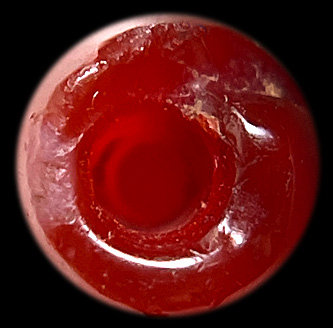
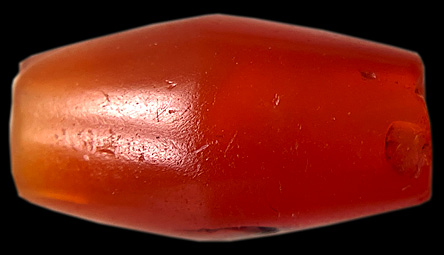
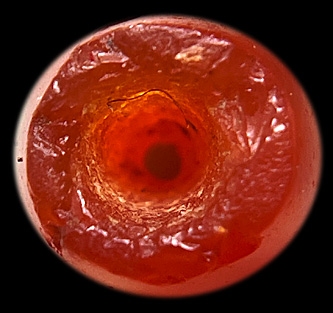
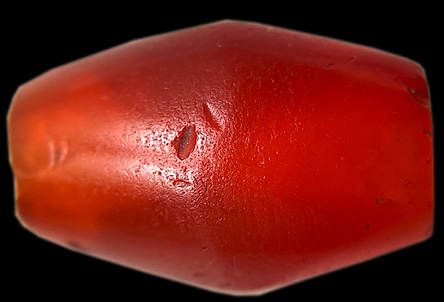
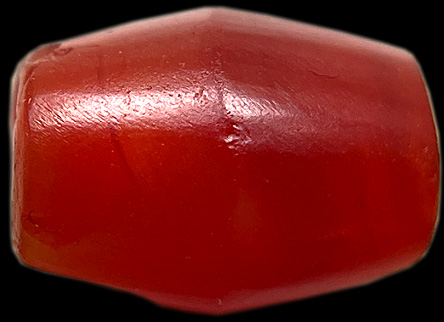
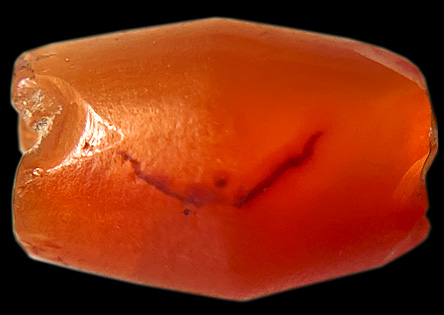
The beads displayed below are typical for the Harappan
Indus Civilization, with their special bicone-shaped design and large,
hourglass shaped
holes.
The Indians call this shape the dholak design
named after their ancient double drum.
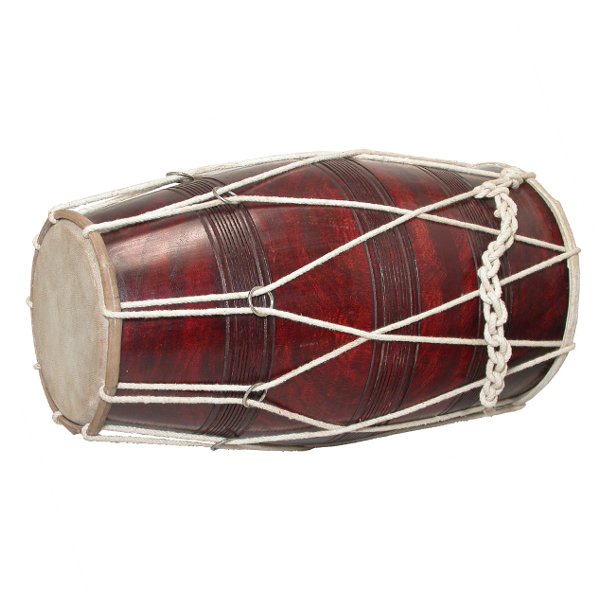
You can see
this type of beads displayed
in the National Museum in New Delhi or in the
British Museum. Below we can observe the same beads found in both an
Egyptian and Mesopotamian grave.
One can clearly see the Harappan
origin of these beads. |
|
|
|
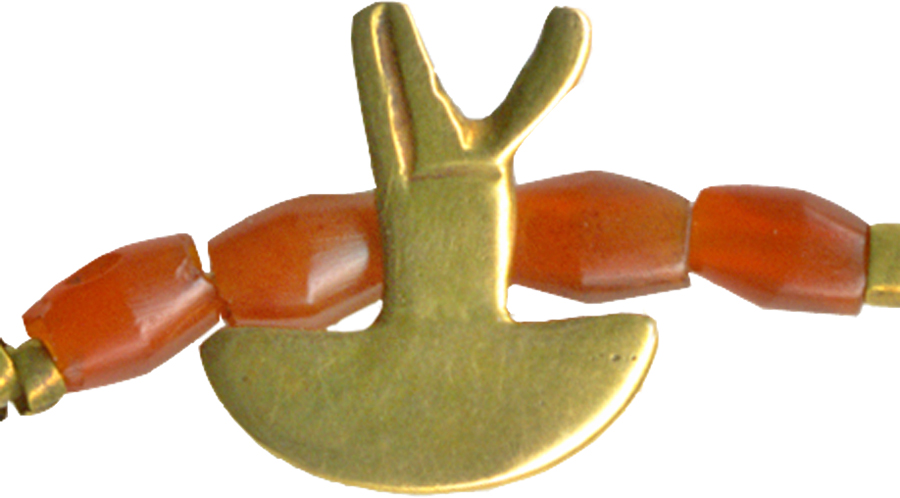
Egyptian neclace -
Walters Art Museum
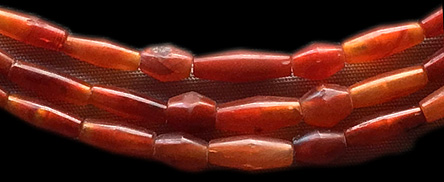
Mesopotamian neclace from Ur -
British Museeum
|
The biconical carnelian Indus beads displayed here have
been photographed in such a way that their inherent red
color is revealed. Seen from a distance in normal
day-light, they would have a color closer to the ones
from the Egyptian necklace above.
|
|
|
|
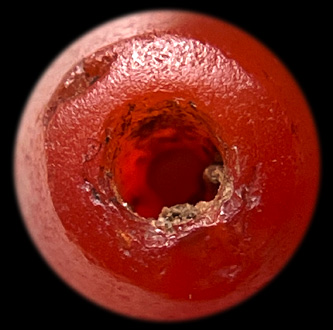
CARN-INDUS 1
- 8,8 * 7,5 mm
|
|
|
|
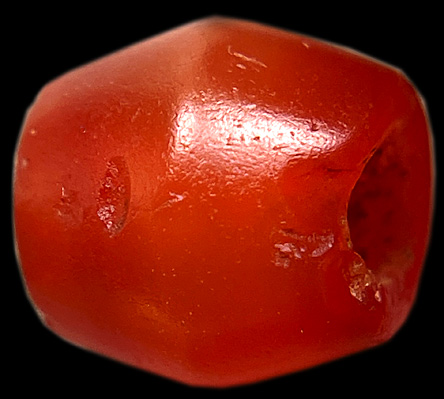
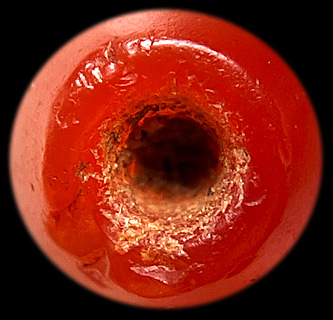
CARN-INDUS 2
- 8 * 8 mm |
|
|
|
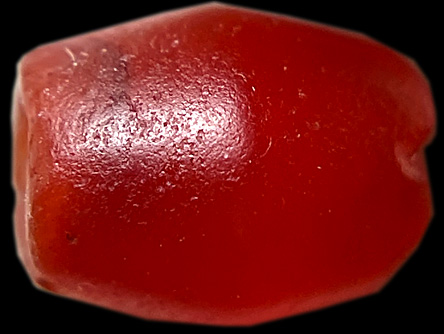
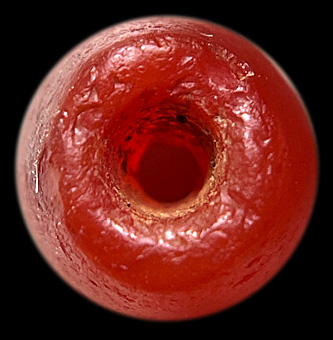
CARN-INDUS 3 - 9,8 * 8,1 mm
|
|
|
|
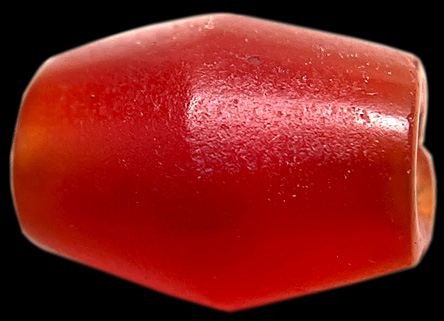
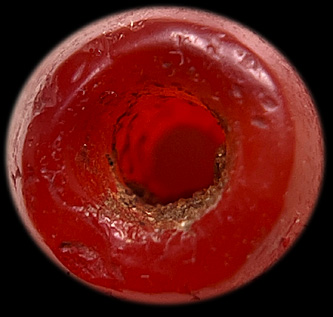
CARN-INDUS 4
- 11 * 8 mm
|
|
|
|
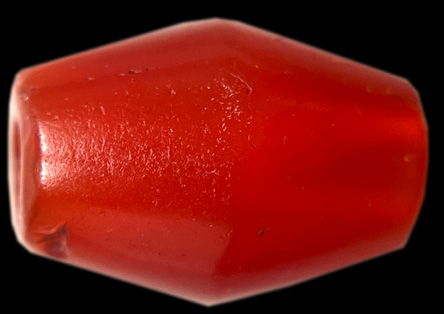 
CARN-INDUS
5 - 12,1 * 8,5 mm
|
|
|
|
CARN-INDUS 6
- 10 * 7 ,5 mm
|
|
|
|
CARN-INDUS 7 - 14,2 * 7,5-9 mm
|
|
|
|
CARN-INDUS
8 - 8 * 7,4 mm
|
|
|
|
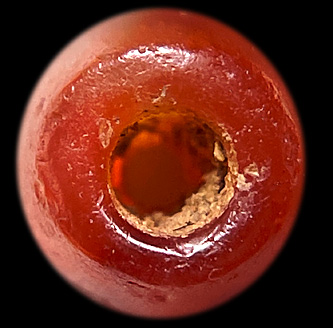
CARN-INDUS 9
- 10,1 * 7,1 mm
|
|
|
|
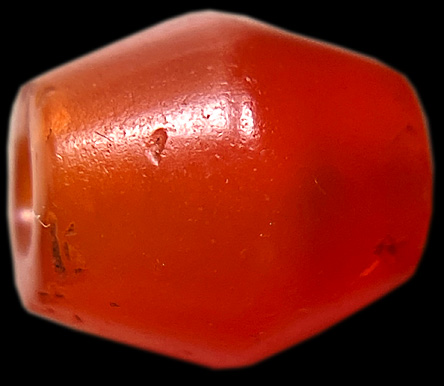 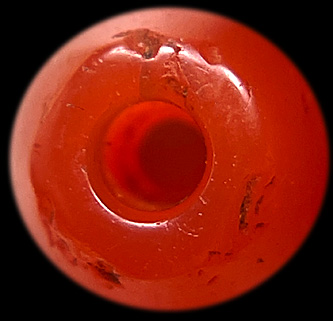
CARN-INDUS 10
- 8,5 * 7,5 mm
|
|
|
|
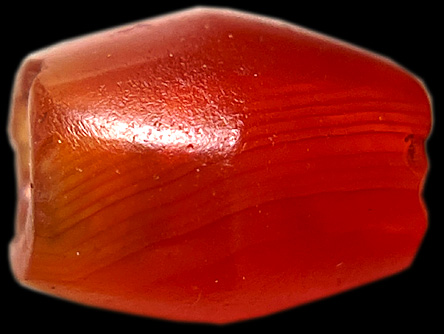 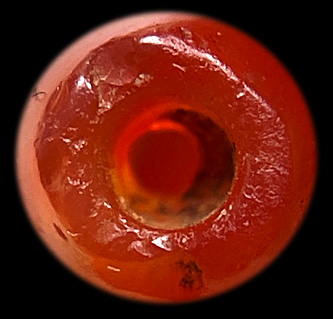
CARN-INDUS
11 - 8,6 * 7 mm
|
|
|
|
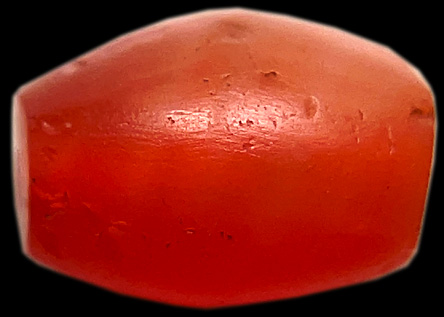
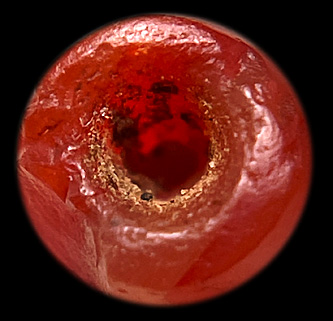
CARN-INDUS 12 - 9,9 * 7,1
|
|
|
|
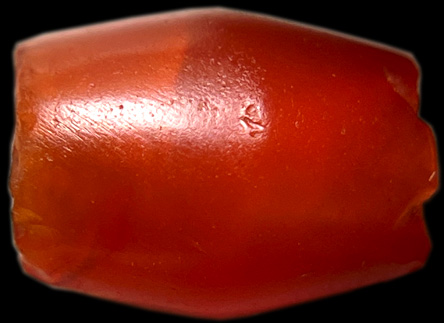
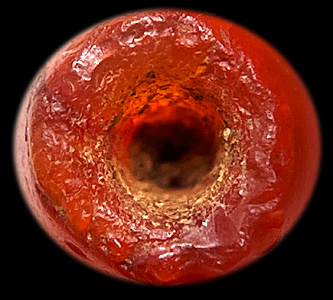
CARN-INDUS
13 - 9,6 * 7 mm
|
|
|
|
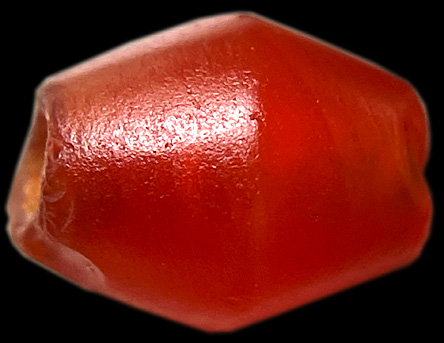
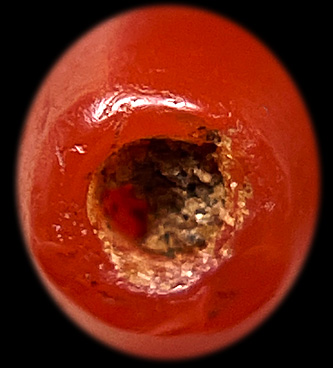
CARN-INDUS 14
- 9 * 7 mm
|
|
|
|
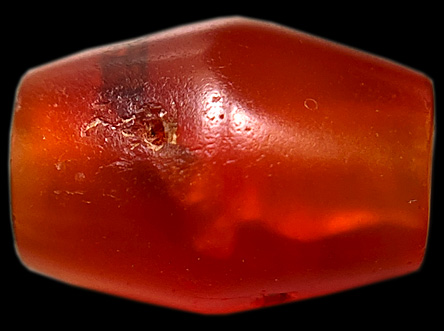 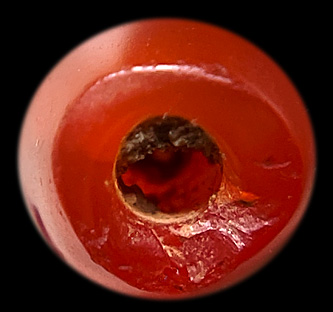
CARN-INDUS 15 - 10 * 7,1-5 mm
|
|
|
|
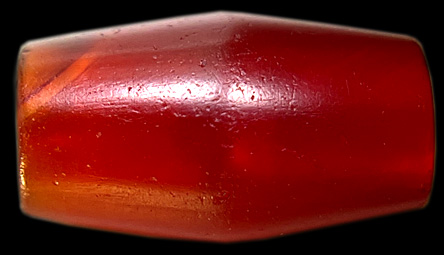
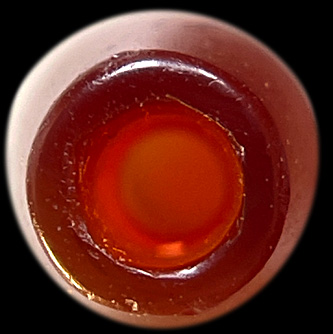
CARN-INDUS 16 - 10,7 * 6,1 mm
|
|
|
|
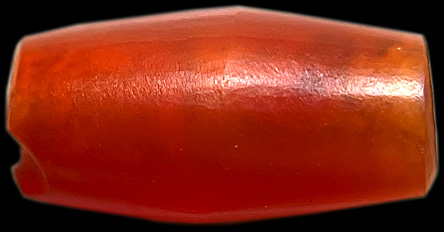 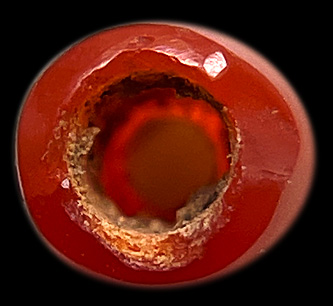
CARN-INDUS 17 - 11 * 5,5 mm
|
|
|
|
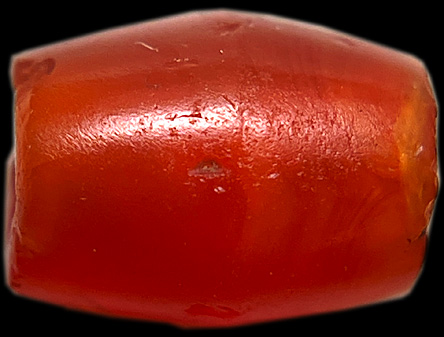
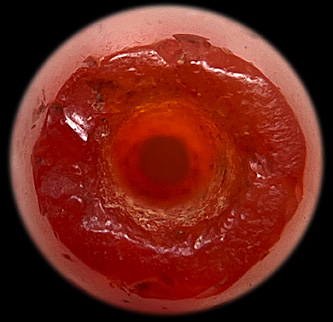
CARN-INDUS 18 - 8,9 * 6,9 mm
|
|
|
|
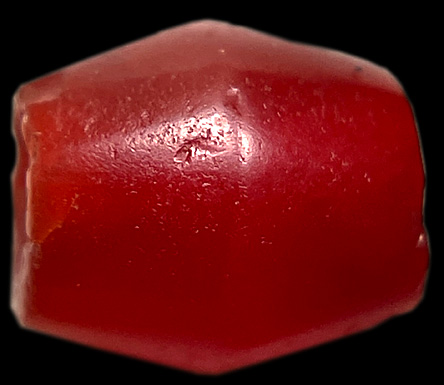 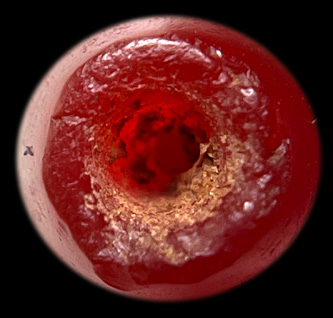
CARN-INDUS
19 - 8,7 * 7,5 mm
|
|
|
|
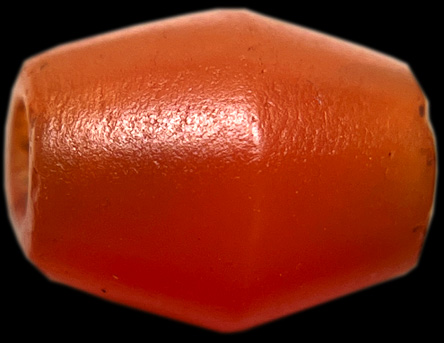 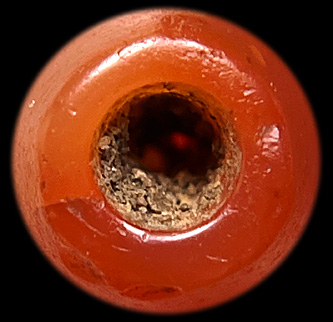
CARN-INDUS
20 - 10 * 8,1 mm
|
|
|
|
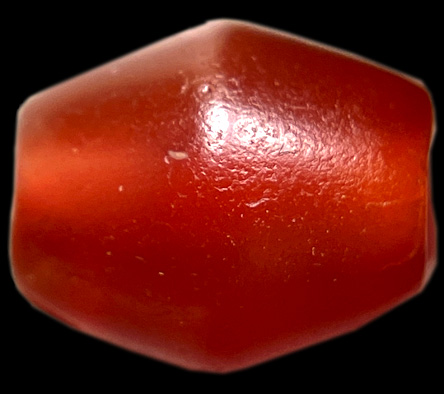 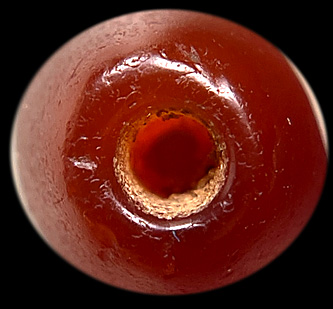
CARN-INDUS 21
- 10,2 * 8,5 * 8 mm
|
|
|
|
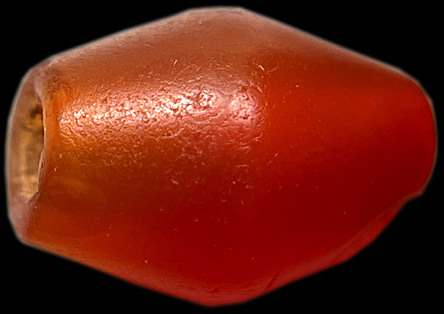 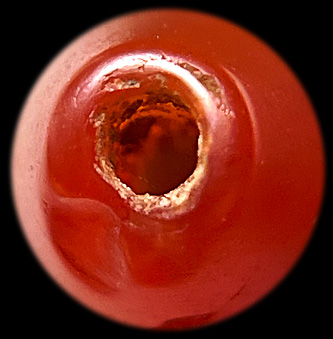
CARN-INDUS 22 - 9,5 * 7 mm
|
|
|
|
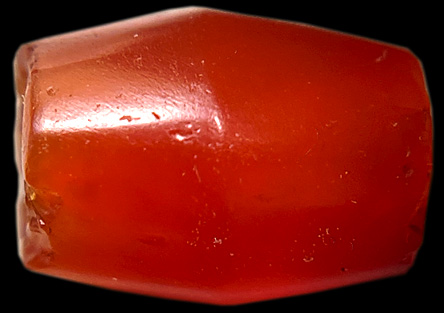 
CARN-INDUS 23
- 10 * 7,1-5 mm
|
|
|
|
CARN-INDUS 24 - 18 * 12 mm

|
|
|
|
CARN-INDUS
25 - 9,9 * 7,1 mm
|
|
|
|
 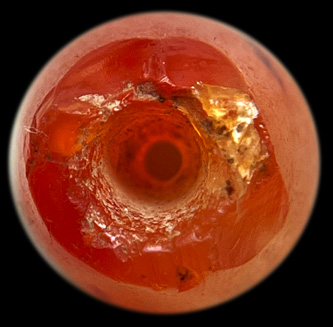
CARN-INDUS 27
- 16 * 11 mm
|
|
|
|
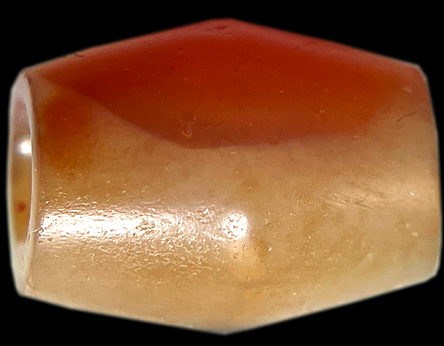
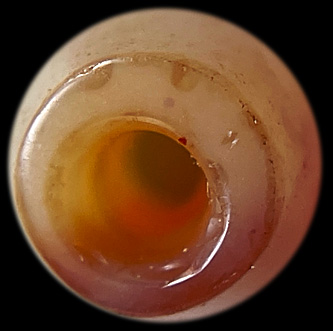
CARN-INDUS
28 - 11 * 8 mm
|
|
|
|
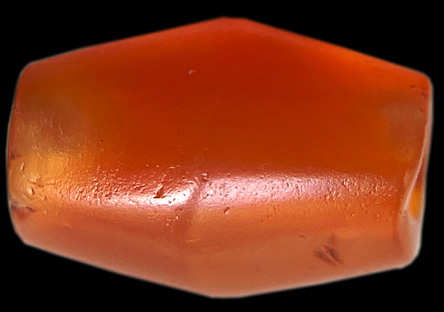 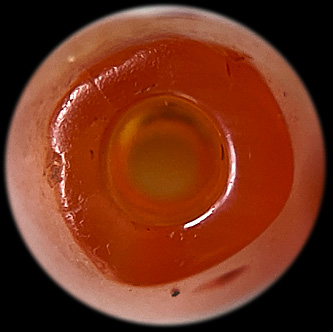
CARN-INDUS 29 - 11,2 * 7,9 mm
|
|
|
|
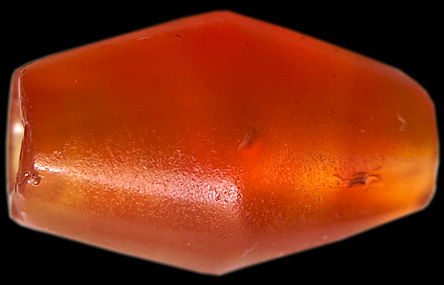 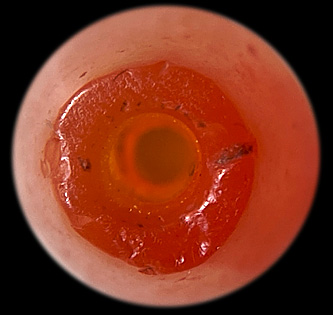
CARN-INDUS
30 - 13,9 * 8,9 mm
|
|
|
|
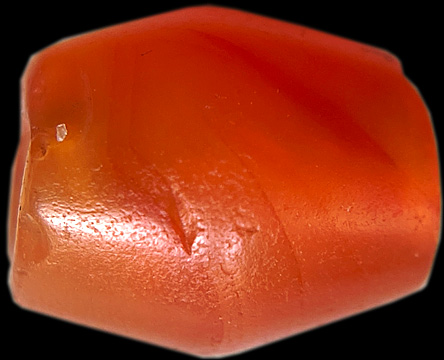 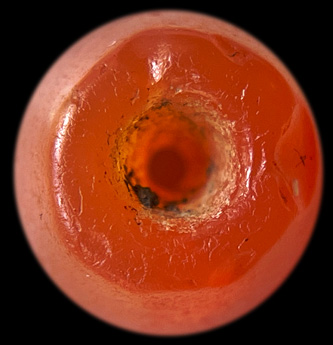
CARN-INDUS 31 - 12,1 * 10 mm
|
|
|
|
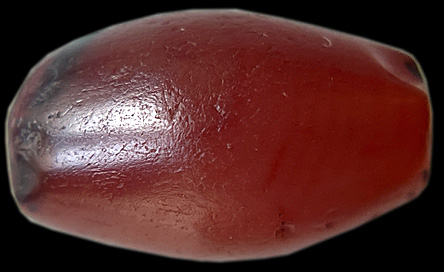 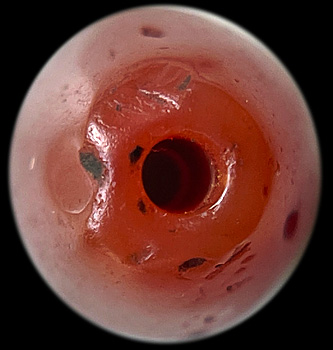
CARN-INDUS 32 - 12,8 * 8 mm
|
|
|
|
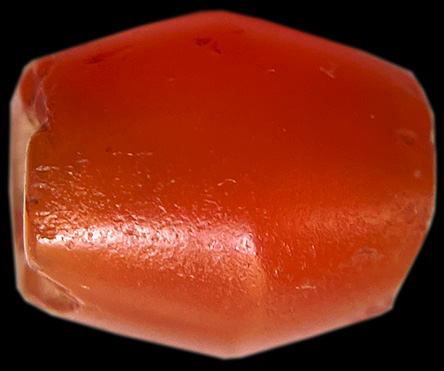 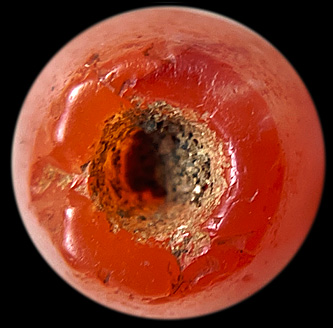
CARN-INDUS
33 - 10 * 9 mm
|
|
|
|
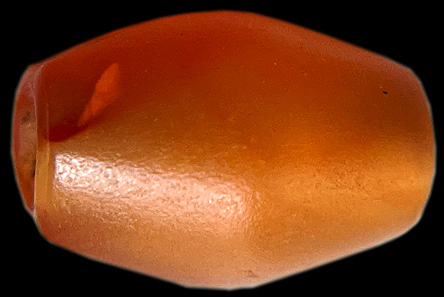 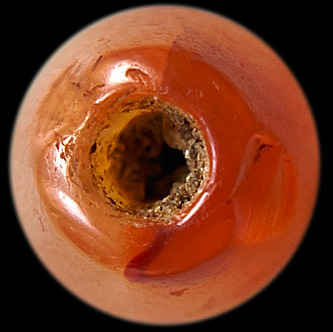
CARN-INDUS
34 - 11 * 7,7 mm
|
|
|
|
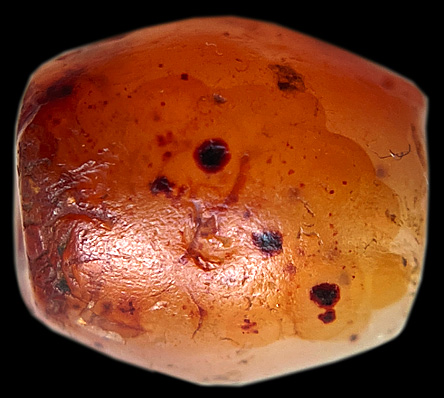 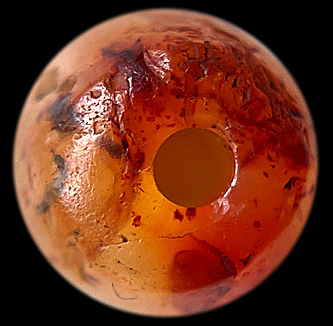
CARN-INDUS 35 - 10 * 9 mm
|
|
|
|
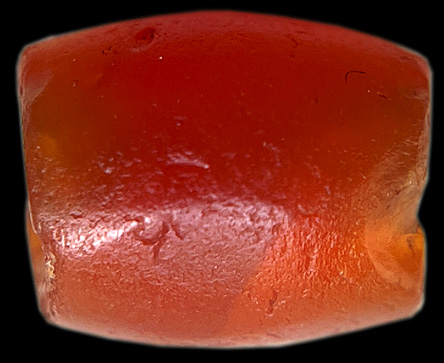 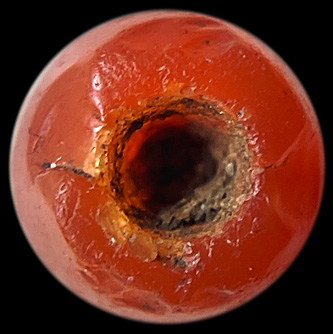
CARN-INDUS
36 - 9,5 * 7,9 mm
|
|
|
|
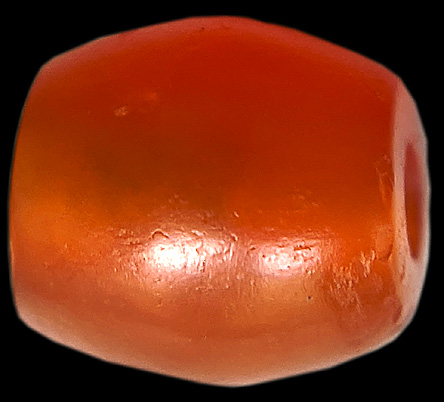 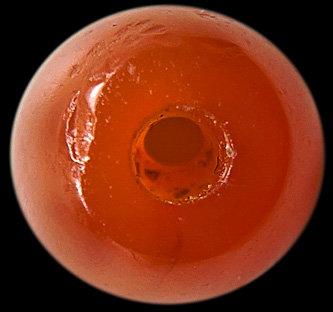
CARN-INDUS 37 - 8,5 * 8 mm
|
|
|
|
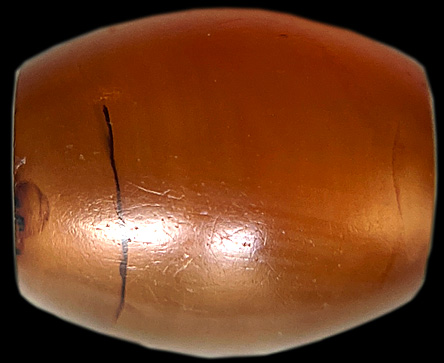
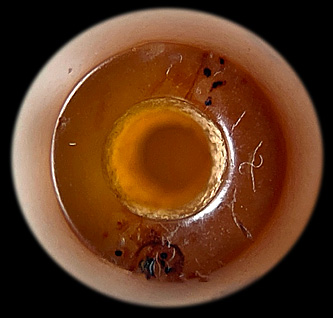
CARN-INDUS 38
- 9,9 * 8,8 mm
|
|
|
|
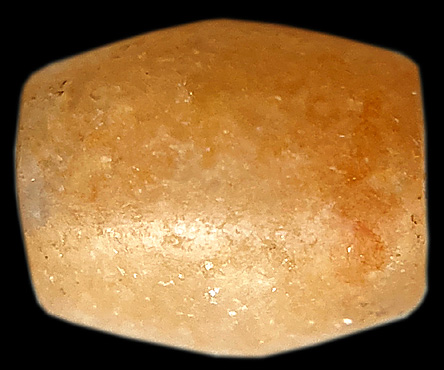 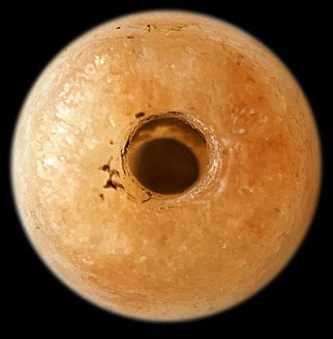
CARN-INDUS
39 - 8,2 * 7 mm
|
|
|
|
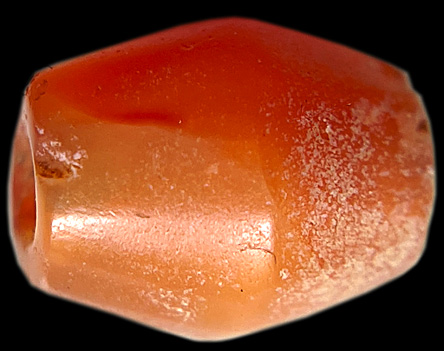 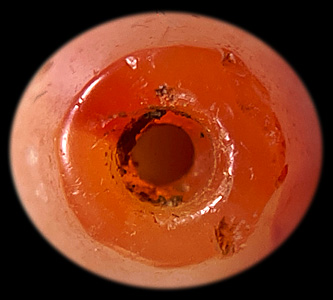
CARN-INDUS 40 - 9,2 * 7,5 mm
|
|
|
|
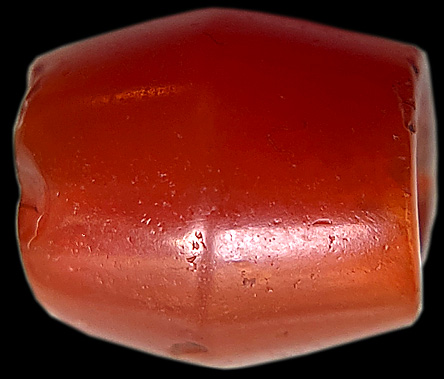 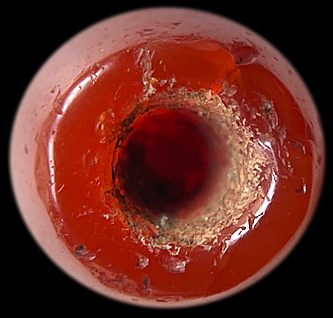
CARN-INDUS 41
- 9,6 * 8,9 mm
|
|
|
|
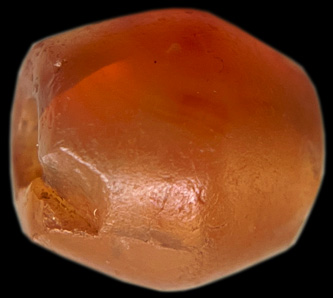 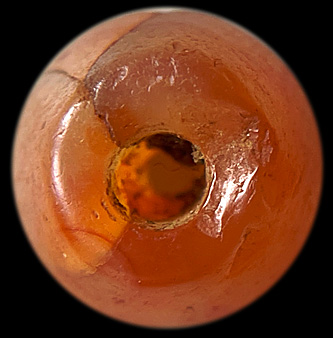
CARN-INDUS
42 - 8,5 * 8,1 mm
|
|
|
|
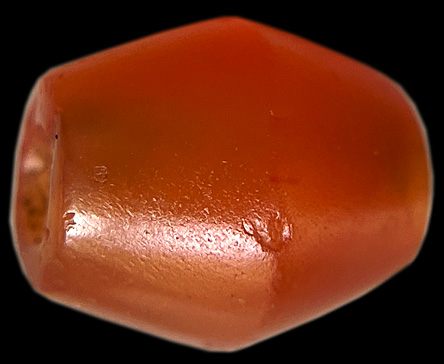 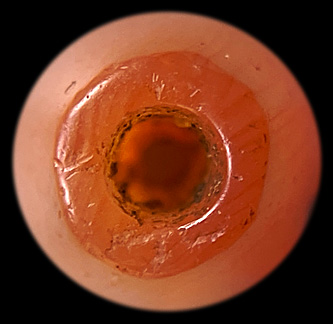
CARN-INDUS 43 - 9,5 * 8,1 mm
|
|
|
|
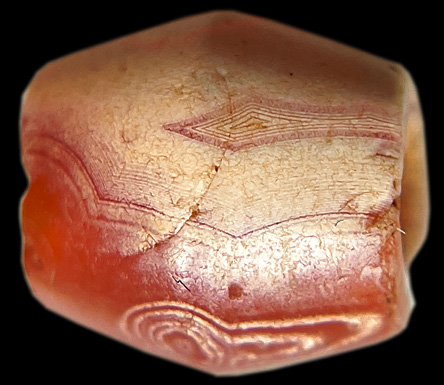 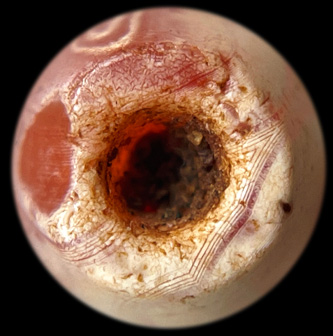
CARN-INDUS 44 - 9,2 * 9 mm
|
|
|
|
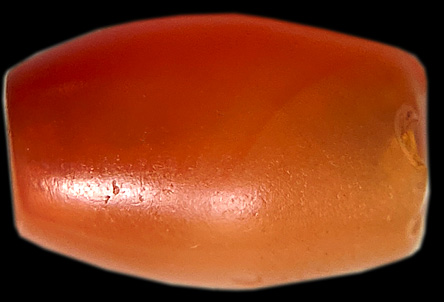 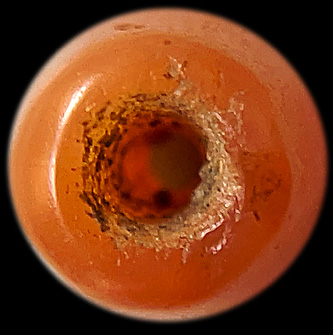
CARN-INDUS 45 - 10 * 6,8 mm
|
|
|
|
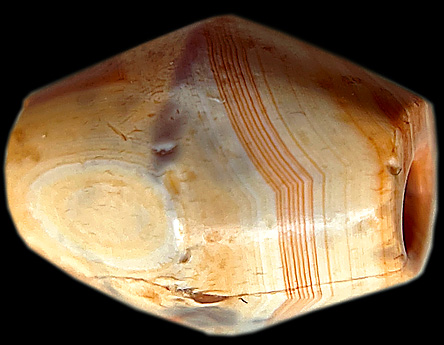 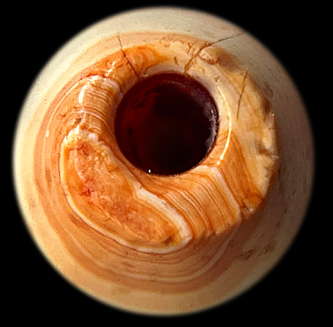
CARN-INDUS 46 - 10 * 7,9 mm
|
|
|
|
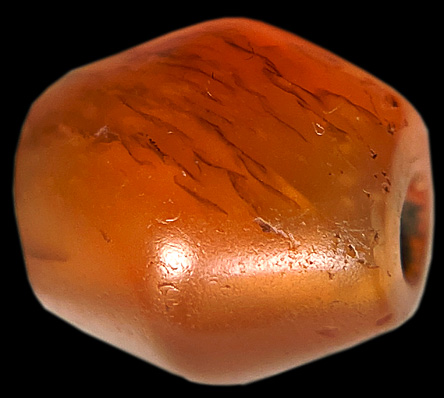 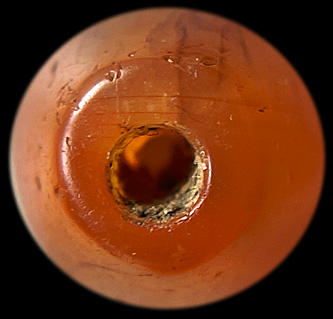
CARN-INDUS 47 - 9,1 * 8,5 mm
|
|
|
|
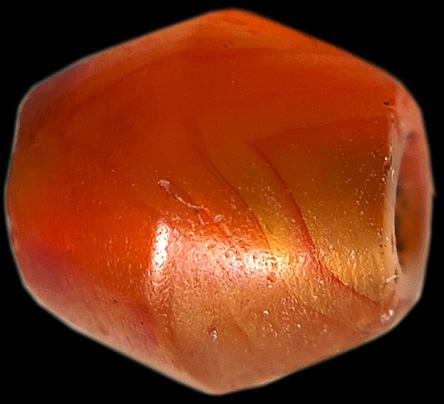 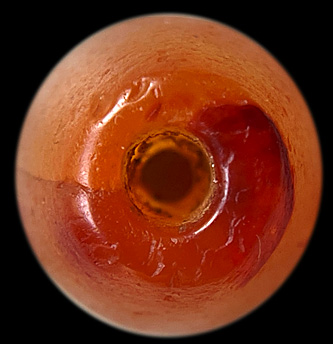
CARN-INDUS 48 - 8,5 * 8 mm
|
|
|
|
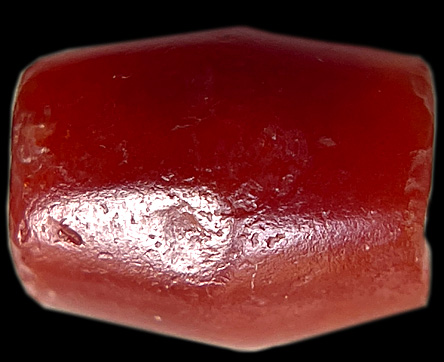 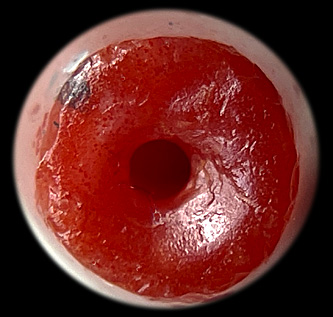
CARN-INDUS 49
- 9,2 * 7,1-3 mm
|
|
|
|
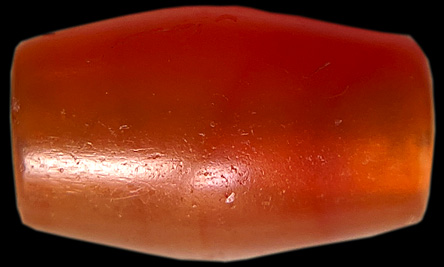 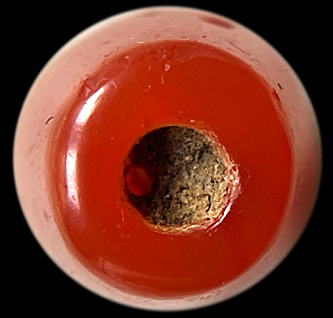
CARN-INDUS 50 - 11,5 * mm
|
|
|
|
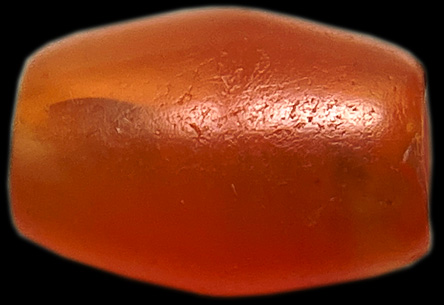 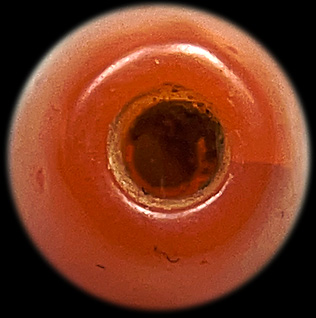
CARN-INDUS
51 - 9 * 6,1 mm
|
|
|
|
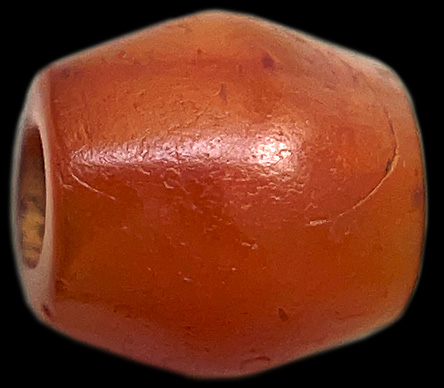 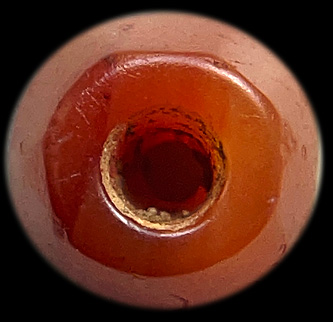
CARN-INDUS 52 - 8,1 * 8 mm
|
|
|
|
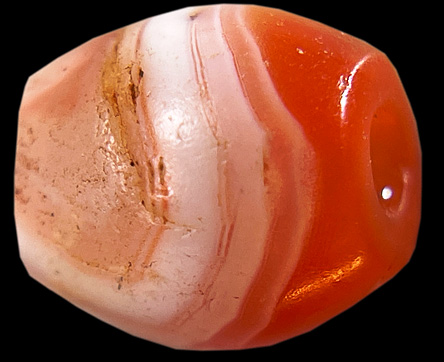
CARN-INDUS 53
- 8 * 7 mm
|
Please note the change in proportionality in the section
to come. The beads above are not as big as they could
seem in comparison to the following display.
|
|
|
|
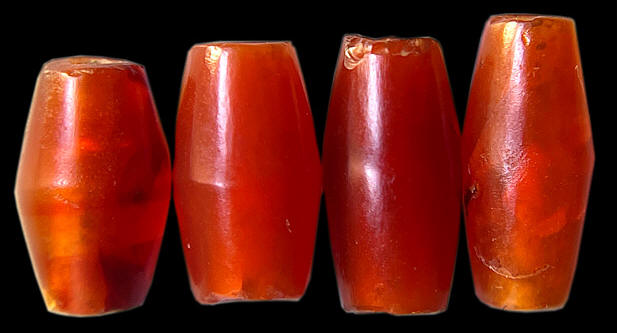
CARN-INDUS - LOT 54 - bead to the right: 10,7 * 5 mm
|
|
|
|
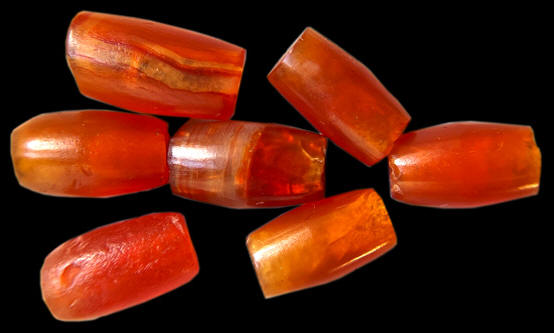
CARN-INDUS - LOT -55 - bead in the middle: 9,5 * 5,2 mm
|
|
|
|
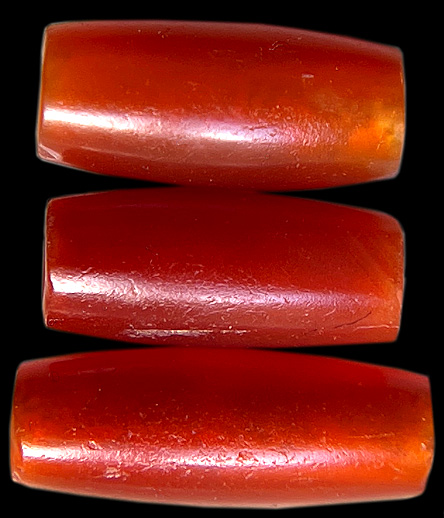
CARN-INDUS - LOT - 56 - lowest bead: 11,2 * 4 mm
|
|
|
|
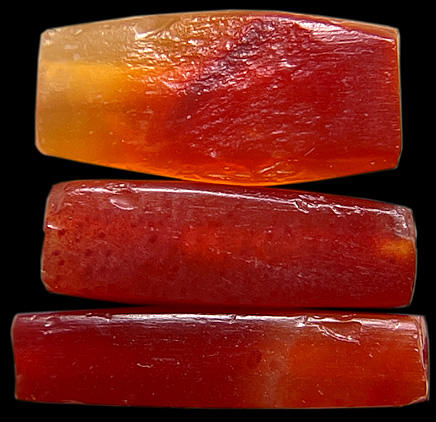
CARN-INDUS - LOT - 57 - lowest bead: 12,7 * 3 mm
|
|
|
|
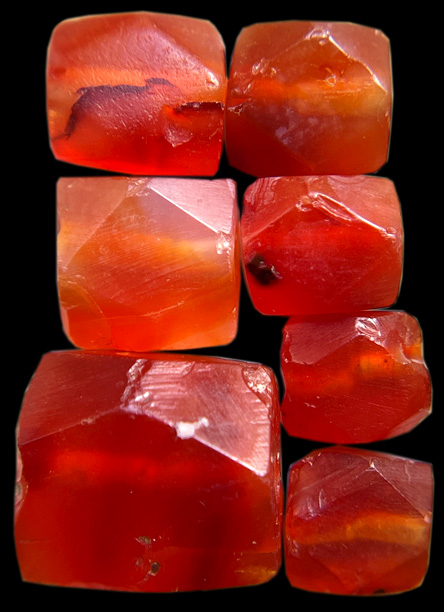
CARN-INDUS - LOT - 58 - Cornerless cubes - lowest left: 11,5 * 10 * 7 mm
|
|
|
|
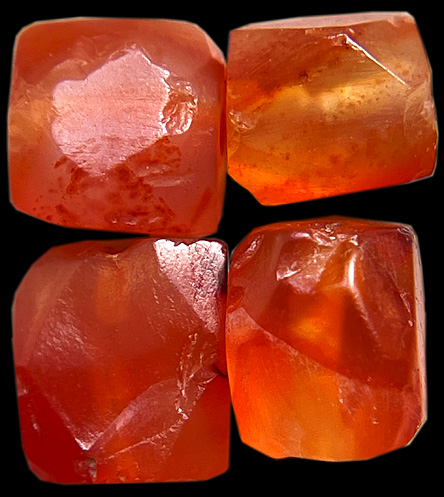
CARN-INDUS - LOT -59 - lowest left 7 * 6 * 4 mm
|
|
|
|
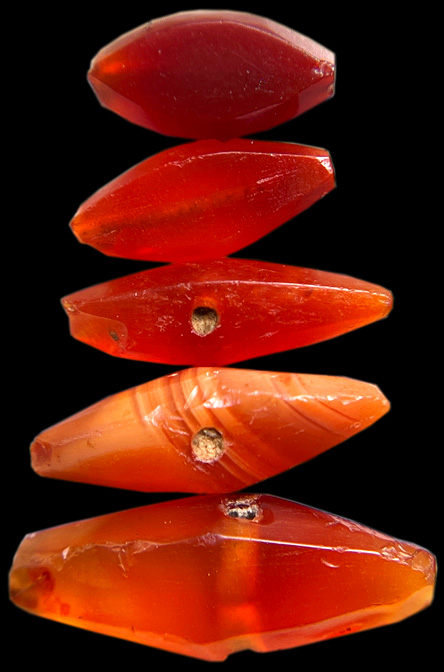
CARN - LOT - 2 - lowest bead: 16,5 * 6,5 * 4 mm
|
|
|
|
CARN 3 - 18 * 11,8 * 7,2 mm
|
|
|
|
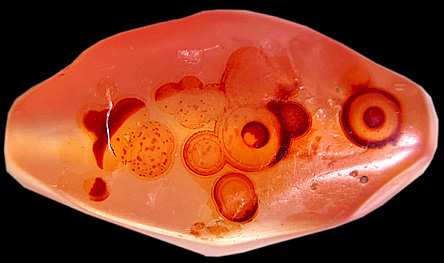
CARN 4 - 18,5 * 11 * 7 mm
|
|
|
|
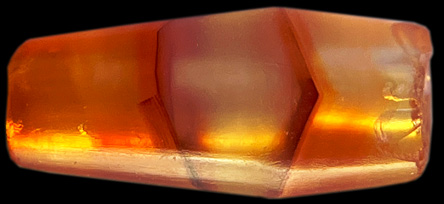
CARN 5 - 13,5 * 6 mm
|
|
|
|
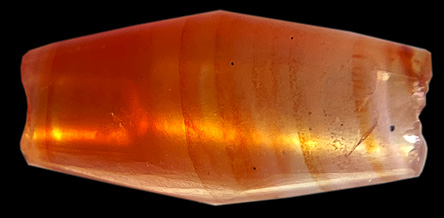
CARN 6 - 16,2 * 8 * 6,5 mm
|
|
|
|
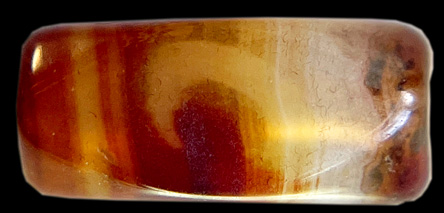
CARN 7 - 15,5 * 7 * 6,5 mm
|
|
|
|
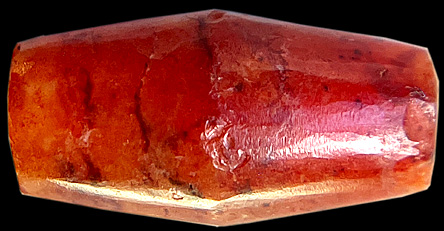
CARN 8 - 16 * 7,5 mm
|
|
|
|
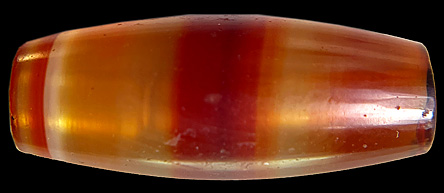
CARN 9 - 26,3 * 11 mn
|
|
|
|
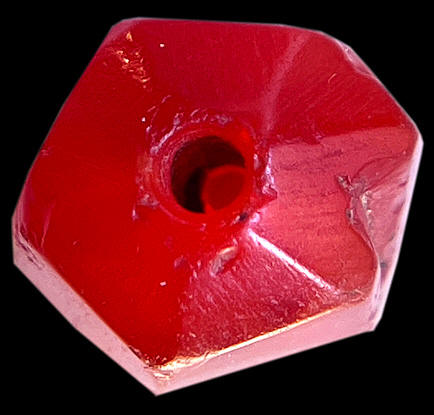
CARN-INDUS-MESOPOTAMIA
1
- 10 * 9 mm
|
|
|
|
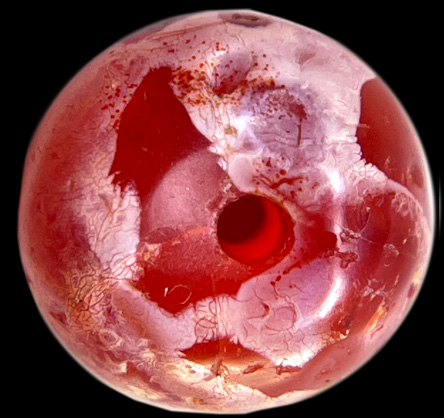
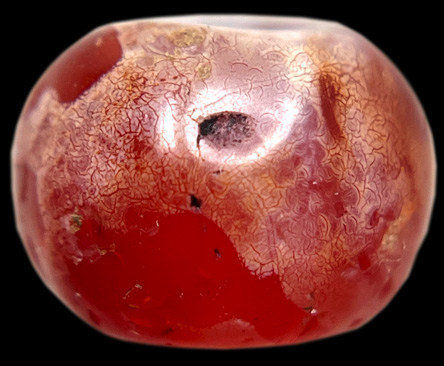
CARN 10 - 11,5 * 9 mm
|
|
|
|
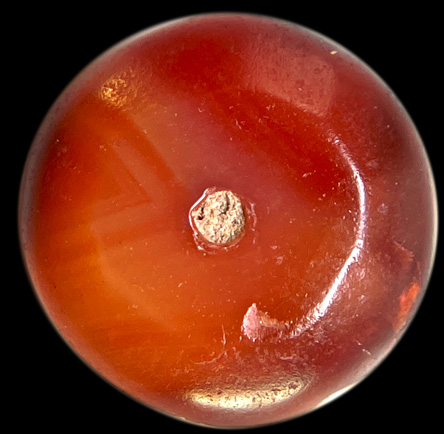
CARN 11 - 15 * 7 mm
|
|
|
|
CARN INDUS LOT 60 - largest: 13 * 5 mm
|
|
|
|
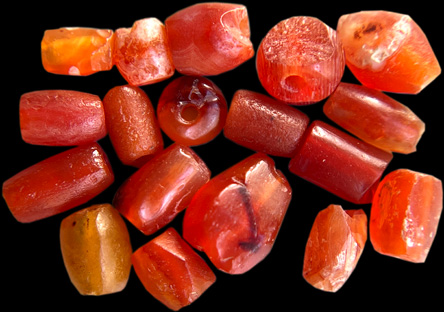
CARN LOT 12 - Yellow down left: 6 * 4,2 mm
|
|
|
|
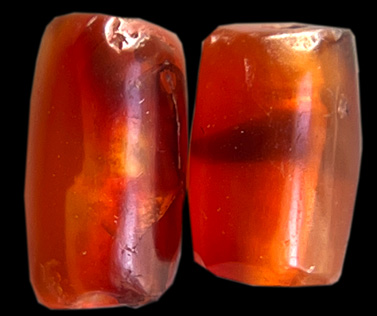
CARN INDUS LOT61 - 8,5 * 4,8 mm
|
|
|
|
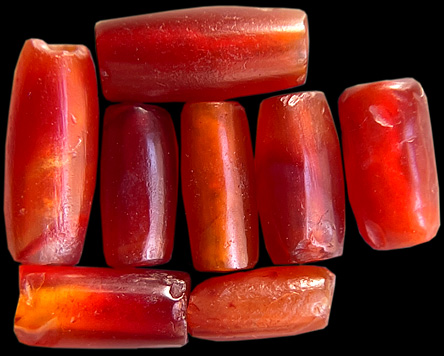
CARN INDUS LOT 62 - standing left: 9,9 * 4 mm
|
|
|
|
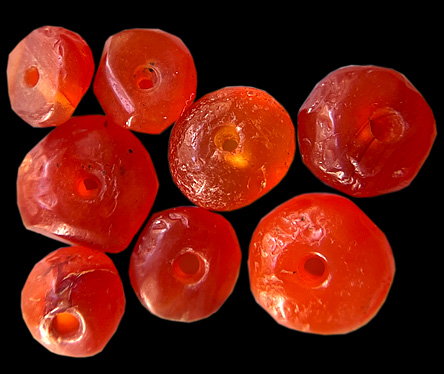
CARN INDUS LOT 63 - down right: 7 * 4 mm
|
|
|
|
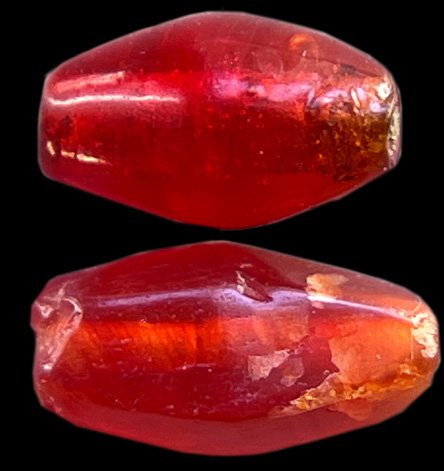
CARN LOT 13 - upper: 7 * 4,5 mm
|
|
|
|
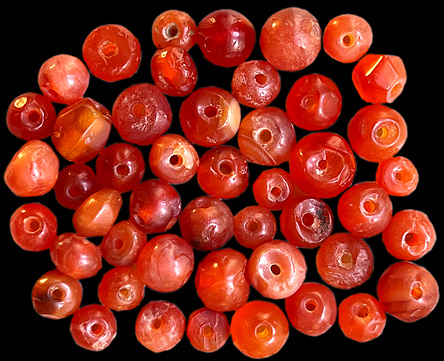
CARN LOT 14 - average 5 mm
Relatively larger than shown in proportion
|
|
|
|
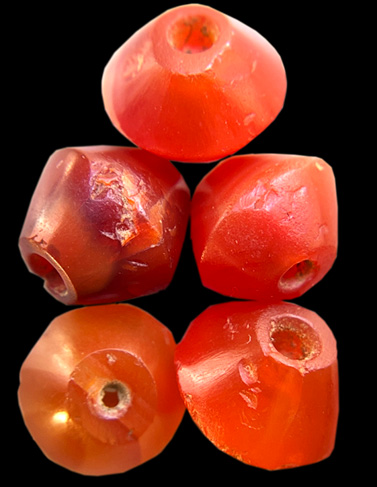
CARN INDUS LOT 64 - down right: 10,5 * 7,5 mm
|
|
|
|
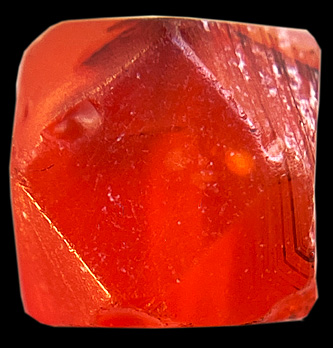
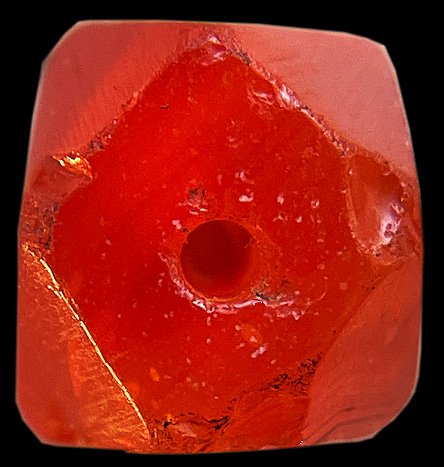
CARN INDUS 65 - 9 mm
|
|
|
|
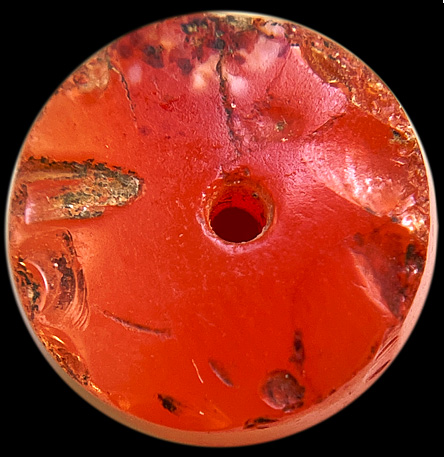
CARN INDUS 66 - 15,5 * 8,2 mm
|
|
|
|
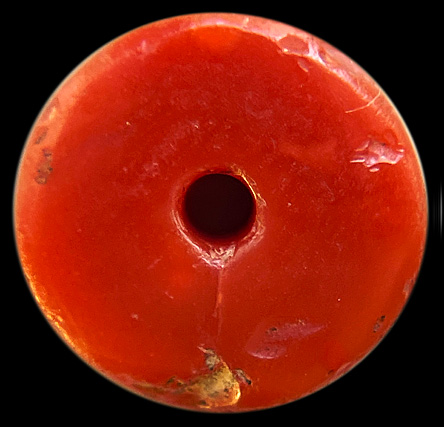
CARN INDUS 67 - 15 * 5,5 mm
|
|
|
|
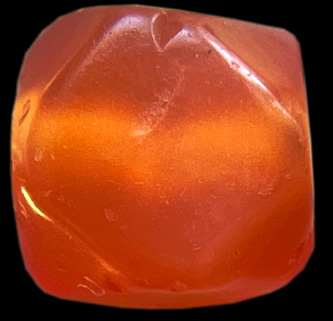
CARN INDUS 68 - 7,5 * 5,5 mm
|
|
|
|
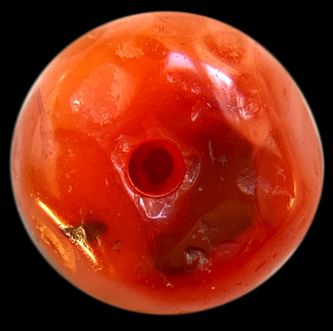
CARN INDUS 69 - 13,5 * 9,5 mm
|
|
|
|
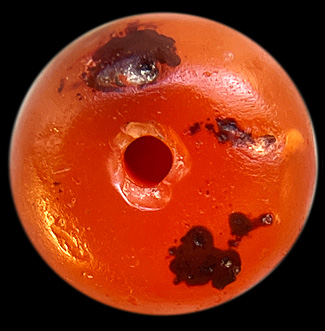
CARN INDUS 70 - 11 * 7 mm
|
|
|
|
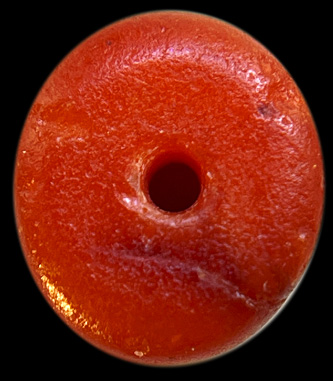
CARN INDUS 71- 12 * 11 * 8 mm
|
|
|
|
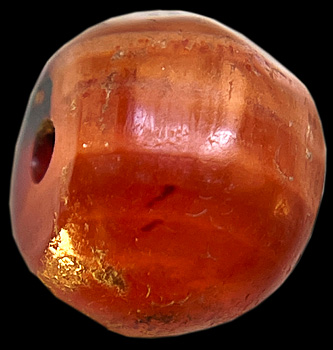
CARN INDUS 72 - 10-11 * 8,5 mm
|
|
|
|
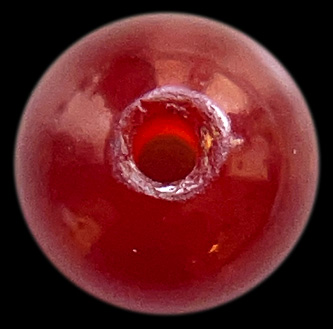
CARN INDUS 73 - 6,8 mm
|
|
|
|
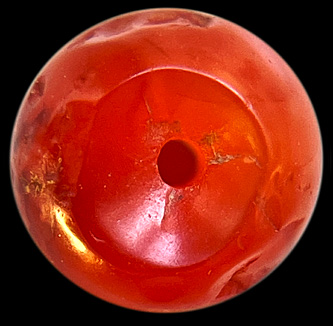
CARN INDUS 74 - 9 * 8 mm
|
|
|
|
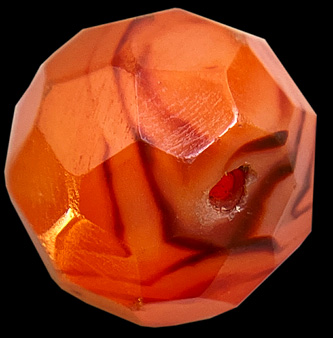
CARN 15 - 11,5/12 mm
|
|
|
|
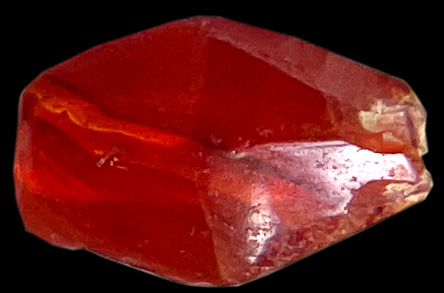
CARN 16 - 8 * 4,5 mm
|
|
|
|
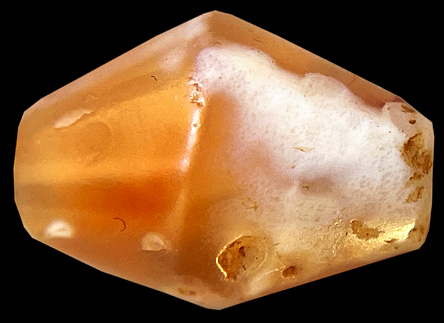
CARN INDUS 75 - 15,2 * 11/9,5 mm
|
|
|
|
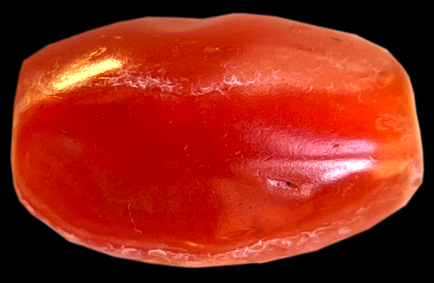
CARN INDUS 76 - 13,5 * 8 * 7,5 mm
|
|
|
|
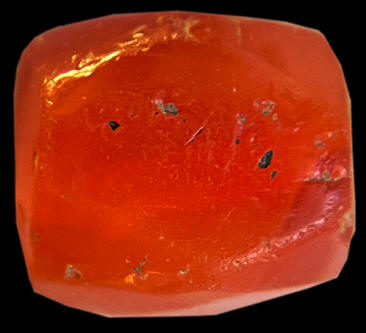
CARN INDUS 77 - 11,2 * 10 * 9 mm
|
|
|
|
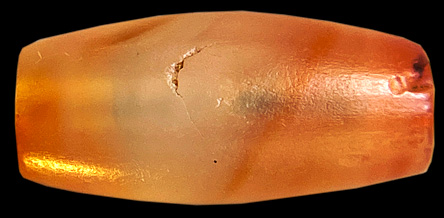
CARN 17 - 14,1 * 6,9 mm
|
|
|
|
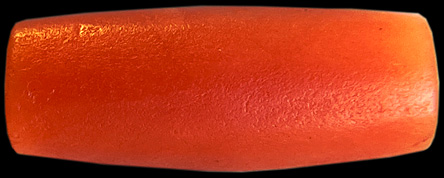
CARN INDUS 78 - 15,2 * 6,2 mm
|
|
|
|
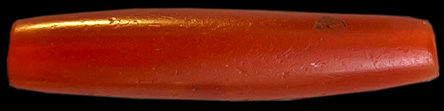
CARN INDUS 79 - 32,2 * 7 mm
|
|
|
|

CARN INDUS 80 - 49 * 6 mm
Relatively longer than shown in proportion
|
|
|
|

CARN INDUS 81 - 42,8 * 5,8 mm
Relatively longer than shown in proportion
|
|
|
|
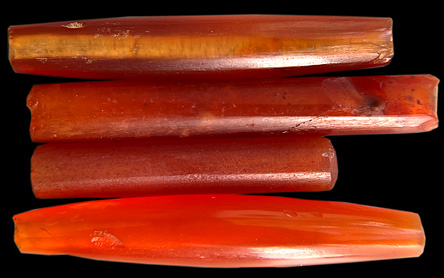
CARN INDUS LOT 82 - Lowest: 29 * 5 mm
|
|
|
|
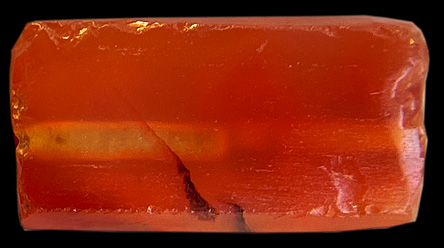
CARN INDUS 83 - 13,3 * 7 * 3,2 mm
|
|
|
|
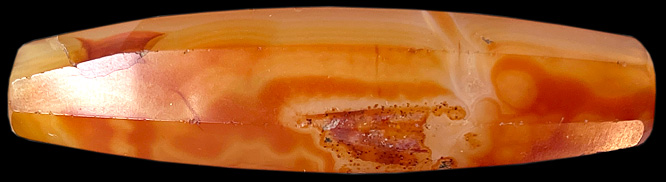
CARN 18 - 51 * 13 mm
Relatively larger than shown in proportion

|
The octagon shaped bead
above and the family o similar designed beads here could
easily be confused with antique beads from
Idar-Oberstein. However these designs have been around
since the Indus-period.
However, as displayed above the drill technique for
making the hole is ancient, in this case more than 1500
years.
|
|
|
|
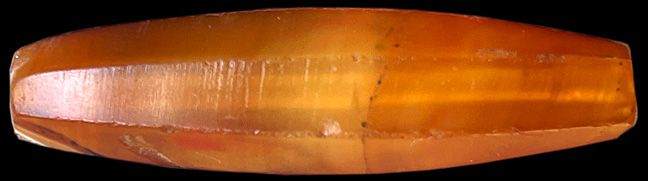
CARN 19 - 41 * 10,2 mm
Relatively larger than shown in proportion
|
|
|
|
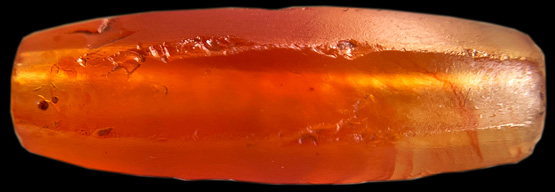
CARN INDUS 84 - 21,6 * 8,1 mm
|
|
|
|
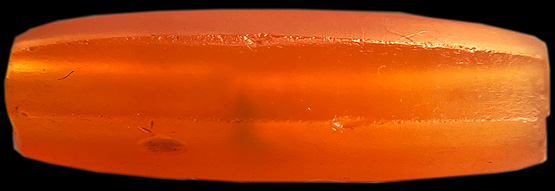
CARN INDUS 85 - 24 * 7,2 mm
|
Displayed above: A
hexagon Indus bead
|
|
|
|
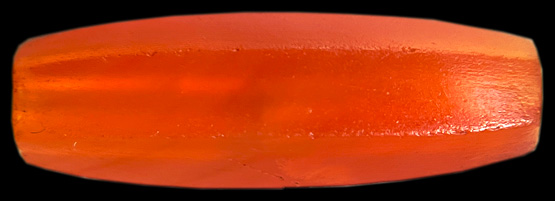
CARN INDUS 86 - 22,1 * 6,5 mm
|
|
|
|
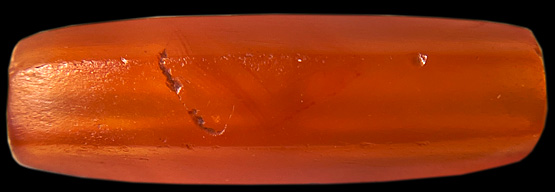
CARN INDUS 87 - 20 * 6 mm
|
|
|
|
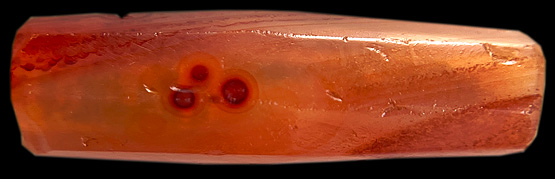
CARN INDUS 88- 23,5 * 7 mm
|
|
|
|
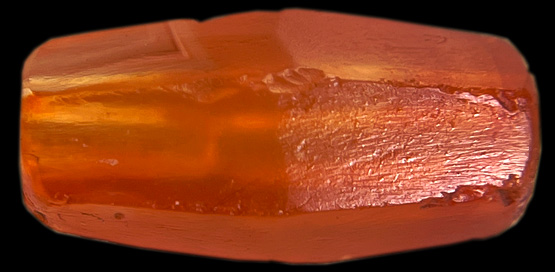
CARN INDUS 89 - 16 * 7,1 mm
|
|
|
|
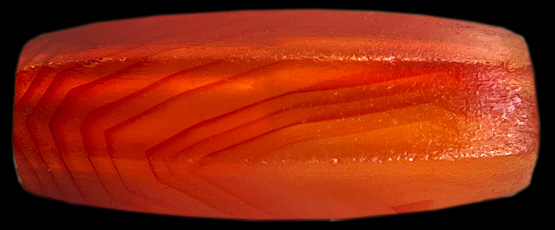
CARN INDUS 90 - 17,5 * 6,5 mm
|
|
|
|
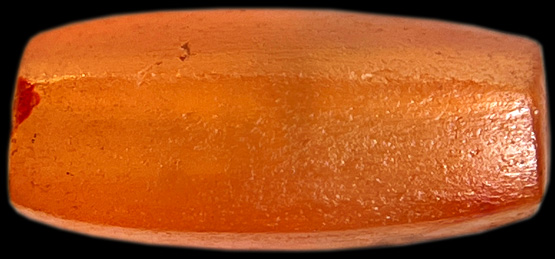
CARN INDUS 91 - 14,5 * 6,2 mm
|
|
|
|
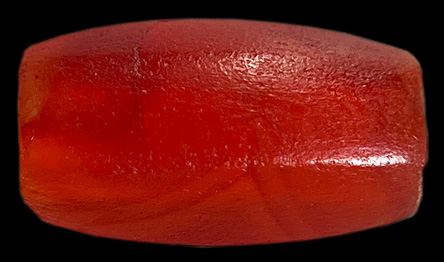
CARN INDUS 92 - 12,1 * 6,5 mm
|
|
|
|
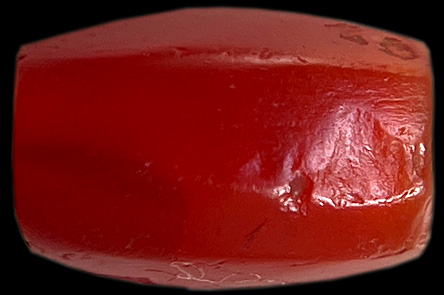
CARN INDUS 93 - 10,1 * 6,6 mm
|
|
|
|
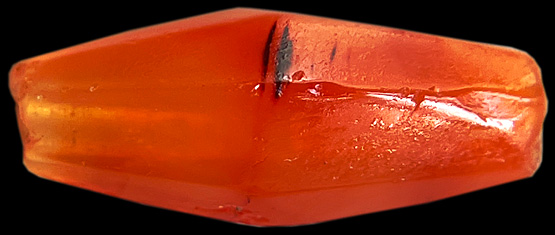
CARN INDUS 94 - 16.9 * 5,6 mm
|
|
|
|
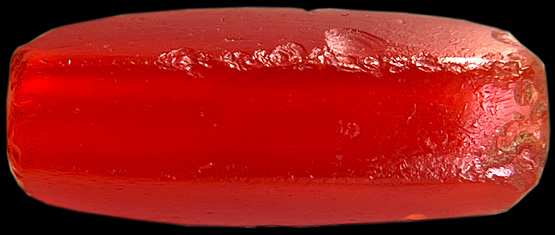
CARN INDUS 95 - 17,1 * 6,8 mm
|
|
|
|
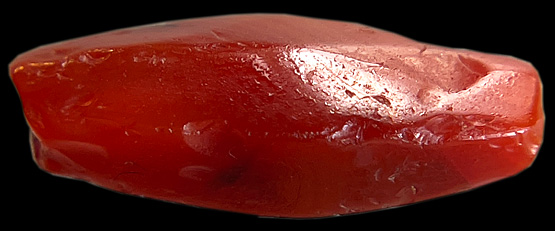
CARN INDUS 96 - 18,5 * 6,5 mm
|
|
|
|
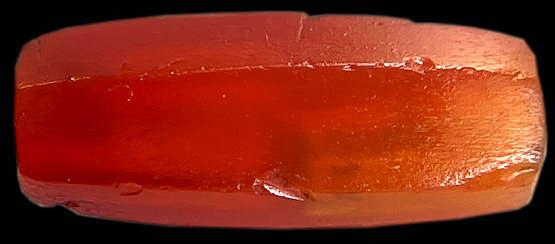
CARN INDUS 97 - 15,1 * 6 mm
|
|
|
|
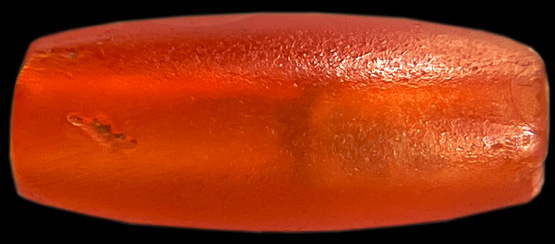
CARN INDUS 98 - 14,5 * 6 mm
|
|
|
|
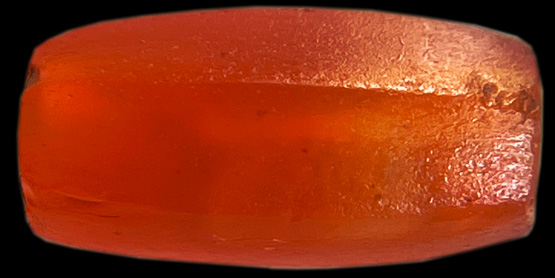
CARN INDUS 99 - 13 * 6,1 mm
|
|
|
|
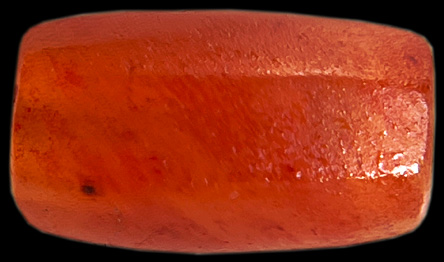
CARN INDUS 100 - 11,8 * 6,9 mm
|
|
|
|
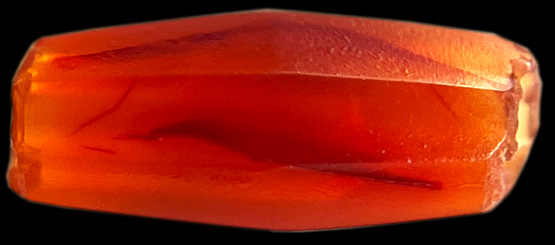
CARN INDUS 101- 14 * 5,9 mm
|
|
|
|
--
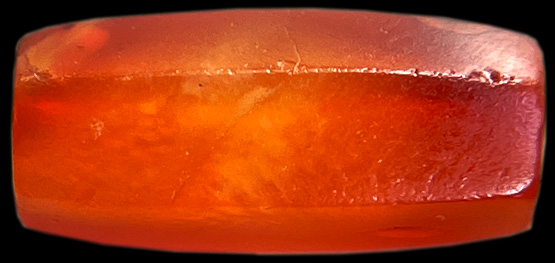
CARN INDUS 102 - 13,5 * 5,9 mm
|
|
|
|
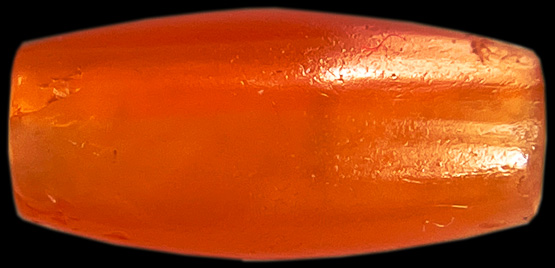
CARN INDUS 103 - 18,5 * 6,5 mm
|
|
|
|
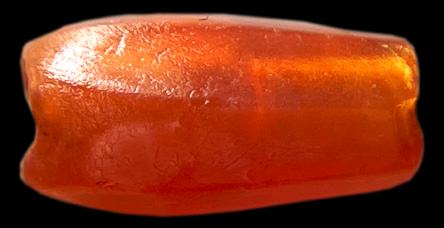
CARN INDUS 104- 11,5 * 5,8 mm
|
|
Please note the change in proportionality in the section
to come.
Ball shaped carnelian beads |
|
|
|
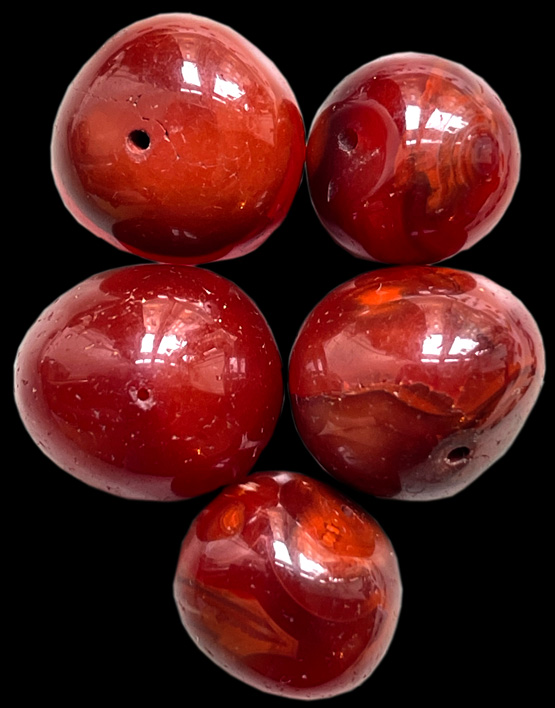
CARN - LOT 20 - Upper left: 17 * 13,5 mm
|
|
|
|
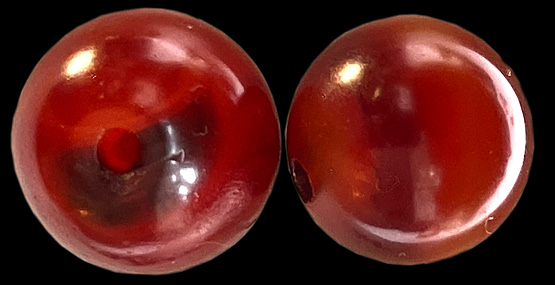
CARN - LOT 21 - Left: 15 * 14,8 mm
|
|
|
|
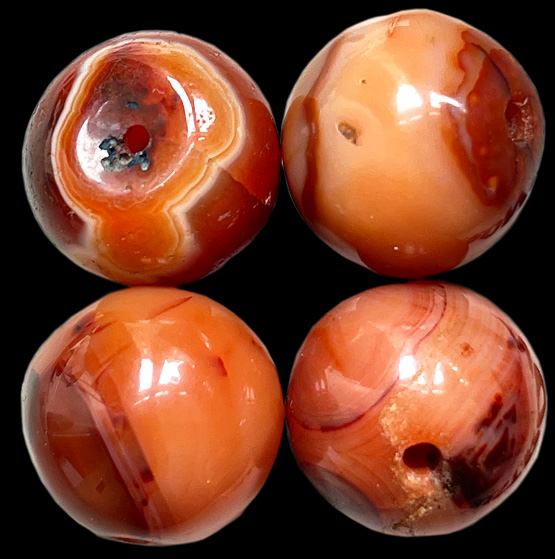
CARN - LOT 22 - Upper Left: 17 * 14,8 mm
|
|
|
|
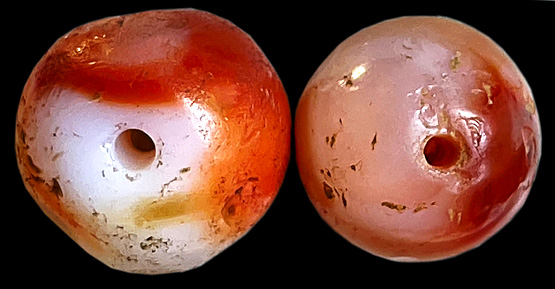
CARN - LOT 23 - Left: 15 * 13,6 mm
|
|
|
|
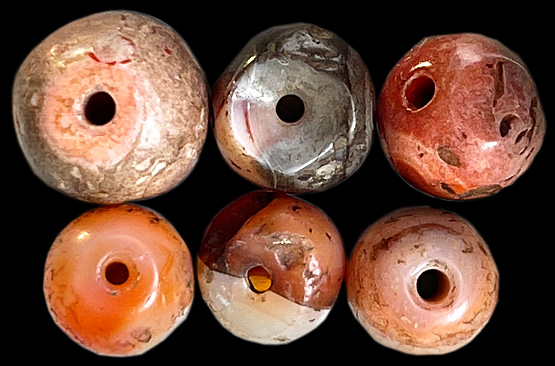
CARN - LOT 24 - Upper left: 10,5 * 9,1 mm
|
|
|
|
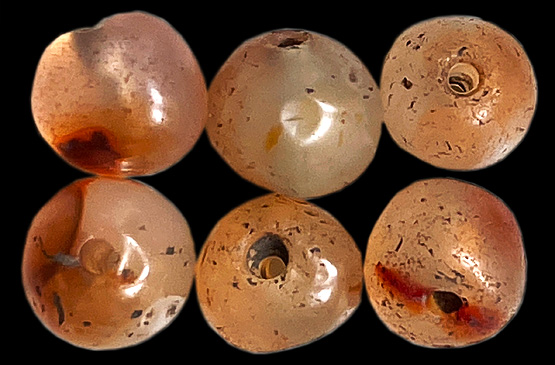
CARN - LOT 25 - 7-8 mm
|
|
|
|
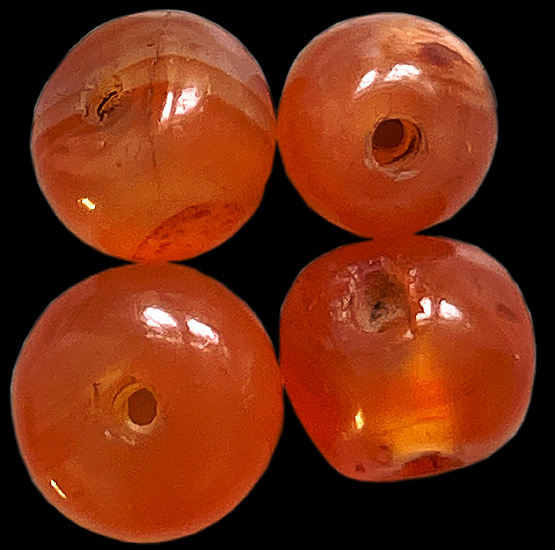
CARN - LOT 26 - Lower left: 10 mm
|
|
|
|
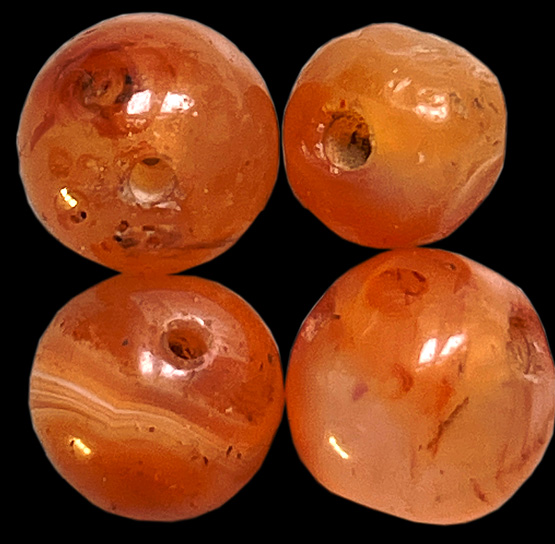
CARN - LOT 27 - Lower right: 11-10 mm
|
|
|
|
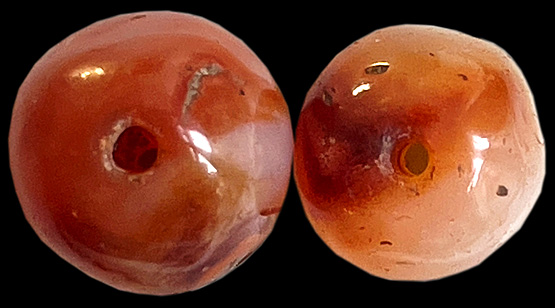
CARN - LOT 28 - Left: 12 mm
|
|
|
|
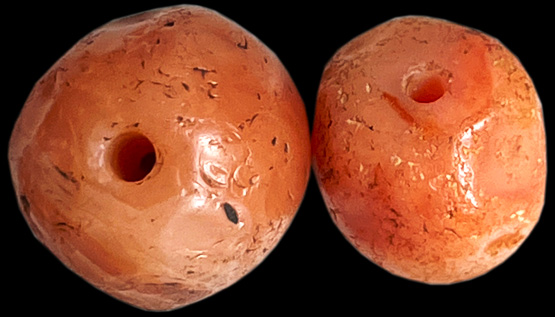
CARN - LOT 29 - Left: 14-13 mm
|
|
|
|
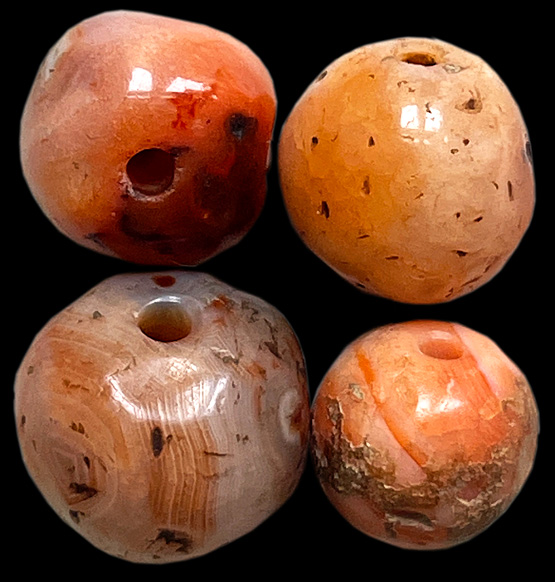
CARN - LOT 30 - Lower left: 12,5-11,5 mm
|
|
|
|
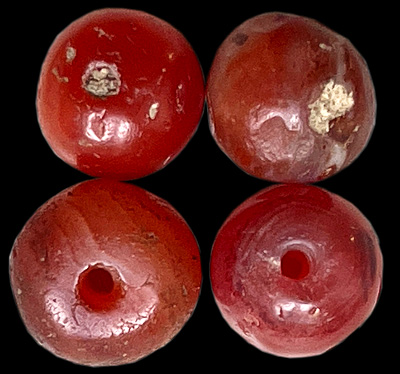
CARN - LOT 31 - Low left 9,5-8 mm
|
|
|
|
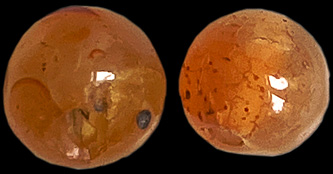
CARN - LOT 32 - 8 mm
|
|
|
|
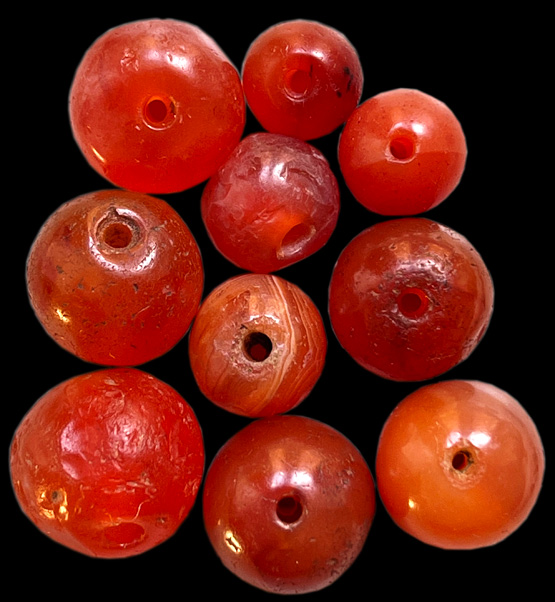
CARN - LOT 33 -
Lower left: 12-11 mm
|
|
|
|
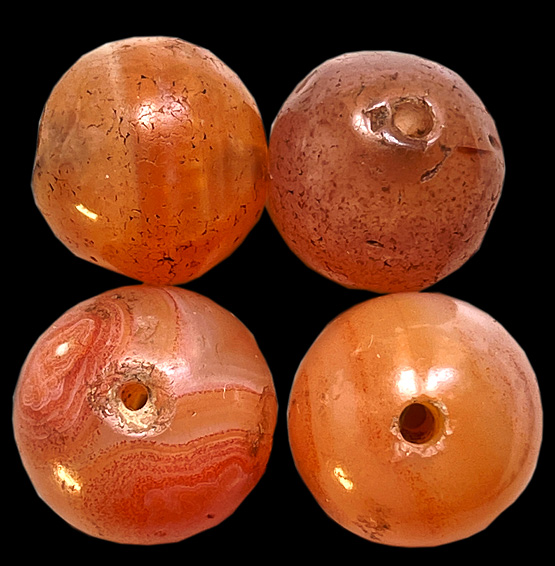
CARN - LOT 34 - Lower left: 14 mm
|
|
|
|
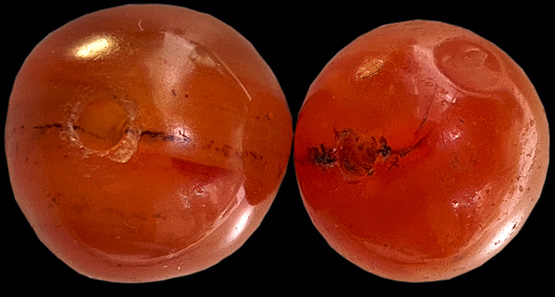
CARN - LOT 35 - Lower left: 14-13 mm
|
|
|
|
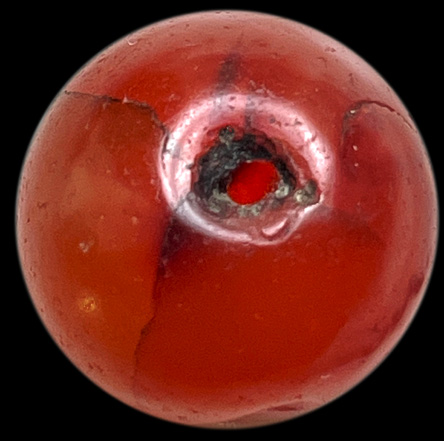
CARN 36 - 17 mm
|
|
|
|
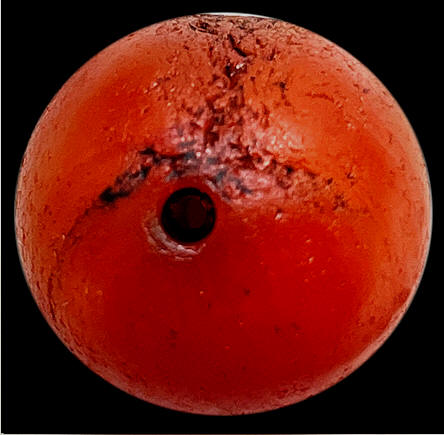
CARN 37 - 19-18 mm
|
|
|
|
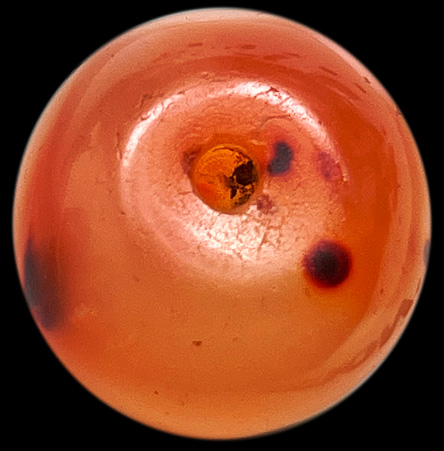
CARN 38 - 18 - 17,5 mm
|
|
|
|
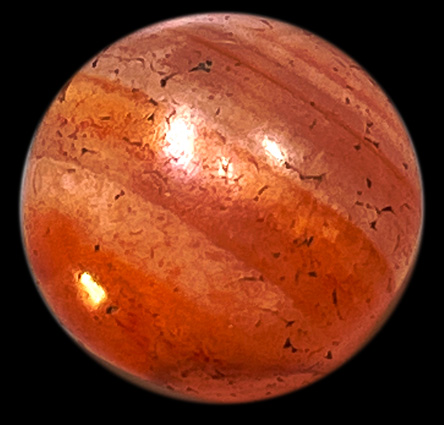
CARN 39 - 12-11,5 mm
|
|
|
|
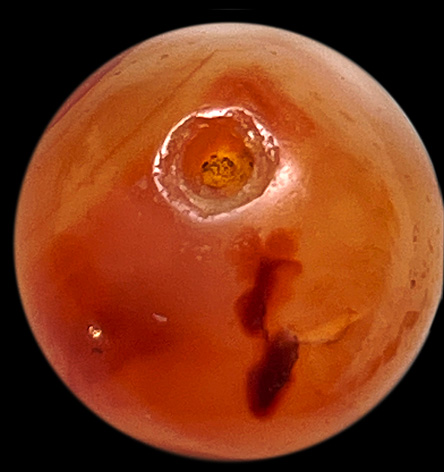
CARN 40 - 15 mm
|
|
|
|
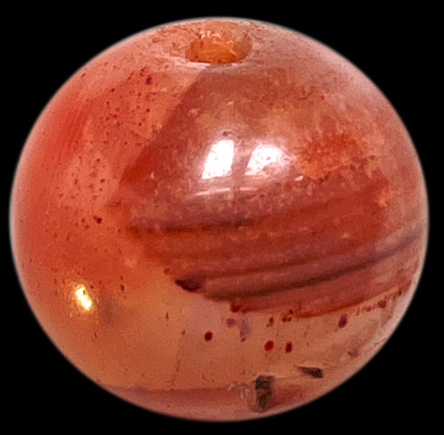
CARN 41 - 17 mm
|
|
|
|
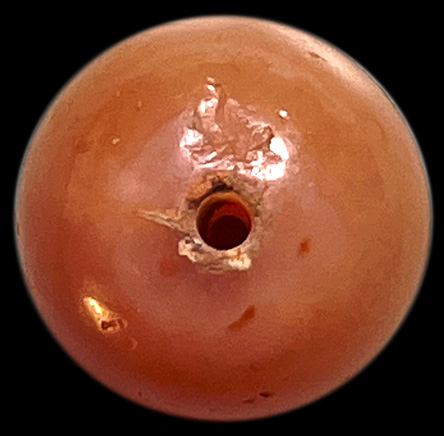
CARN 42 - 12 mm
|
|
|
|
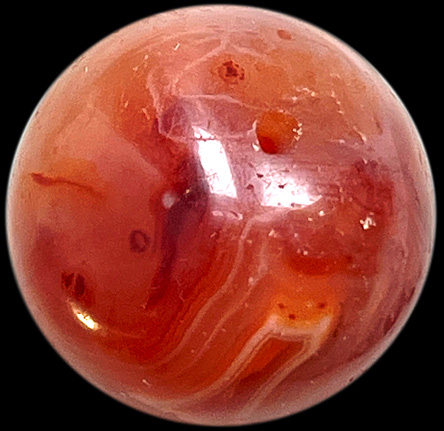
CARN 43 - 18 * 16 mm
|
|
|
|
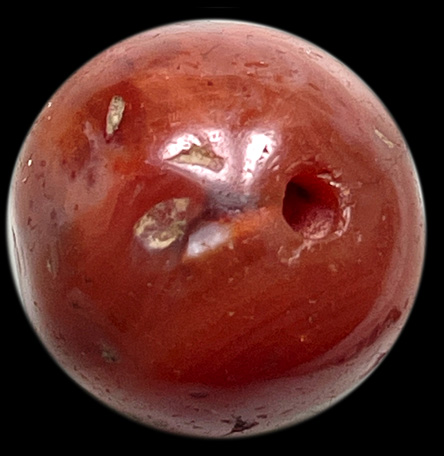
CARN 44 - 17 mm
|
|
|
|
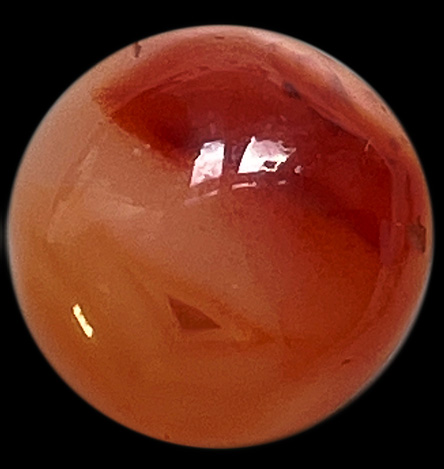
CARN 45 - 12-11,5 mm
|
|
|
|
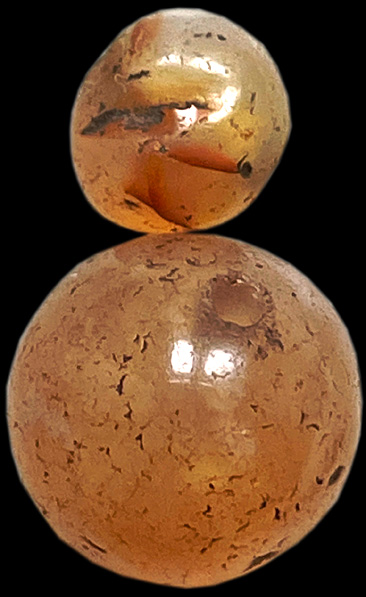
CARN - LOT 46 - Low: 13 mm
|
|
|
|
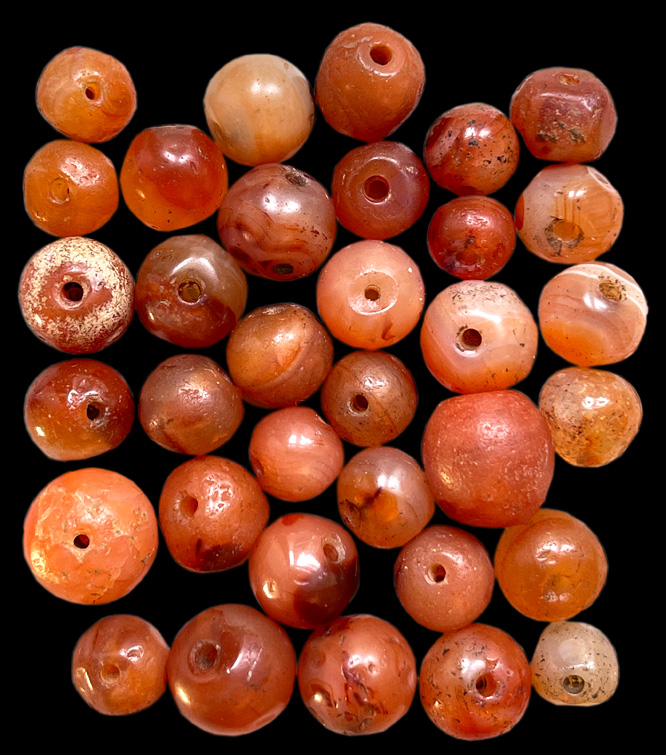
CARN - LOT 47
|
|
|
|
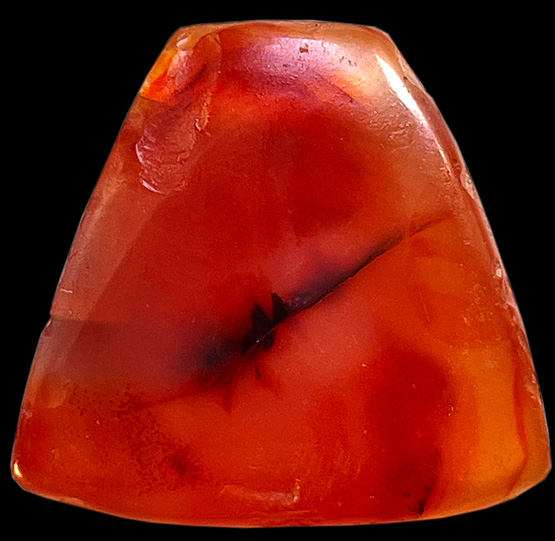
CARN 48 - 24 * 23 * 7,2 mm
|
|
|
|
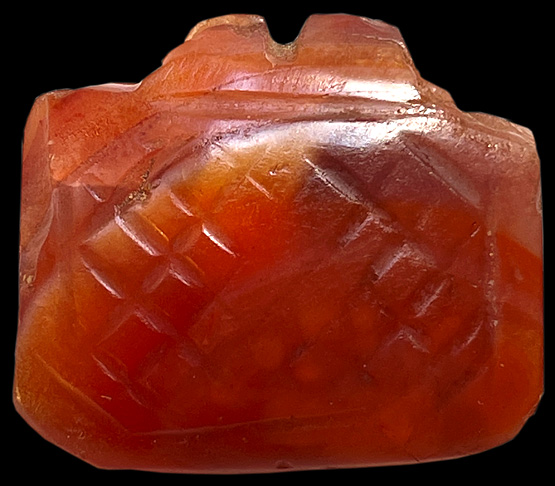
CARN 49 - 27 * 23,5 * 9 mm
|
Two amulets. The above
from India. Below from Sahara.
|
|
|
|
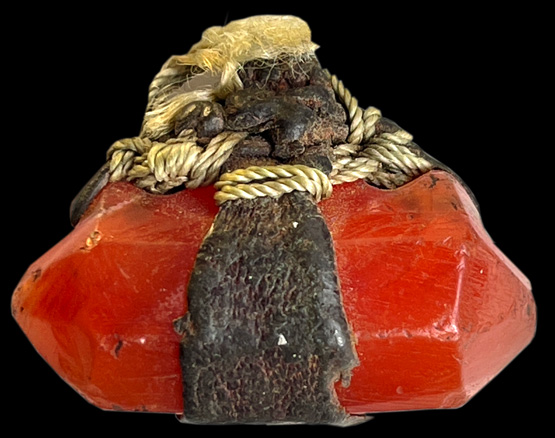
CARN 50 - 28,5 * 12 * 12 mm
|
|
|
|
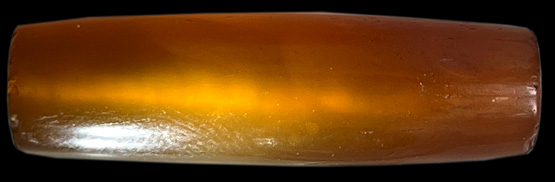
CARN 51 - 33 * 9,5 mm
|
|
|
|
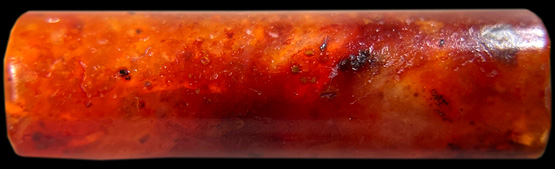
CARN 52 - 20 * 6 mm
|
|
|
|
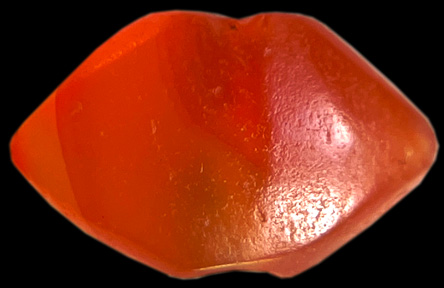
CARN INDUS 105 - 14 * 9 * 5,5 mm
|
|
|
|
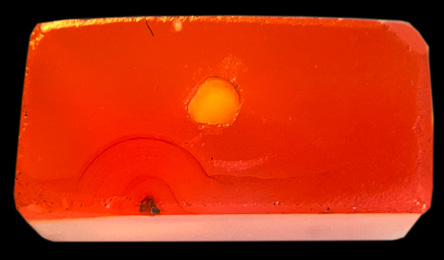
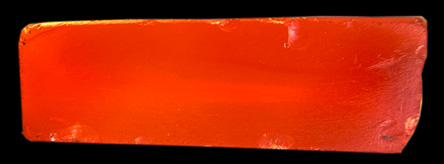
CARN 53 - 22,5 * 14,2 * 7,9 mm
|
|
|
|
CARN - LOT INDUS 106 - Disk shaped - lowest bead: 12,5 * 4,9 mm
|
|
|
|
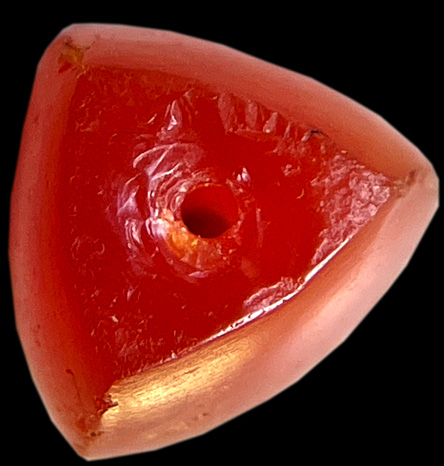
CARN INDUS 107 - 11 * 10 mm
|
|
|
|
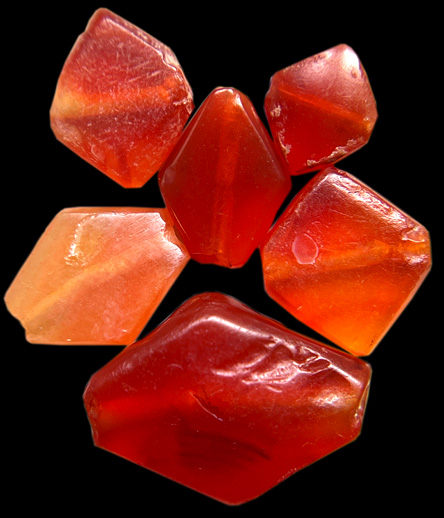
CARN - LOT INDUS 108 - lowest bead: 15 * 11,3¨* 5 mm
|
|
|
|
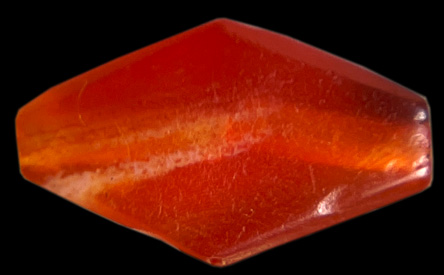
CARN INDUS 108 - 16 * 9,5 * 5 mm
|
|
|
|
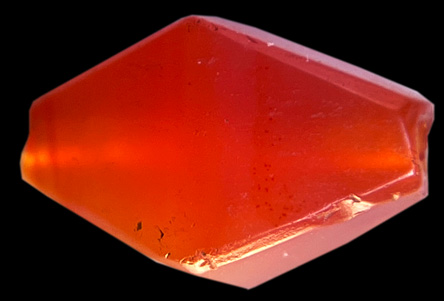
CARN INDUS 109 - 15 * 9 mm
|
|
|
|
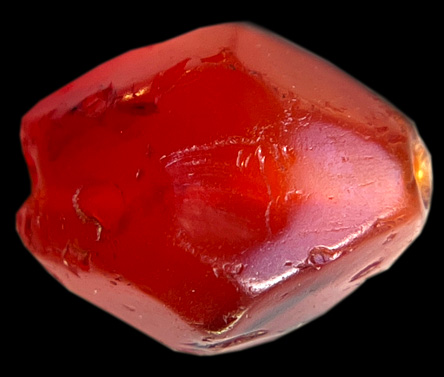
CARN INDUS 110- 14 * 11 * 8 mm
|
|
|
|
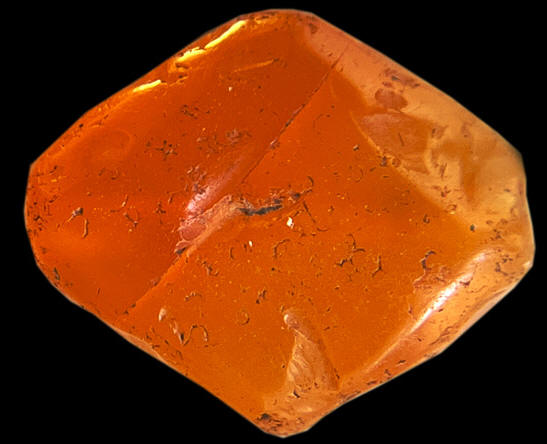
CARN INDUS 111 - 15 * 12,5 * 5,5 mm
|
|
|
|
|
|
CAMBEY CARNELIAN BEADS
The huge non-transparent bead below was sourced in
Punjab, India. As one can observe on the sharp edges of the hole, this
super-large and heavy carnelian bead has never been used,
or at least not much. It looks new. However, the discoloring made by calcium in the earth reveals that this bead actually is ancient.
I have found exactly similar beads in Africa. In
the section with
African
Fulani Beads, you can observe these beads.
|
|
|
|
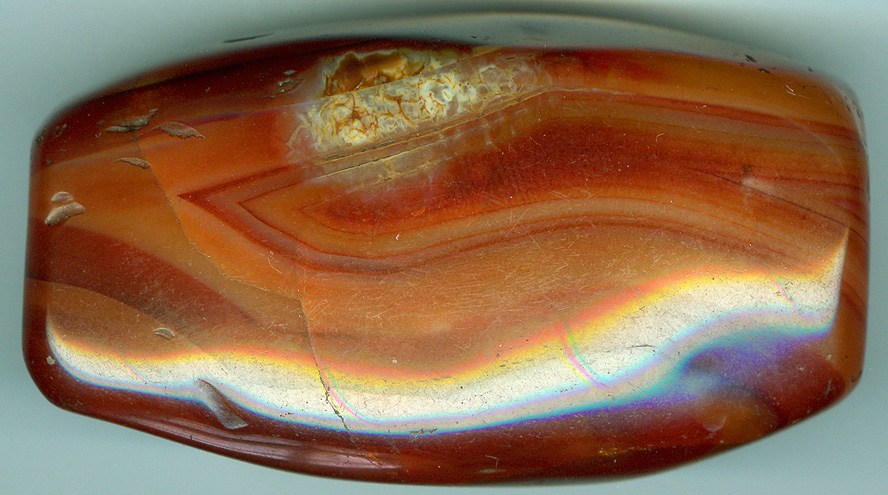 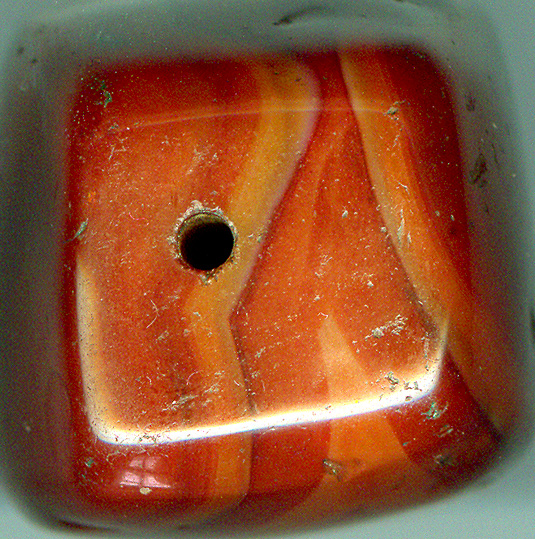
CARN 54 - 60 * 31 * 28 mm
This bead does
have banding. So one could also call it a red agate bead.
However this is a distinction without
a much difference,
as both are red-orange cryptocrystaline
quartz.
|
|
This bead is an example of the huge bead trade from
India to Africa going on since ancient times.
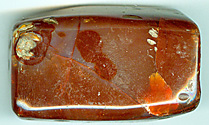
Fulani bead sourced from
Africa
|
|
|
|
|
|
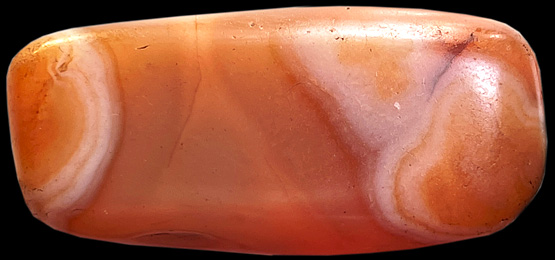 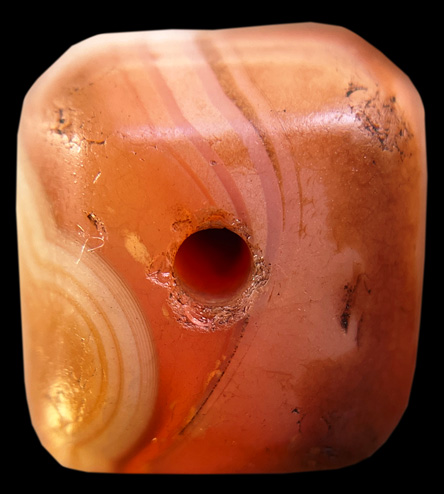
CARN 55 -
|
|
|
|
|
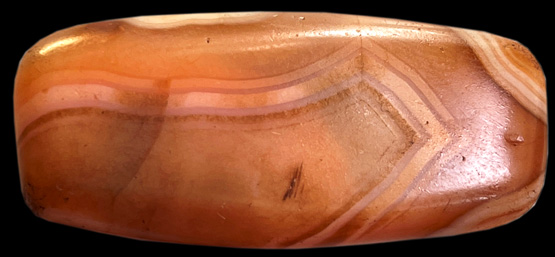 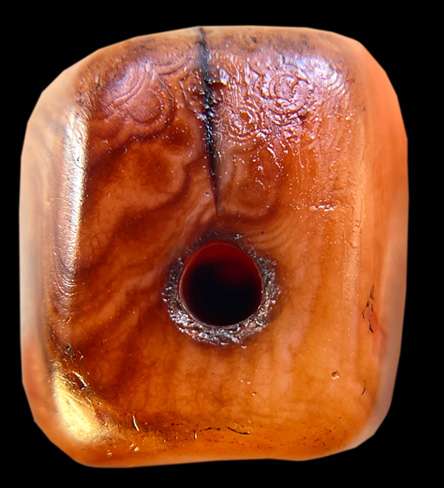
CARN 56 -
|
|
|
|
|
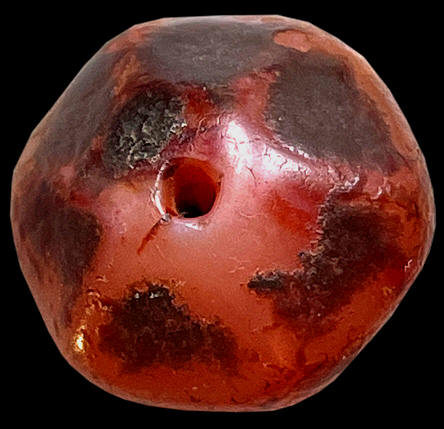
CARN 57 -
18 * 13 mm - SOLD
Hexagon
Moroccan Sahara
|
|
After this find, I went to Morocco and found a few
similar beads in Marrakech. I was extremely lucky to
purchase some on the internet too.
Indus beads made for export
According to the bead expert Malik Hakila, the facetted
carnelian beads above and below display the typical
carnelian orange-red shine that in ancient times only
carnelian from the area around Cambey in India had.
However, we don't find facetted carnelians beads in the
Indus Civilization. As we can observe through bead
history, every geographical area in every historical time
had its own favorite beads with certain patterns, shape,
material, and color. The Indus people did not seem to
like facetted beads, but the Mesopotamians did.
Accordingly, my best guess is that
this wonderful polygon highest quality carnelian disk
bead and the ones you see below were made as long back
as by Indus people for the export to the Mesopotamian
Proto Elamite
elite in the Early Bronze Age. According to science, the trade between the
advanced urban civilizations of Mesopotamia and the
Indus began around 2600 BC. For this facetted Indus
carnelian bead to end up in a Neolithic grave in
Moroccan Sahara, we must at least extend this relation
back to 3000 BC and maybe even further! Some historians
relate the earliest Proto
Elamite script with the Indian Dravidian language,
which points at the existence of an Elamo-Dravidian culture
stretching all the way from the Gulf to India. Seen
in the light of the Elamo-Dravidian connection, bead-making and
exporting relations between the two areas might very
well open up for the possibility of an Indus bead ending
up in a Saharan Neolithic grave.
The Proto Elamites had trading
relations with Neolithic cultures as far as northwest
Africa. For the Neolithic people in west Sahara the Proto Elamites were
the closest 'higher' trading civilization at the time of
the decline of water in the area.
So this super ancient bead most probably ended up here due to the exchange
of goods with contemporary but more far more advanced cultures further
east.
Remnants from several Neolithic
settlements can be found in the Moroccan Sahara. For sure, these Neolithic
cultures did not have the technology to
fabricate polished polygonal-shaped beads.
As you can see here, Neolithic beads
from
West Sahara have a far more 'primitive' design equivalent to their
technological level in general.
|
|
|
|
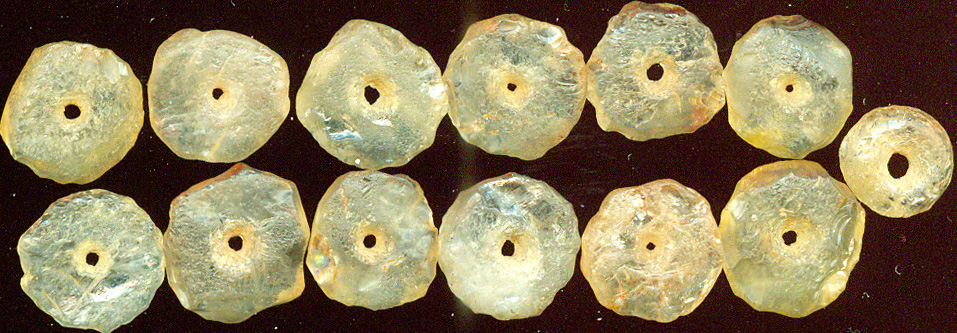
Neolithic Crystal beads from West Sahara - 12 * 5 mm
|
|
From India to Nigeria
Beads are indeed great travelers, and their journey is
often proportional with their age. The beautiful and
large heptagon bead displayed below was a part of an
ornament from the Kings of Benin, Nigeria, 1000 to 1300
A.D. It might have been ancient way before it reached
the African mainland. Note the extremely high quality in
the carnelian material itself. It is rare to find such a large
bead with this ideal deep orange-red translucent and
perfect uniform Cambey color. It does not look so old as
the other beads, and this bead shape was produced for
thousands of years after the Indus period. However the
carnelian itself points to the same period as its more
torn and worn brothers.
|
|
|
|
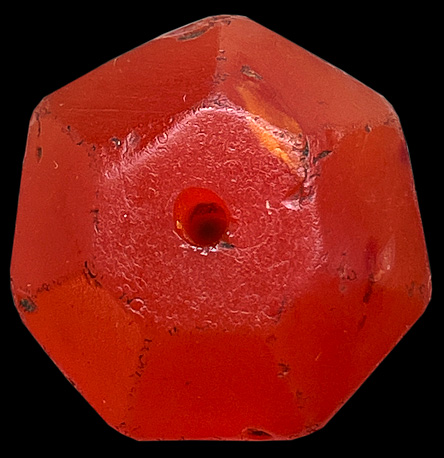
CARN
58 - 22,5 * 12, 5 mm
Heptagon carnelian bead
|
In the Danish National Museum in Copenhagen, there is said to be an exactly
similar bead to the one displayed above, woven into the dress of a
chieftain from Papa New Guinea! This particular bead has never been in
the possession of Europeans. Most probably it went eastwards from
India via Chinese sea trading routes to Papua New Guinea.
Displayed below is a ancient pentagon-shaped carnelian bead
sourced from the Harappan Indus
culture in Pakistan. As mentioned, it is rare to find this type
of bead in the Indus area.
|
|
|
|
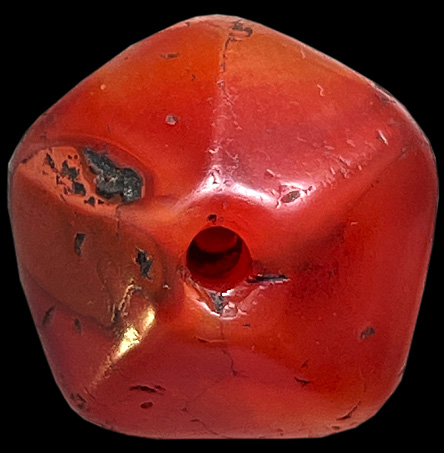
CARN
59 -
17,5 * 13 mm
Pentagon
bead
|
THE TALISMANIC
POWER OF ANCIENT BEADS
I love that the bead displayed above has become softly rounded through
contact with countless generations of human skin. Again we find the
highest quality of carnelian. The discoloring of the bead has been made
by earth and time.
The ancient signature
Why love beads that show extreme wear and tear?
Because they have wrinkles like a face of an old wise man.
Because they are imperfect. Perfection has no spiritual life.
Young people are seldom spiritual. Spirit grows with age in both beads
and humans.
These worn-out beads are perfectly imperfect.
Time has put its mark on them like the softly rounded stones on the beach.
|
|
|
|
|
|
|
|
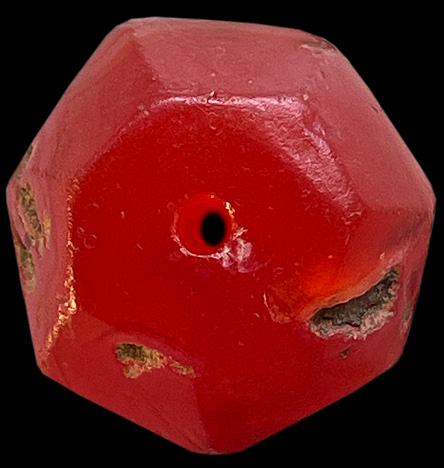
CARN 60 - 18,2 * 11 mm
|
|
|
|
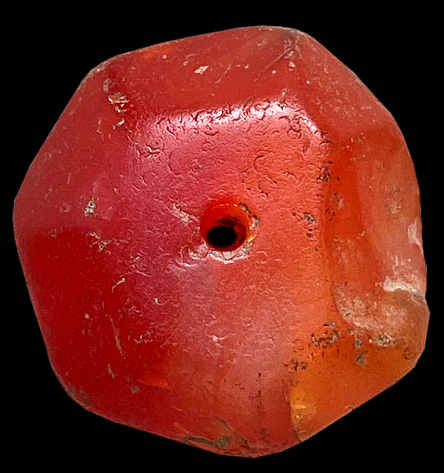
CARN 61 - 23-22 * 11,1 mm
|
|
|
|
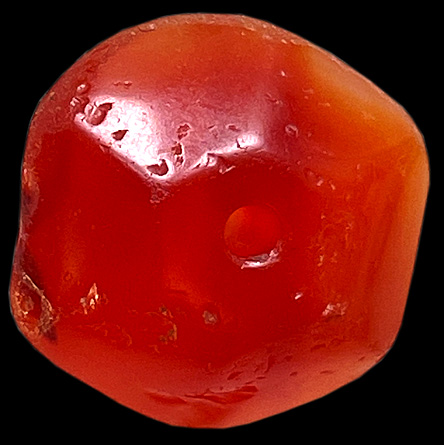
CARN 62 - 18 * 12,5 mm
|
|
|
|
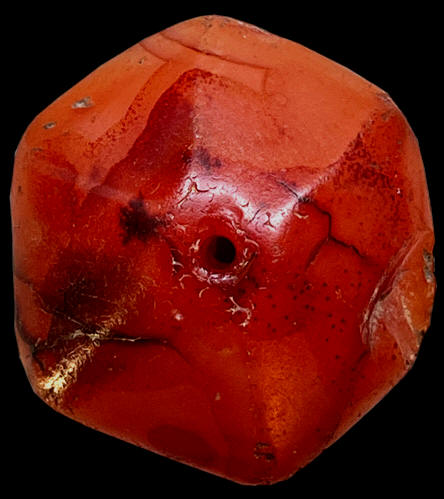
CARN 63 - 25-24 * 12 mm
|
|
|
|
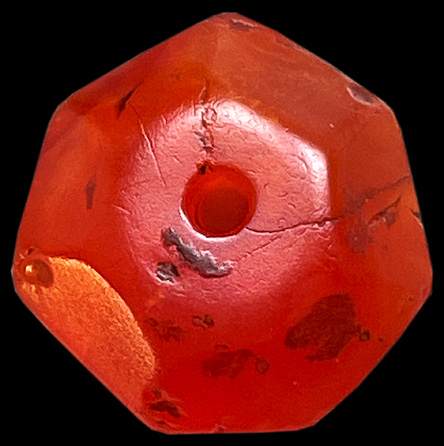
CARN 64 - 15,9 * 9,3 mm
|
|
|
|
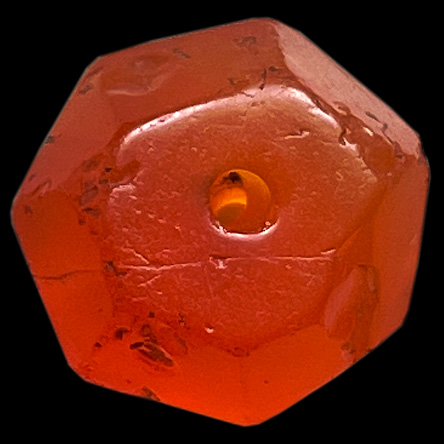
CARN 65 - 13,5-13 * 7,5 mm
|
|
|
|
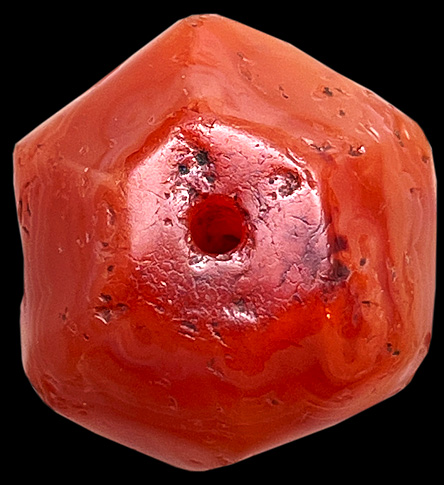
CARN 66 - 20-19,5 * 12,1 mm
|
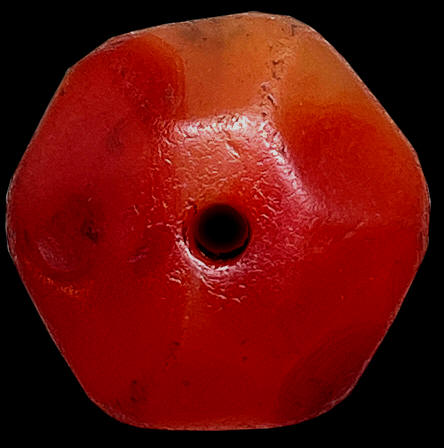
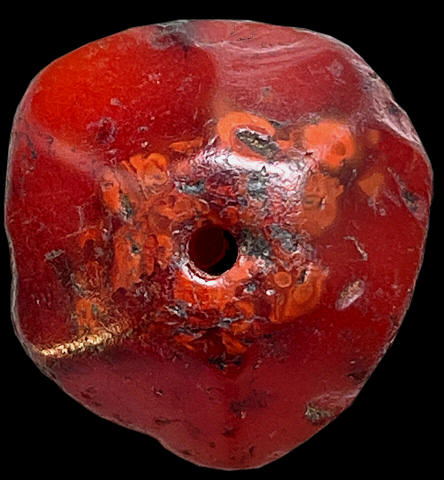
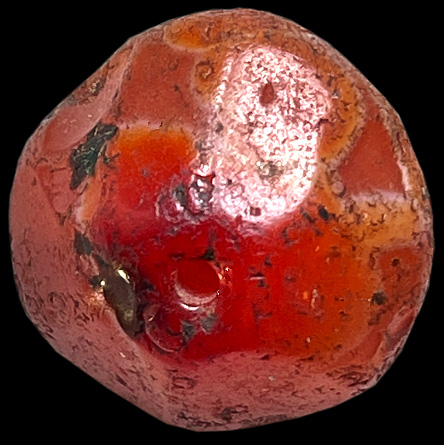
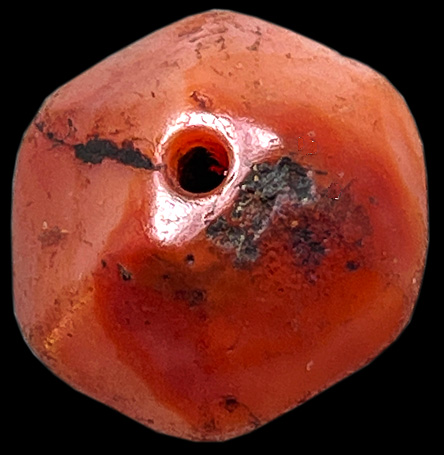
I do not have many beads in my collection that has been so much polished
by wearing as the beads displayed here. These beads must be super ancient. Carnelian has a hardness on
the Mohr scale between 6,5 to 7. Imagine how much time in contact
with human skin it need to make beads like the ones you see here!
|
|
|
|
CARN 67 - 18 * 10,2 mm
|
|
|
|
CARN 68 - 19,5-18,5 * 13 mm
|
|
|
|
CARN 69 - 18 * 15 mm
|
|
|
|
CARN 70 - 15 * 12 mm
|
|
|
|
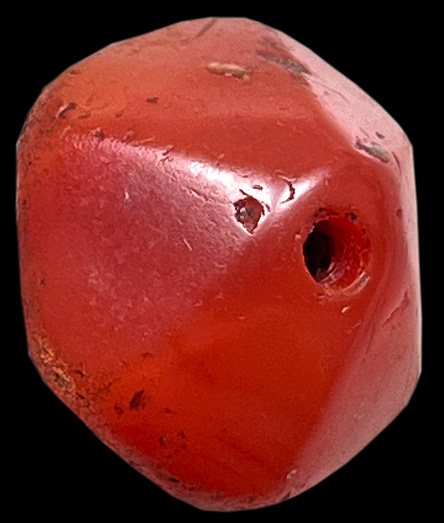
CARN 70 - 16 * 13 mm
|
|
|
|
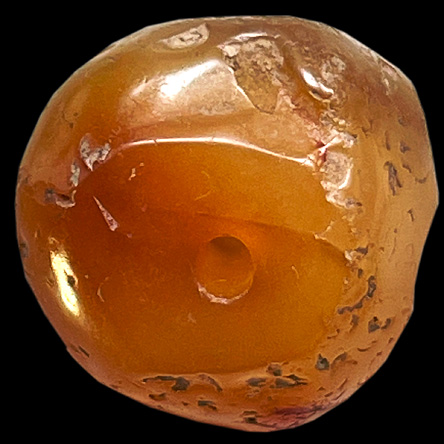
CARN 72 - 17 * 11 mm
|
|
|
|
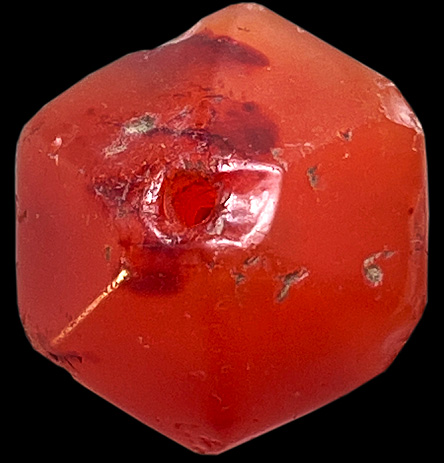
CARN 73 - 16 * 13 mm
|
|
|
|
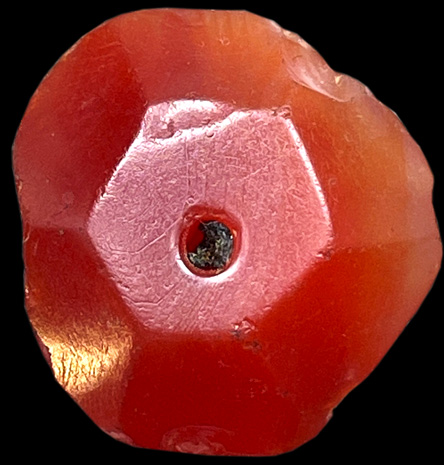
CARN 74 - 21-18,5 * 10 mm
|
|
|
|
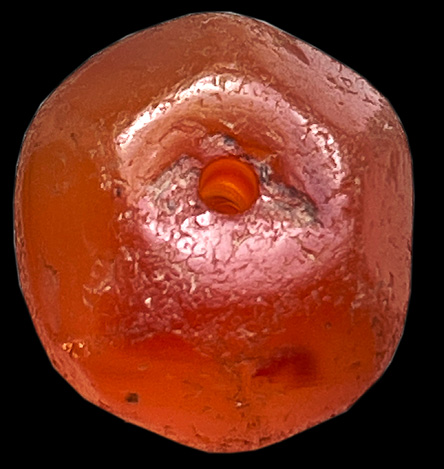
CARN 75 - 16,5 * 13 mm
|
|
|
|
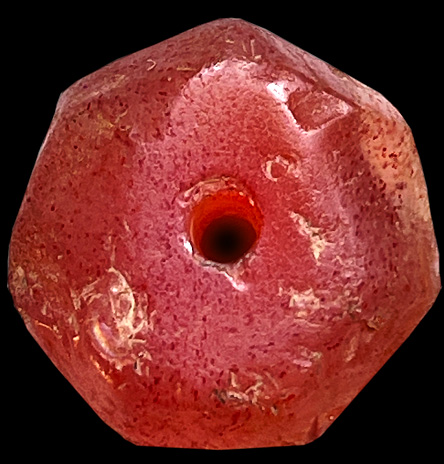
CARN 76 - 18 * 10,1 mm
|
|
|
|
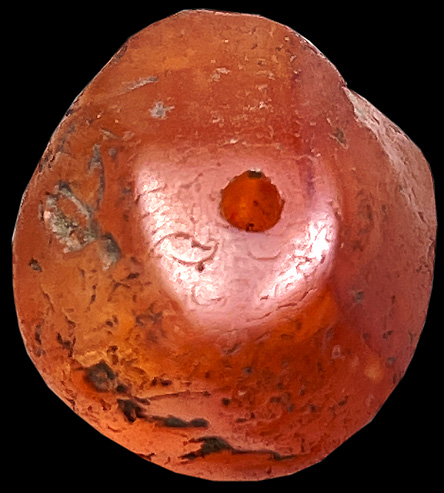
CARN 77 - 19-17 * 14 mm
|
|
|
|
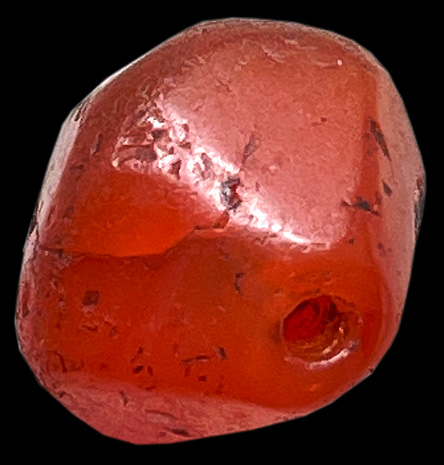
CARN 78 - 12,5 * 12 mm
|
|
|
|
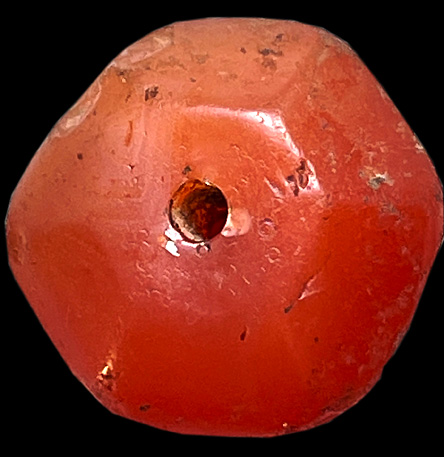
CARN 79 - 15 * 10 mm
|
|
|
|
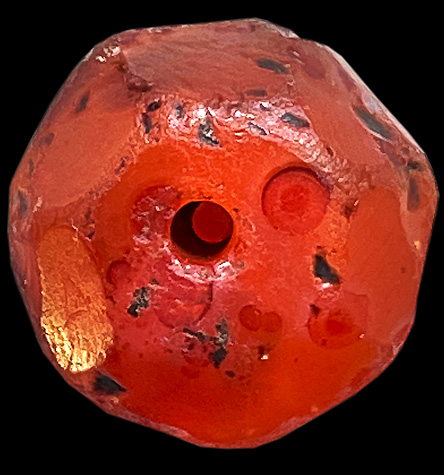
CARN 80 - 14,5 * 9,5 mm
|
|
|
|
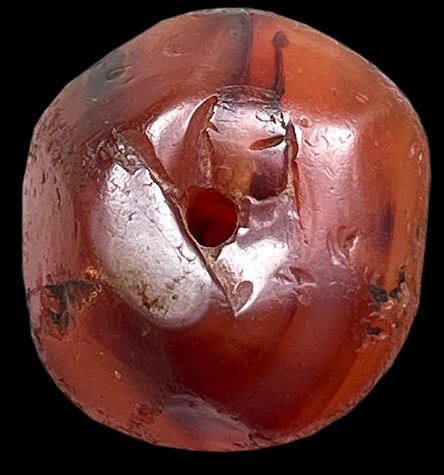
CARN 81 - 17-16 * 11,9 mm
|
|
|
|
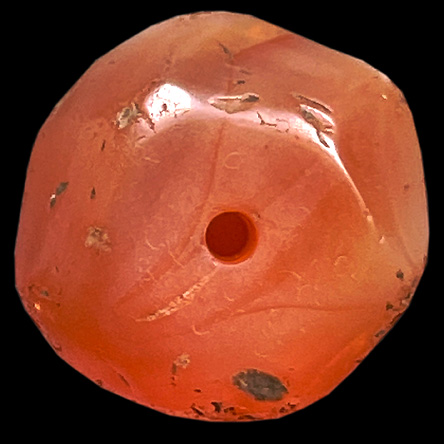
CARN 82 - 16-15 * 8,5 mm
|
|
|
|
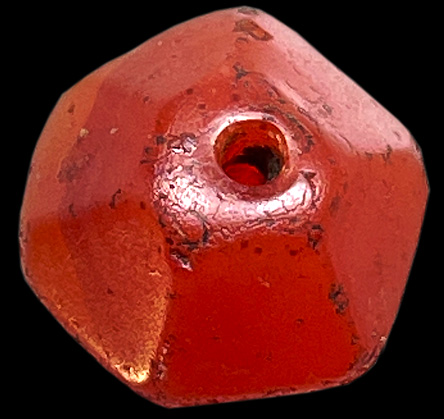
CARN 83 - 12,5 * 10 mm
|
|
|
|
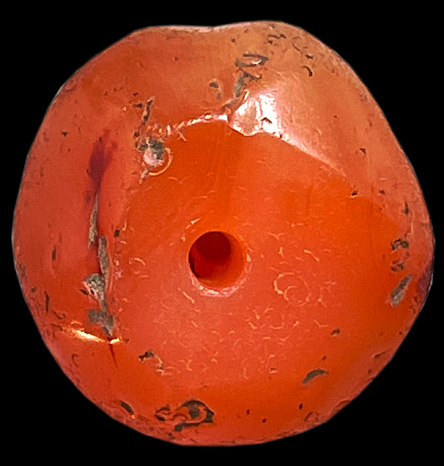
CARN 84 - 17-16 * 10,9 mm
|
|
|
|
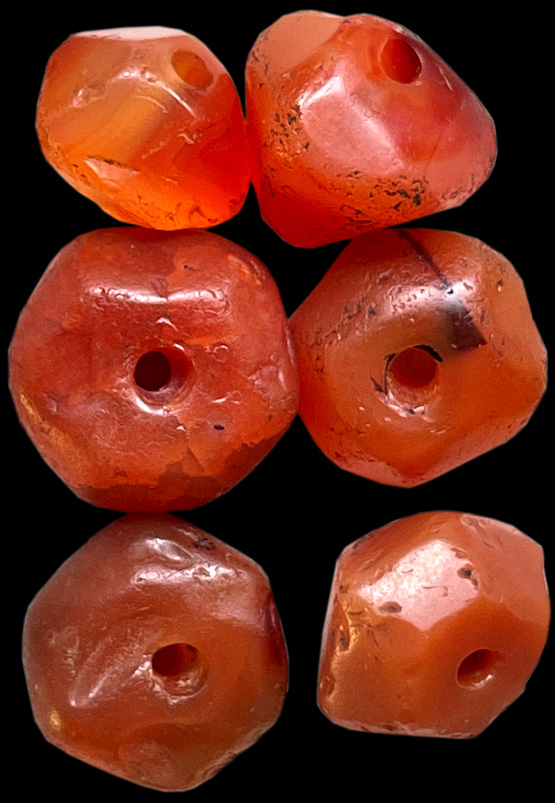
CARN LOT 85 - left Middle: 12,8 * 8 mm
|
|
|
|
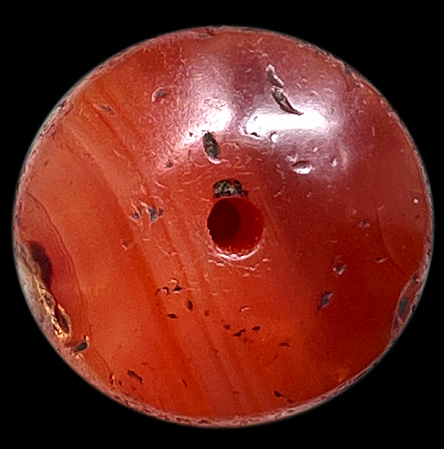
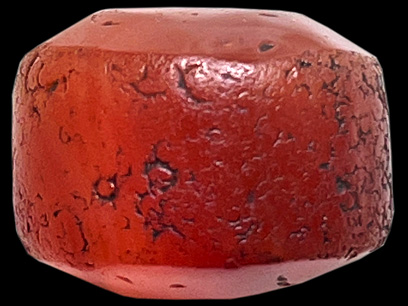
CARN 86 - 16 * 12 mm
|
|
|
|
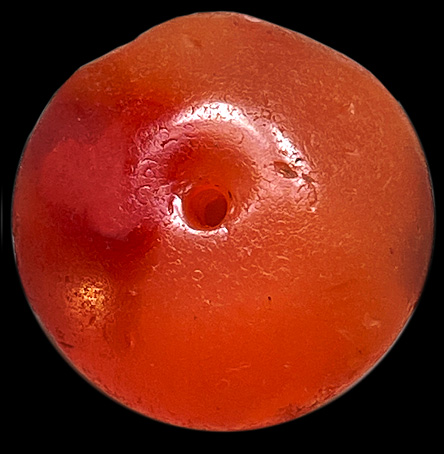
CARN
87 -
20-19 * 11 mm -
Hexagon
Moroccan Sahara
This magick bead has been
polished almost round by time
|
Most
of these beads were sourced from Moroccan Sahara. It shows, what cannot surprise: that the earliest
higher civilizations had trading contact with the hunter-gatherer civilizations which surrounded them. As you can observe on the page
Neolithic beads, most
of the beads displayed here are more crudely made. Only more 'advanced'
societies could make beads like the fine polished and facetted beads
displayed above. Many of them exhibit the highest quality of carnelian.
However, we must also take into the equation that many of these bead shapes were so popular that they were copied and produced in Africa
almost up to up to our time. Patina, wear and tear and the size and
design of holes are therefore most important in the time-lining of them.
|
|
|
|
|
|
|
From ancient production to Baba Ghors mass-production
Beads like those displayed above were produced for
export by the Indus people from more than 5000 years ago.
You can compare the Indus beads OIV 9 and 10 above with
the beads below to see the similarity in design.
Several of the beads displayed below are most
likely to be 'only' around 500 years old. They are from the
heydays of Baba
Ghor, whom I mentioned in the beginning. The Baba
Ghor beads are, what is easy to observe, made
out of carnelian stones of a far lesser quality than the
much older
Indus beads
above. Baba Ghors export beads are not rare and not as old as the above
high-quality Indus carnelian beads. The holes are smaller. The craftmanship
is primitive but powerful like an African tribal mask.
These beads are still available for collectors, but for how
long?
Is the baba Ghor story a myth?
However, when I look at these beads, they do not seem to
be 'only' 500 years old. They look ancient to me. I
recently talked to an Indian bead expert, who told me
that according to his view, the Baba Ghor story was a
myth. He told me that there since ancient times had been
a huge amount of ancient beads scattered around n the
area. As an example he mentioned an area in Gujarat
called Ghansor, or Naga Baba Ghansor. In this area, like
many other similar people had for generations collected
beads from Indus sites and sold to especially the Moslem
faqirs. Beads like the ones below were then not produced
500 years back but collected from sites since the last
500 years. I tend to believe this explanation more than
the official Baba Ghor myth.
|
|
|
|
|
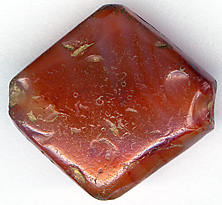
CARN 88 - 24 * 23 * 8 mm
|
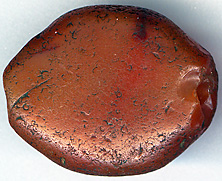
CARN 89 - 24 * 20 * 8 mm |
Click on pictures for larger image
|
|
|
|
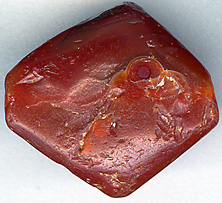
CARN 90 - 22 * 20 * 7 mm - SOLD
|
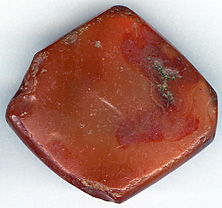
CARN 91 - 33 * 29 * 8 mm |
|
|
|
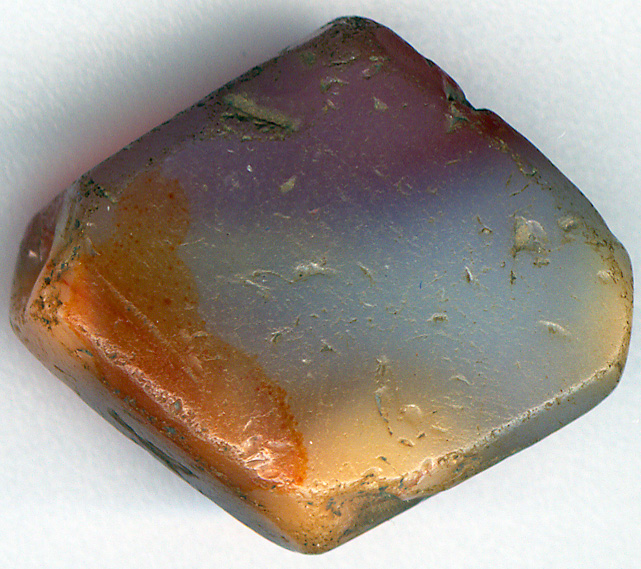
CARN 92 - 26 * 23 * 10 mm
|
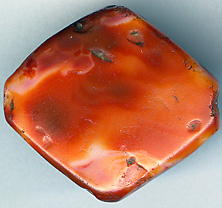
CARN 93 - 29 * 26 * 7 mm
|
|
|
|
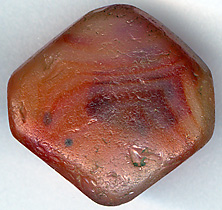
CARN 94 - 22 * 21 * 8 mm
|
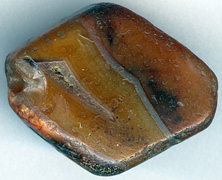
CARN 95 -
25 * 20 * 8,5 mm |
|
|
|
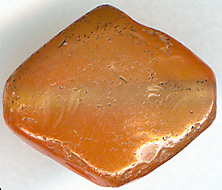
CARN 96 - 15 * 12 * 5 mm
|
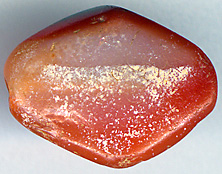
CARN 97 - 18 * 13 * 5 mm
|
|
|
|
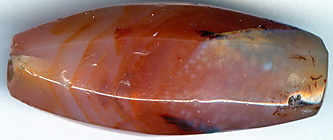
CARN 98 - 39 * 16 mm
|
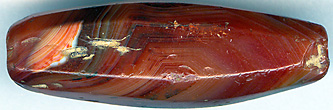
CARN 99 - 39 * 13 * 9 mm
|
|
Some of the beads above and below are thousands of
years old. Others are from the
times of Baba Ghor.
in the 15. Century. Again others are trade beads from
Idar Oberstein in the 18. Century:
How to tell the difference? Often
wear and tear is the only indicator of age because the
designs of these beads are ancient. They can be
traced back to Indus Culture. A comparison between the
bead designs below with
the bead shown in this Harappan link
will further substantiate this claim. It is unlikely that Baba Ghor and his followers
invented any new bead designs. Most probably, they did as
Muslim conquerors were best at all the new territories
they came to: sampling information and skills from the
already existing cultures. The production in Idar
Obersten again copied the Ghor beads to ensure a
steady demand from Africa. In this way, the Germans made
copies of Indus valley beads.
|
|
|
|
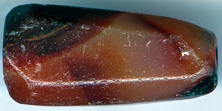
CARN 100 - 23 * 12 mm
|
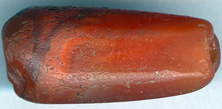
CARN 101 - 22 * 12 mm |
|
|
|
|
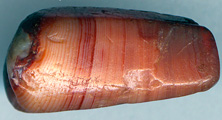
CARN 102 - 22 * 10 mm
|
|
|
|
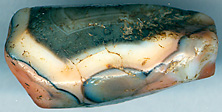
CARN 103 - 25 * 13 mm
|
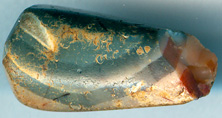
CARN 104 - 24 * 12 mm
|
|
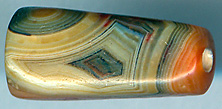
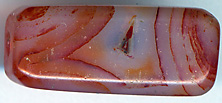
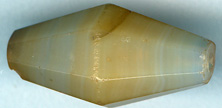
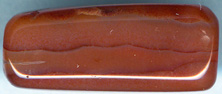
Baba Ghor beads?
How much wear and tear will carnelian beads have
after 500 years? My guess is that the beads above are
older than the Cambey Ghor period. The 6 beads below are
in my opinion more in sync with not thousands, but
hundreds of years of human time ravage.
|
|
|
|
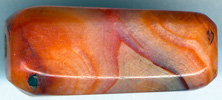
CARN 105 - 24 * 10 mm
|
CARN 106 - 19 * 8 mm |
|
|
|
CARN 107 -
25 * 11 mm
|
CARN 108 - 30 * 13 mm |
|
|
|
CARN 109 - 23 * 10 mm
|
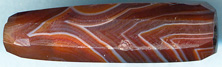
CARN 110 - 30 * 9 mm |
|
|
|
|
|
INDIAN SARD BEADS
Sard is like carnelian a variety of chalcedony. It is
however harder with 7 on the Mohr scale, whereas carnelian
centers around 6,5. Sard is as you can see below brownish yellow
in color.
|
|
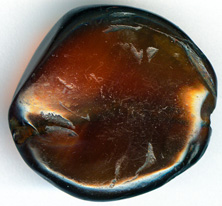
Click on picture for larger version
|
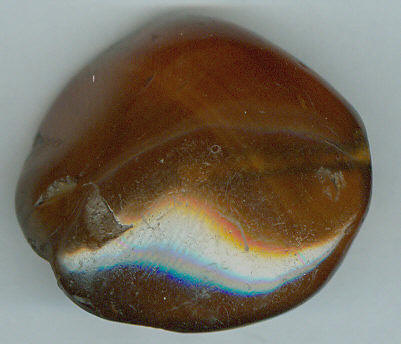
30 * 30 * 11 mm |
|
CARN - 111
Translucent sard bead from India. The shine in this bead is
very special.
Unfortunately the photo is not able to reflect it.
|
|
|
|
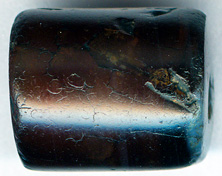 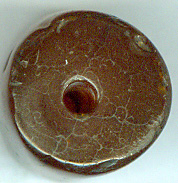
CARN 112 -
|
|
|