|
|
ZOOMORPHIC, HUMAN,
WEAPON & RELIGIOUS SYMBOL BEADS
This section showcases an array of beads whose
significance lies not merely in their material or color,
but notably in the expressive forms they take on.
Instead of the conventional geometric shapes typically
seen in ancient beadwork, such as barrels, spheres, or
convex forms, these beads take on the shapes of animals,
humans, symbols, and even weapons.
Horace Beck, in his book 'The Beads from Taxila',
proposes that certain patterns may carry specific
meanings. By this premise, the bead's design - whether
natural or etched, its material, its color, and its
shape can all contribute to a largely forgotten symbolic
language. This could be likened to the enduring
mudras
of Lord Buddha - a language of gestures understood
universally by Buddhists, transcending culture, spoken
language, and geographical distance along the Silk Road,
from Syria to China, and from the Himalayas to Sri
Lanka.
It's plausible to suggest that beads might have been
part of a similar iconographic system, developed out of
the need for a universally comprehensible 'lingua
franca' across expansive geographical regions with
shared cultural identities. Both mudras and these
symbolic beads could have functioned as social glue,
fostering a sense of unity across vast distances. In
this light, it's conceivable that this shared
iconography of sign and bead language was birthed not in
the expansive Ashokan Empire, but rather as early as in
the Indus Valley civilization, a culture that at its
peak encompassed an area of 1.5 million kmē. Later, with
the expansion of Islam, beads found widespread
distribution
throughout the vast Islamic world.
|
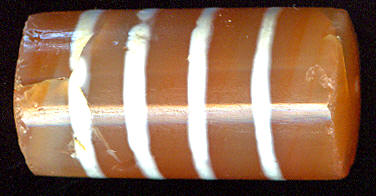 |
A peculiar illustration of how a forgotten
language is supplanted with a novel context of significance is
observable in the reclassification of etched beads with stripes. In
modern internet parlance, these are frequently referred to as 'military
beads', a name inspired seemingly by the vague resemblance these stripes
bear to those used on military uniforms.
|
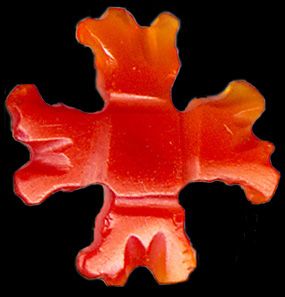
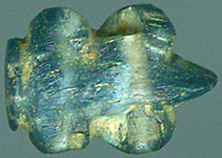
When we consider shaped
beads such as the carnelian cross or the crystal lion
featured below, deducing their symbolic meaning and
historical context becomes slightly more
straightforward. Nevertheless, while the following
theories are grounded in fragments of evidence, they
remain speculative.
|
The beads in
my collection
are now for sale
Inquire
through bead ID
for price
|
|
| |
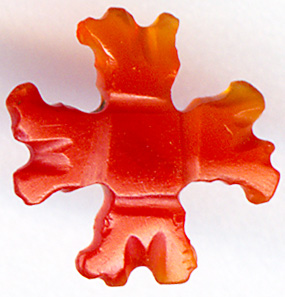
BF 1
- 12 *
12 * 3 mm
Origin: Taxilla - Pakistan - not for sale
The workmanship
in this little bead figure is awesome!
Also note the
strong and uniform carnelian color.
|
The
beads
are for
sale
Inquire
through
bead ID
for price
|
|
The
Buddhist Cross - The Cross of Taxila
Interestingly, the cross was seemingly a common
signifying symbol on ancient etched beads, particularly
in areas that were ancient Buddhist strongholds such as
Pakistan
in the west and Burma
in the East.
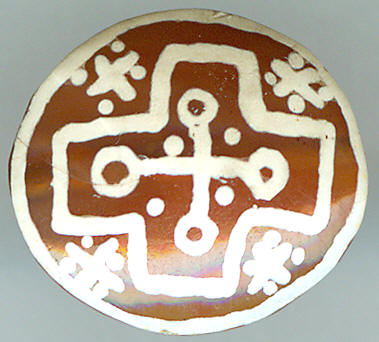
Taxila, Pakistan |
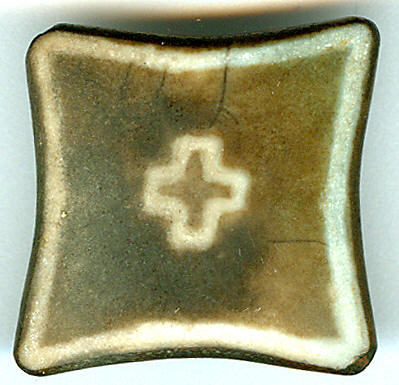
Matehtilay,
Burma |
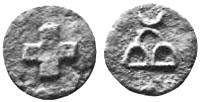
Coin from the Buddhist
capital, Taxila |
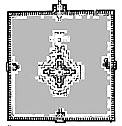
Cruciform stupa structure
of Somapura, India |
This
symbol, however, is incredibly rare to encounter in the
form of a carved Buddhist bead within India itself. The
rarity of this form is so pronounced that it goes
unmentioned in Shantaram Deo's comprehensive work
"Indian Beads," which describes a broad variety of
Indian amulet and pendant bead-shapes in detail (pages
79 to 94) but makes no reference to the existence of a
cross-shaped bead amulet.
 |
|
Christianity Meets Buddhism at the Crossroads
The remarkable cross bead showcased above, among
other evidences, points towards a hidden
connection between Bactrian Buddhism and
Christianity.
Although this is not the appropriate venue to
delve into this connection in detail, it's
noteworthy to mention that there's abundant
evidence suggesting Christianity may be a
social, western adaptation of Eastern Buddhist
philosophy, which existed in the form of the
Jataka Tales along the trade routes extending to
Syria and beyond.
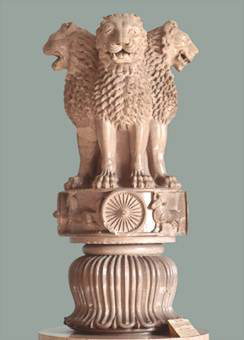
In the Buddhist context, the cross likely does
not symbolize the suffering of Christ. Instead,
it likely represents the dissemination of the
Buddha's first
four noble truths in all four directions of the
world, as mirrored in the depiction of the
Ashoka Lions.
|
Ashoka's four lions - Museum in Sarnath.These Ashoka Lions were erected on 15-meter tall pillars everywhere in Ashoka's vast Empire.
|
|
|
|
|
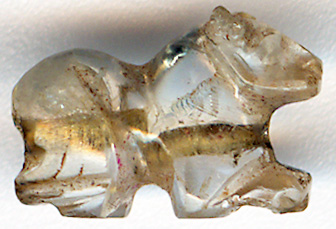
BF 2
- 12 *
9 * 5 mm
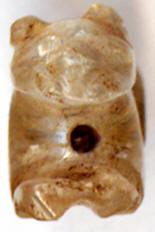
Lion -
Crystal
Was
this lion a part of an
Ashokan Buddhist iconography?
|
|
A predilection for
ornamentation has been inherent to humans since the era
of the Neanderthals. This penchant for adornment was
embedded in a milieu of symbolic and magical thought.
It's not beyond the realm of possibility that the
amuletic potency of carved beads was associated with
their specific form. For instance, this finely crafted
crystal lion may have been intended to endow its bearer
with the lion's symbolic attributes of authority and
courage.
Preceding the advent of Christianity, Buddhism embodied
the concept of the Trinity in the form of the Tri-Ratna
or "Three Jewels." This triune principle represents the
Buddha, his teachings (Dharma), and the monastic
community (Sangha). The act of "taking refuge" in these
Three Jewels is a fundamental aspect of Buddhist
commitment and ordination ceremonies:
Buddham Sharanam Gacchāmi: I go for refuge to the
Buddha.
Dharmam Sharanam Gacchāmi: I go for refuge to the
Dharma.
Sangham Sharanam Gacchāmi: I go for refuge to the
Sangha.
These proclamations embody a personal commitment to
follow the Buddhist path. The Buddha signifies the
enlightened one who found the path; the Dharma
encompasses his teachings that outline this path; and
the Sangha refers to the community of monks and nuns who
live according to the Dharma and provide guidance to the
lay community. Thus, this Buddhist 'Trinity' is an
interplay of wisdom, practice, and community.
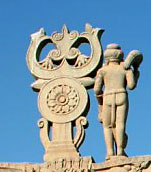
The 'Triratna'
From Ashoka's famous
stupa in
Sanchi
|
|
|
|
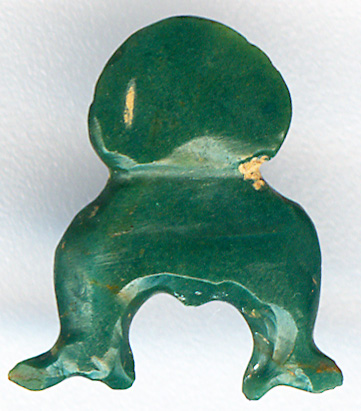
BF 15 -
16 * 14 * 3,5 mm
|
|
|
|
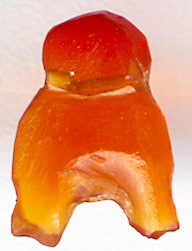
BF 16 -
10 * 7 * 2 mm
|
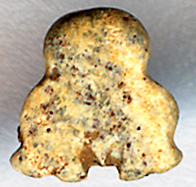
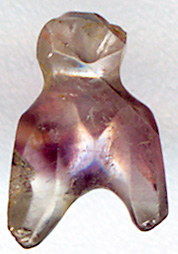
Triratna Beads
BF 17 -
7 * 7 * 2 mm |
BF 18 -
10 * 7 * 4 mm
|
|
Now again let us take a look at the cross bead:
In the understanding
light of the Triratna we now can se how this cross bead
also consists of four Triratnas, pointing in all four
directions of the world like King Ashoka's famous Lions.
HINDU BEADS |
|
|
|
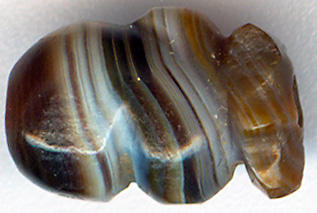
BF 3 -
13 * 8 * 6 mm (Burma)
Bull - agate
|
|
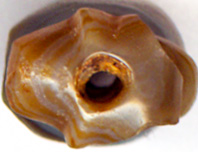
Pictured above is a
prevalent symbol in Hindu culture: Nandi, the bull, which is
commonly depicted in association with Lord Shiva. It's crucial
to remember that India was home to both Hindu and Buddhist
cultures, even during the pinnacle of Emperor Ashoka's rule.
Nandi, as Shiva's loyal steed, serves as a reminder of the
enduring presence of Hindu traditions and practices within the
complex tapestry of India's spiritual history. This coexistence
of religious beliefs during Ashoka's reign highlights the
remarkable religious pluralism characteristic of the Indian
subcontinent at that time.
|
|
|
|
BF 4 -
12 * 10 * 4 mm
Kaushambi -
Allahabad UP
|
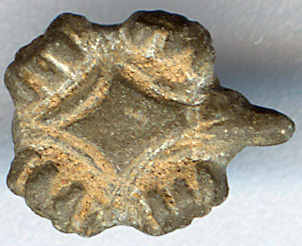 |
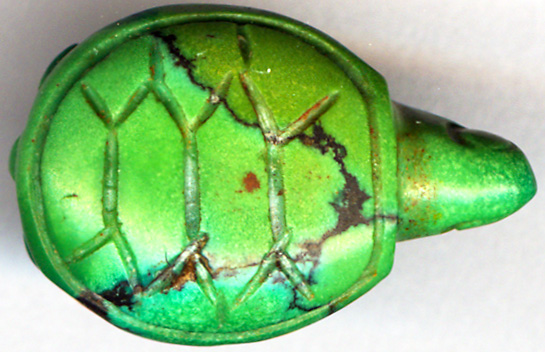
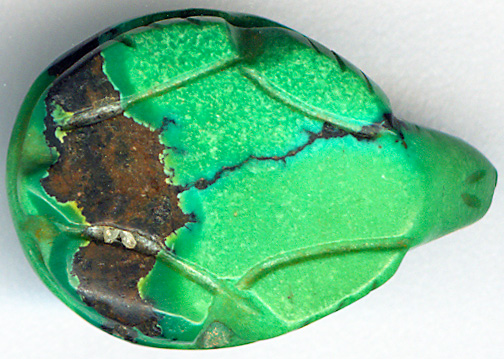
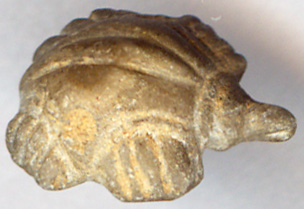
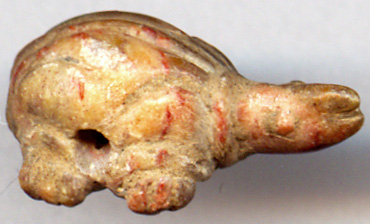
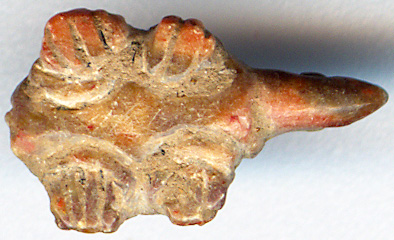
Pictured above and
below are exquisitely carved tortoise beads in
immaculate condition. The tortoise is recognized as an
avatar of Lord Vishnu, the preserver and protector of
the universe. Lord Vishnu maintains the cosmic order, a
divine duty that a virtuous king is expected to mirror.
Hence, a king upholding peace and justice in his kingdom
is regarded as an embodiment of Vishnu. These tortoise
beads, therefore, may symbolize this high ideal, serving
as a constant reminder of a ruler's duty towards his
subjects and the universe.
|
|
|
|
BF 5 -
16 * 9 * 5 mm
|
 |
|
|
|
|
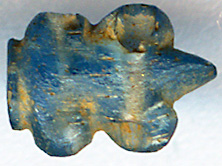
BF 6 -
9 * 6 * 2 mm
|
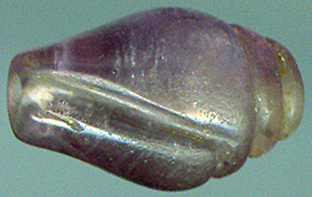
BF 7 -
12 * 7 mm |
|
On the left, we see
a small but stunning tortoise bead from
Sri
Lanka. It's crafted from a nearly flawless piece of
sapphire. Most likely, this bead has its origins in the
Hindu tradition.
On the right, we have a captivating amethyst bead carved
in the likeness of a conch shell. The conch shell
carries historical connotations of war and victory. In
bygone eras, it served as a war trumpet. Even today, it
retains its significance and is used in various
religious ceremonies.
|
|
|
|
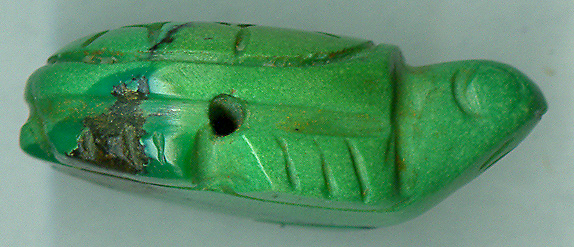
BF 8 -
22 * 14 * 7 mm
Wonderful Turquoise Tortoise -
This bead is antique, but not ancient.
Click on pictures for larger version
of hole
|
|
|
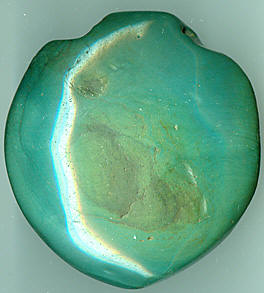
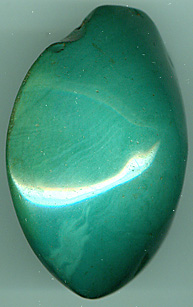
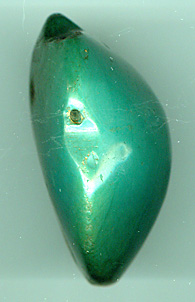
Click on pictures for larger
image |
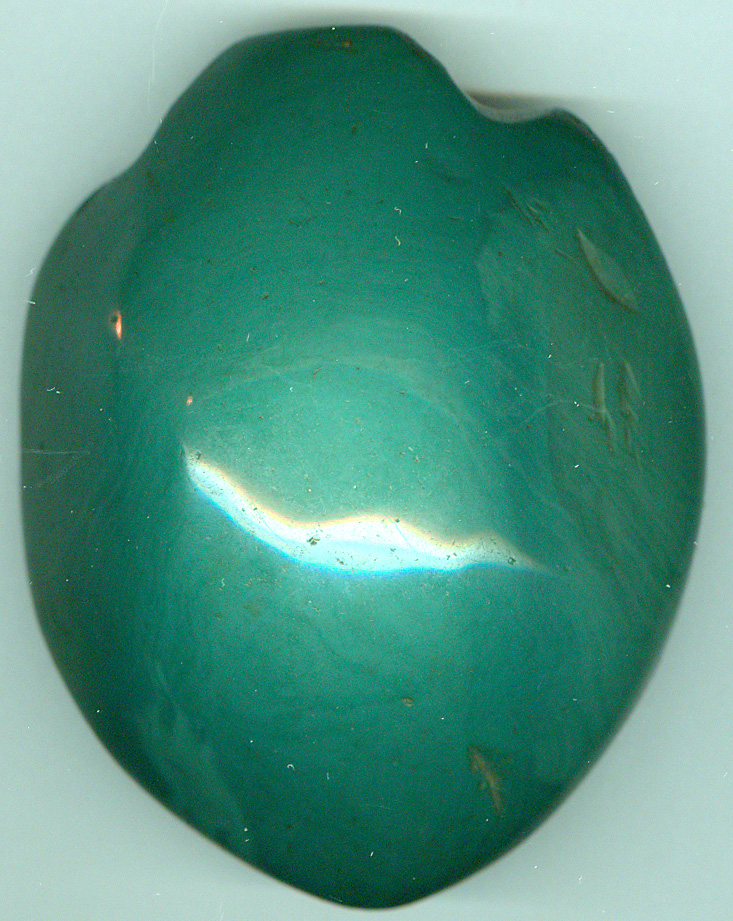
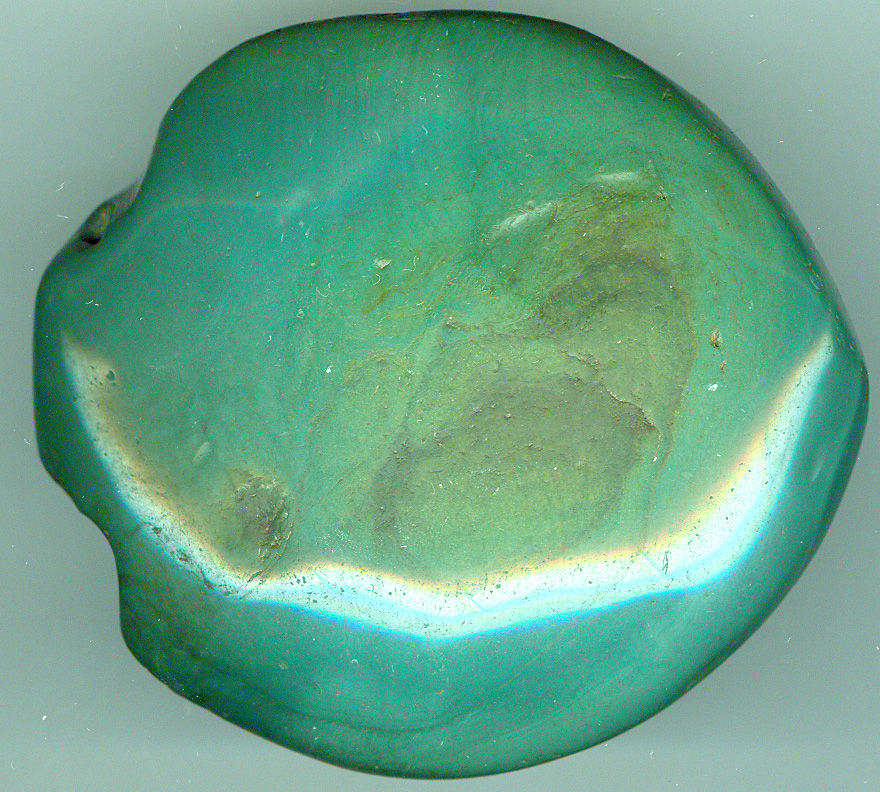
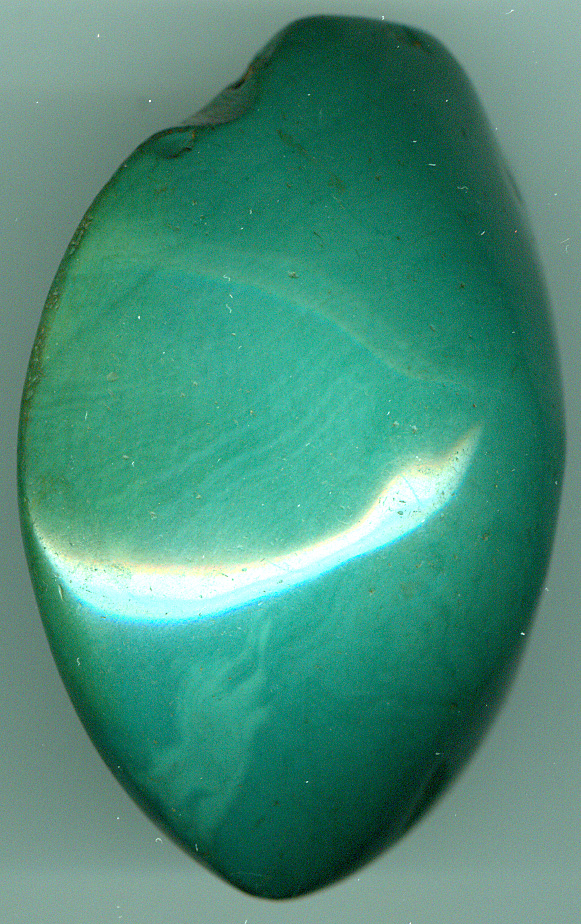
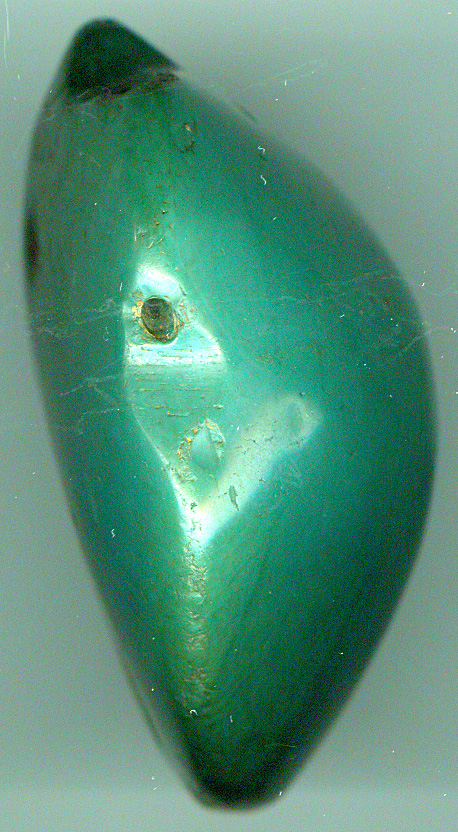
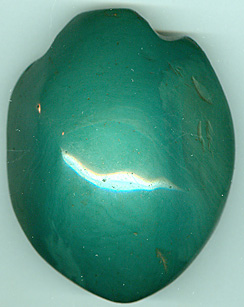
ROYALB 1
- 74 * 64 * 36 mm
|
I have aptly dubbed this monumental bead "The King
Bead."
The bead you see above is remarkably singular, and as
far as I can discern, it may very well be the only one
of its kind. Notice how the reverse side of the bead has
altered color over generations, a testament to prolonged
contact with human skin. This patina, lovingly crafted
by the sweat of kings, is truly fascinating.
This striking bead doesn't command attention due to
intricate patterns or color variations. In fact, its
charm lies in its uniformity. The purity and evenness of
the material is an aesthetic feature in its own right.
Finding a uniformly pattern-less
Chrysoprase
Jasper stone of such magnitude, without any blemish, is
in itself a rarity! This vibrant green stone is a gem,
seldom do you encounter a semi-precious stone of such a
large size that possesses such purity and homogeneity.
The form of this exceptional ancient bead evokes an
abstract, stylized tortoise, and this is not mere
chance. The tortoise is an avatar of Lord Vishnu, the
deity that maintains balance on Earth and in human
civilizations. This very role also befits a virtuous
king. I conjecture that this grand bead may have served
as a
Royal Insignia , worn by a succession of Hindu kings in
ancient India. This theory can be corroborated by the
ancient text, Brihatsamhita, which stipulates that a
king should keep a tortoise as an auspicious symbol (Distinctive
Beads in Ancient India, Maurya Jyotsna p.47).
|
|
|
|
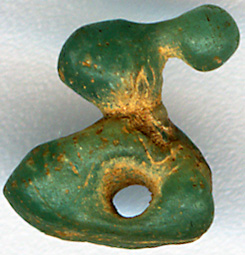
BF 9 -
10 *
9 * 4 mm
A Bird in glass
|
|
|
|
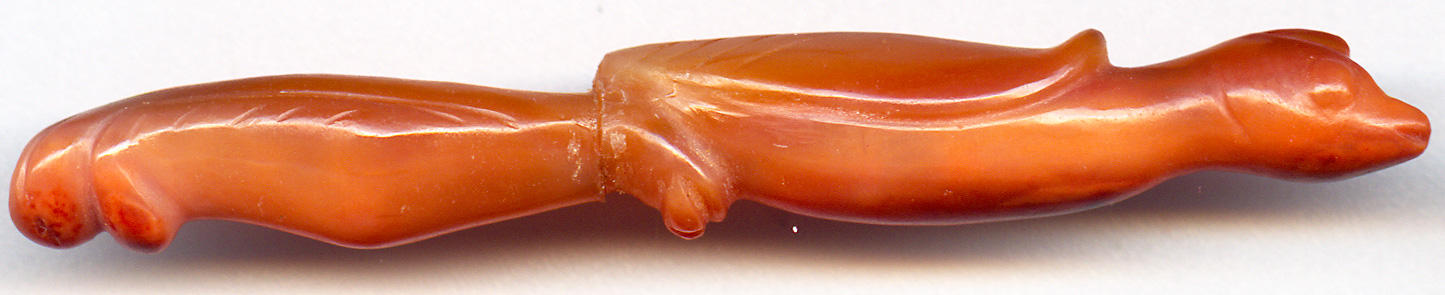
BF 10 -
61 * 8,5 * 7,5 mm - (Brm 17)
|
As one can see on the scan, this
fragile peacock bead is broken and has been repaired. It
is however still a marvelous piece of art.
|
|
|
|
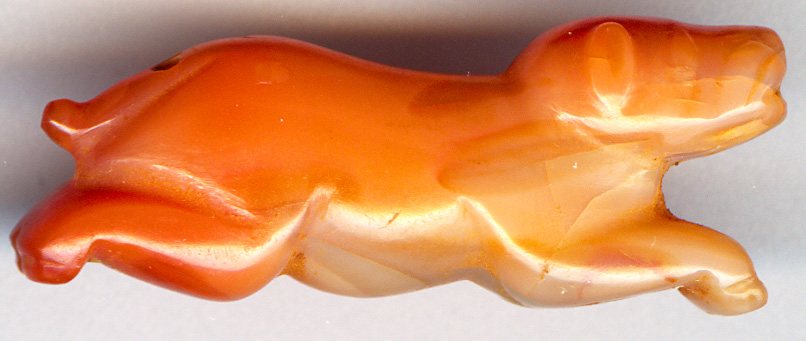
BF
11 -
32 * 12 * 8 mm
(Brm 20)
|
|
|
|
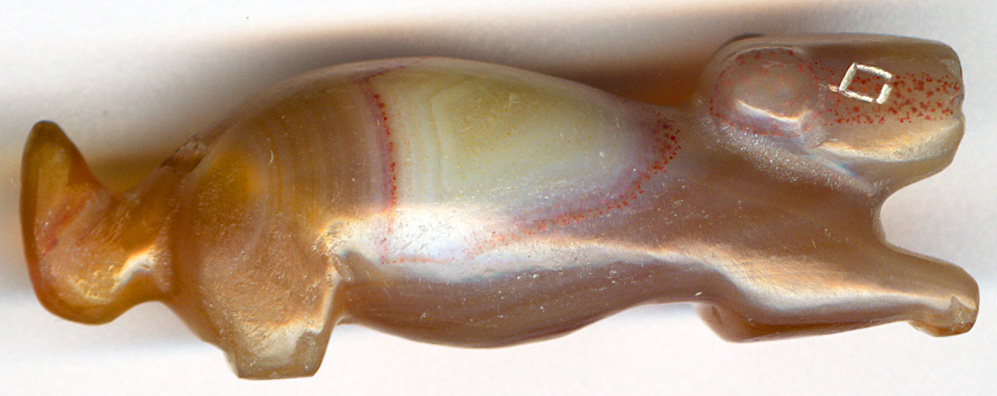
BF 12 -
40 * 13 * 10 mm
(Brm 19)
|
|
|
|
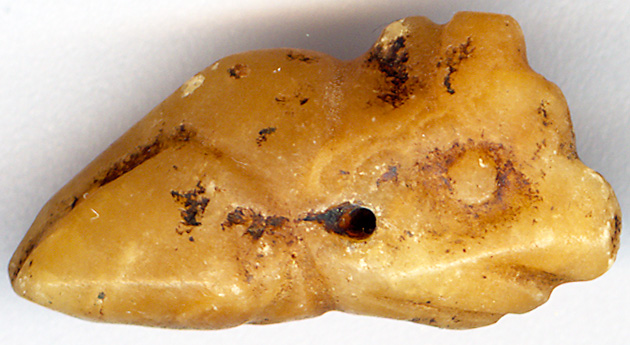
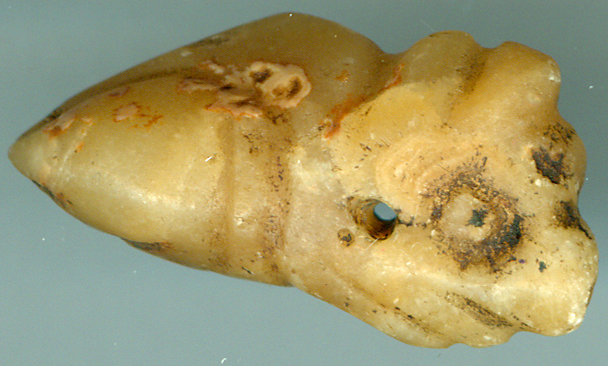
BF 13 -
27 * 18 * 11 mm - (Brm 81)
Click on picture
|
|
|
Huge Jade tiger
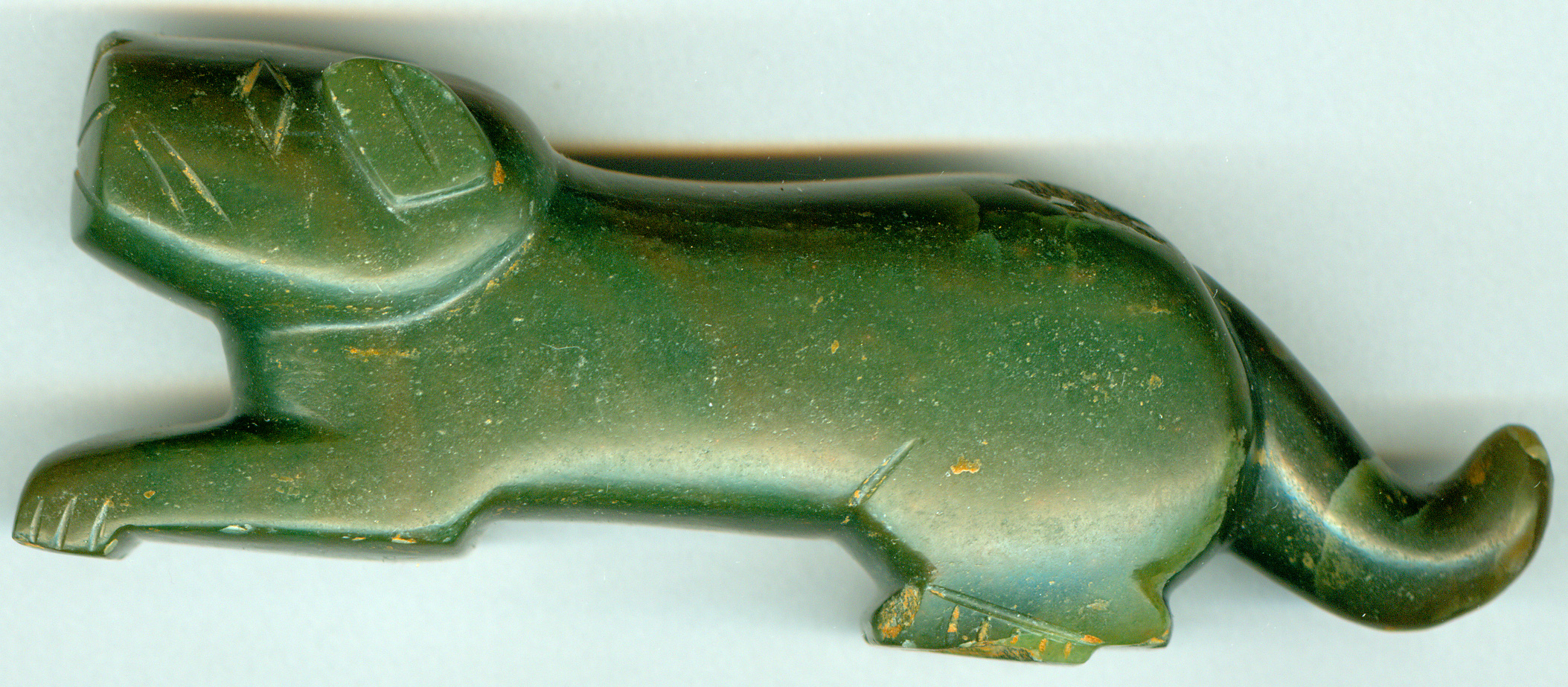
BF 14 -
-
91 * 30 * 23 mm - (Brm
18)
Click on picture
SOLD
There are a lot of well crafted fake copies of these huge zoomorphic tiger or lion beads,
but all doubt disappears when you hold an original like this one in your hand.
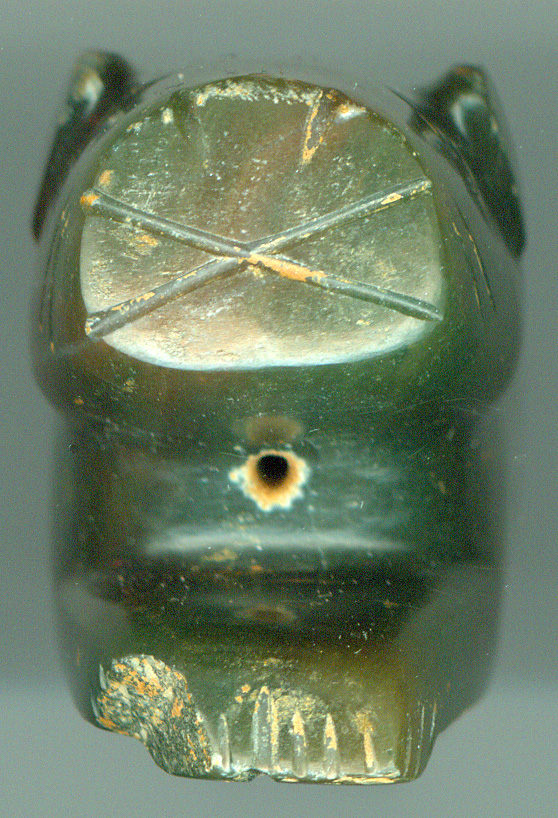
The tiger bead seen from the front
|
|
|
|
|
|
|
|
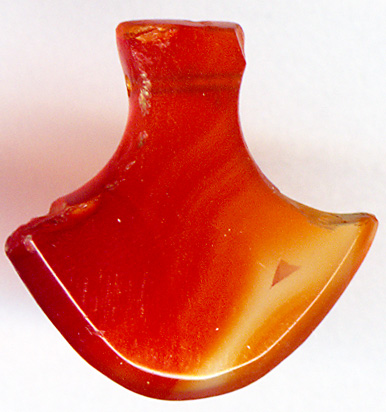
BF 19 -
16 * 16 * 3 mm
|
|
|
|
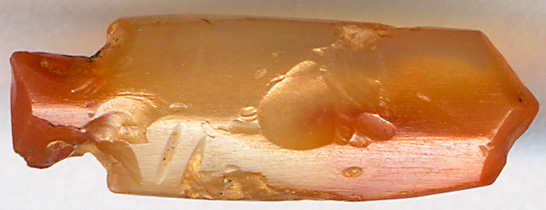
BF 20 -
23 * 8 * 4 mm
A rare carnelian Roman Gladius
sword pendant bead
|
|
|
|
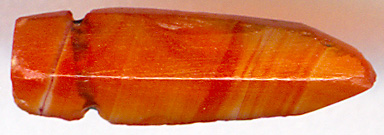
BF 21 -
15 * 5 * 2 mm
Roman
sword pendant bead
Amadalpur - Haryana - India
|
|
|
|
Bow shaped carnelian bead
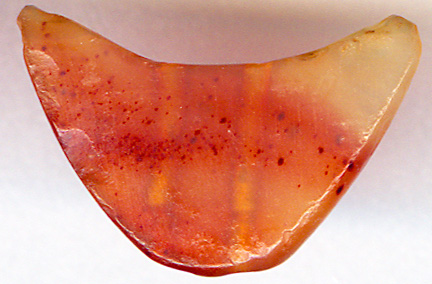
BF 22 - 17 * 9 * 3 mm
|
|
|
|
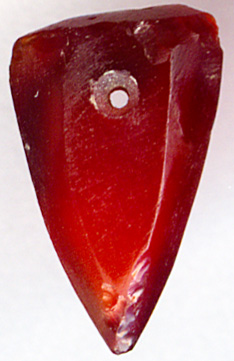
BF 23 -
14 * 9 * 4 mm
|
|
|
|
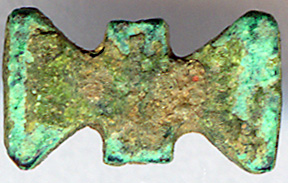
BF 24 -
12 * 7 * 2,5 mm
|
|
|
|
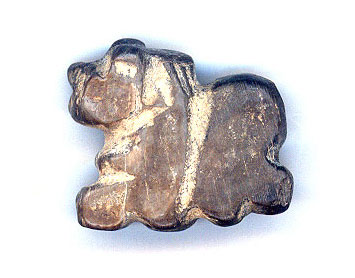 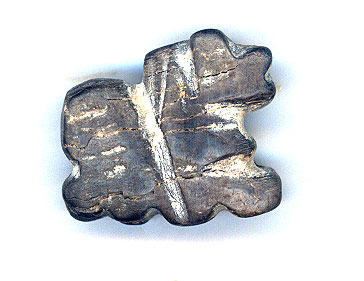
BF 25 - 18 * 15 * 6 mm
Terra cotta Lion
|
Old Bohra weapon beads from South India
Presented here are fascinating weapon beads that likely
hail from South India. They depict swords representative of the
Bohra Muslim culture prevalent in southern and central India.
Based on their style and condition, these beads are estimated to
be a few centuries old.
|
|
|
|
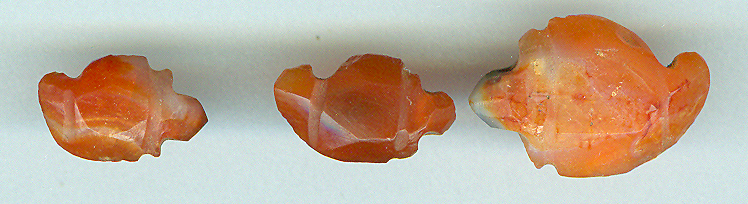
Largest: 21 * 14 * 6 mm -
click on image for larger picture
Old Bohra sword beads
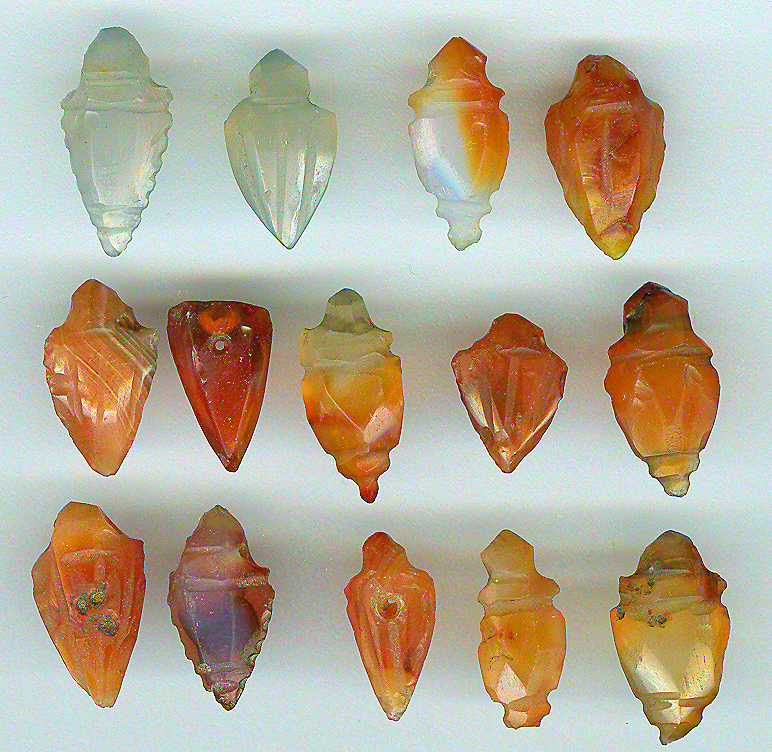
BF 26 -
Average size: 19 * 10 * 5 mm - click on image for larger picture
See: Beads from Sri Lanka
|
|
|
|
|
|
|