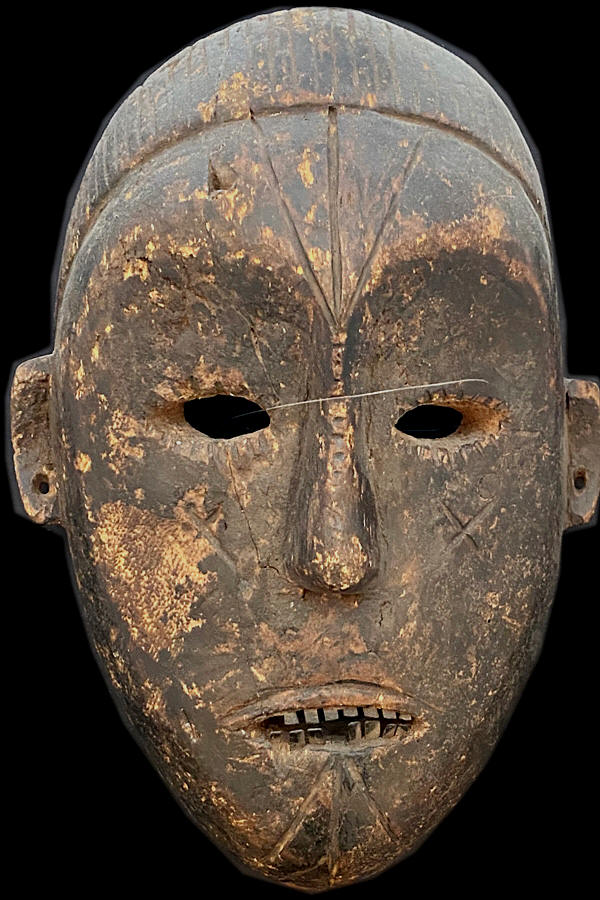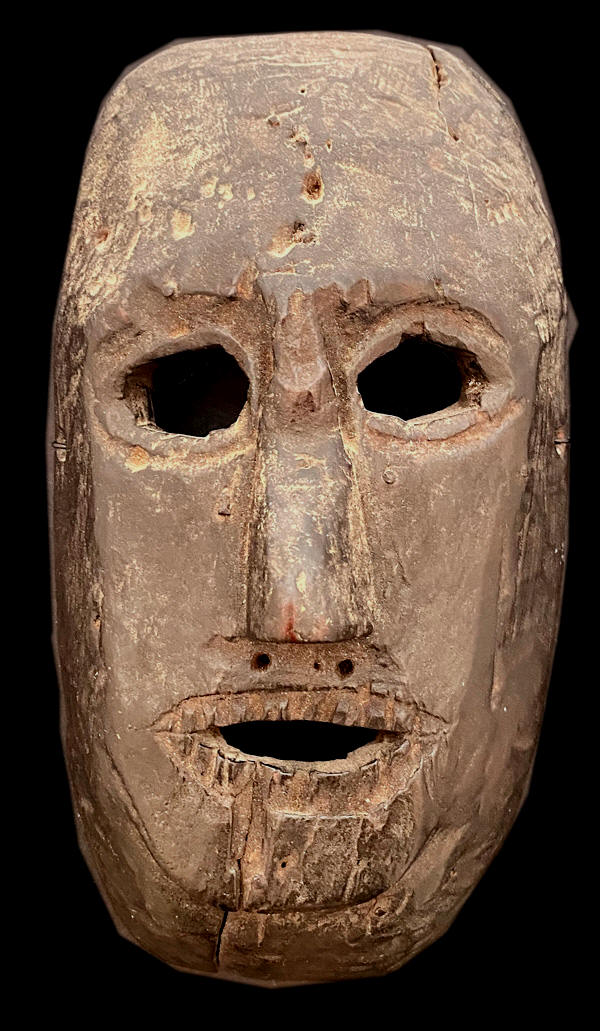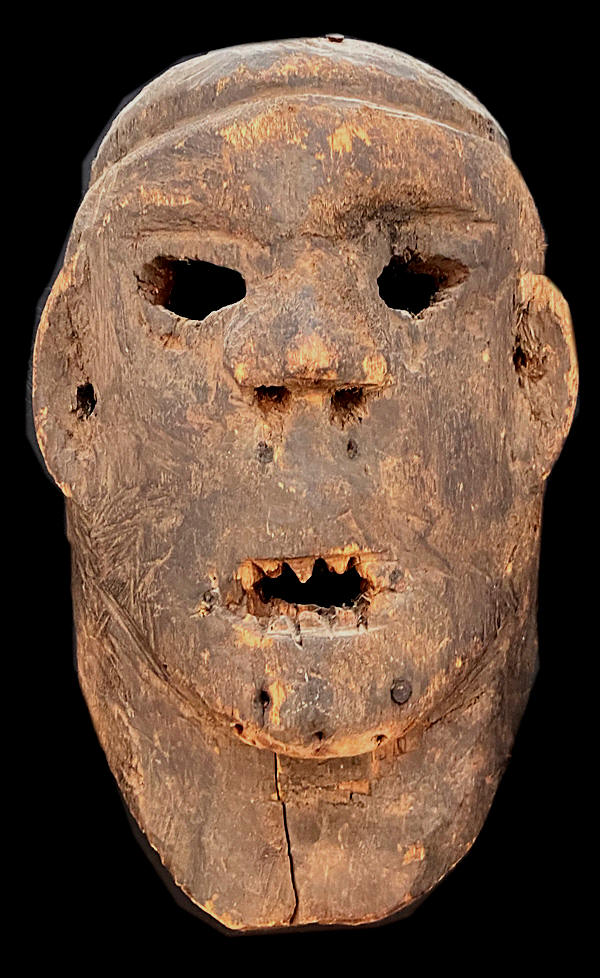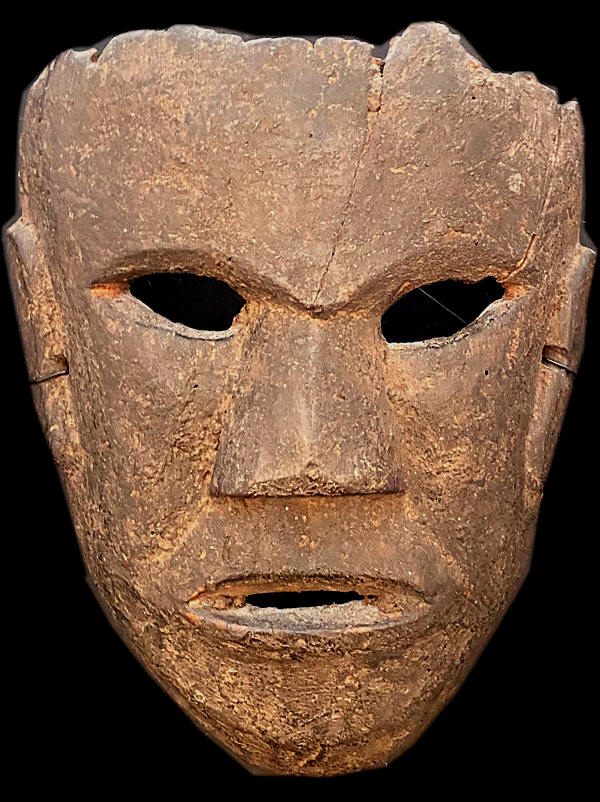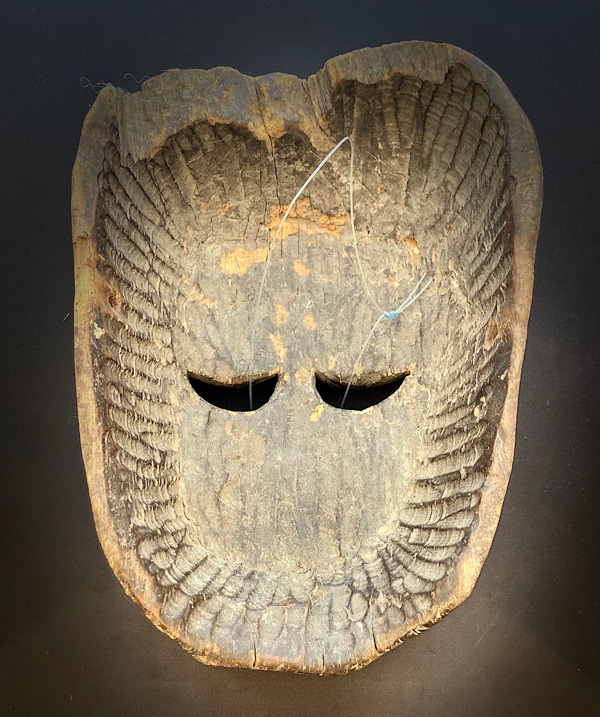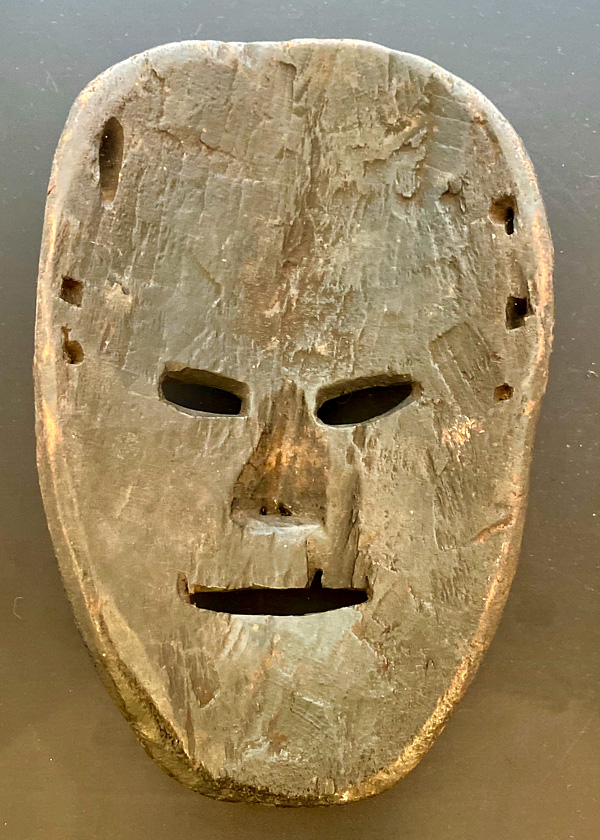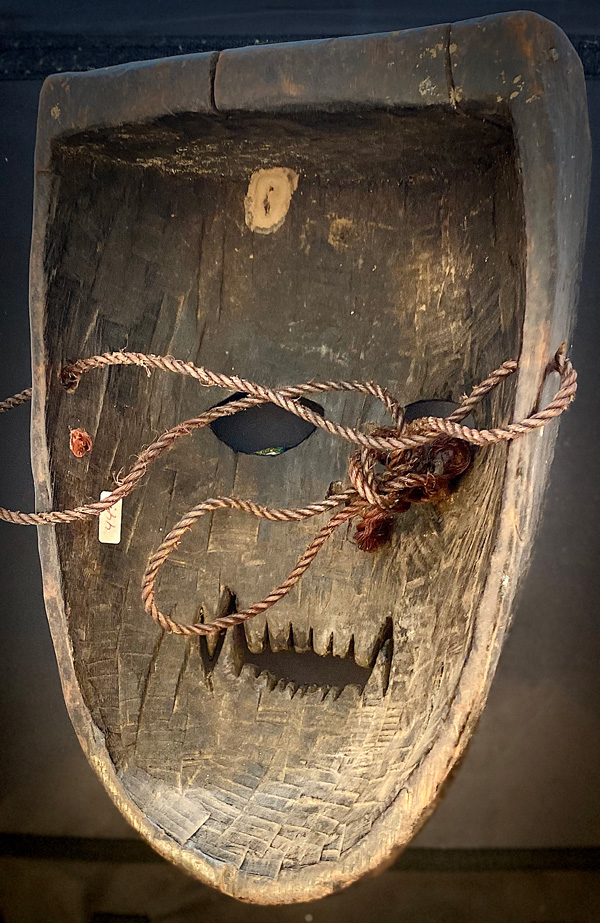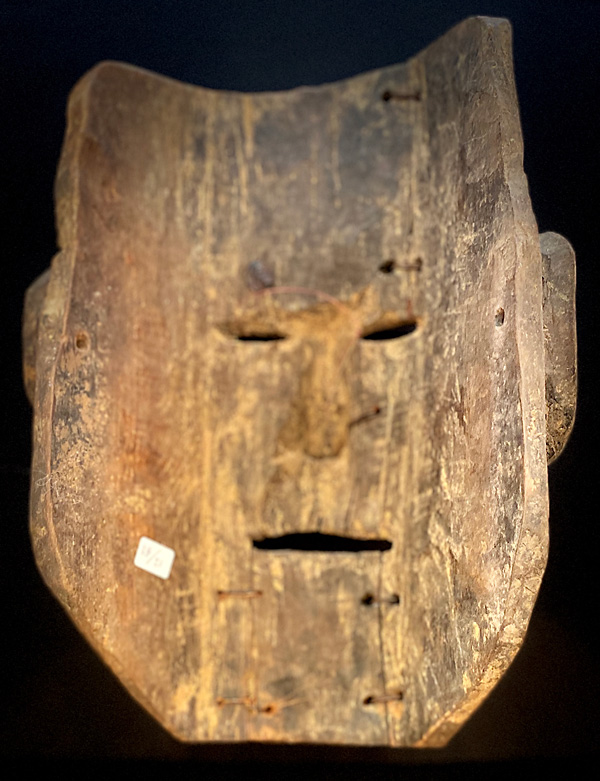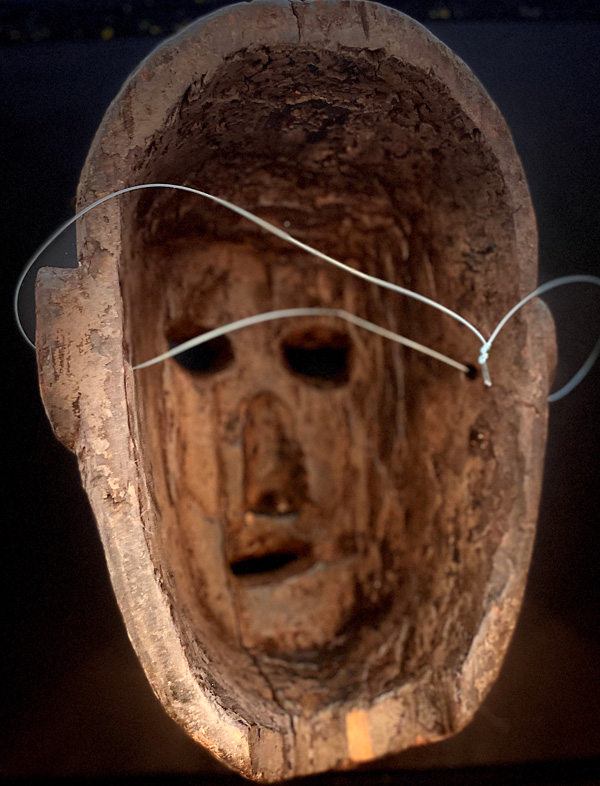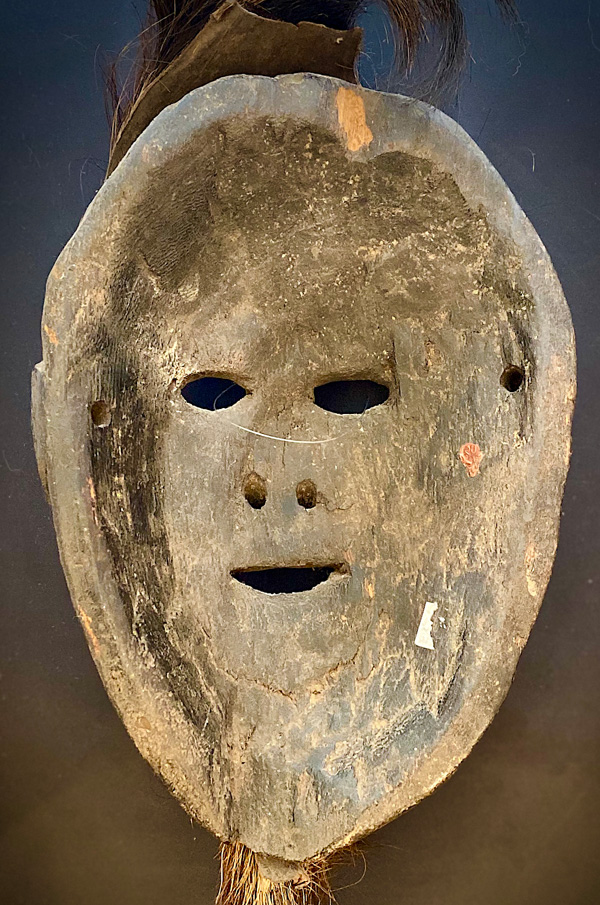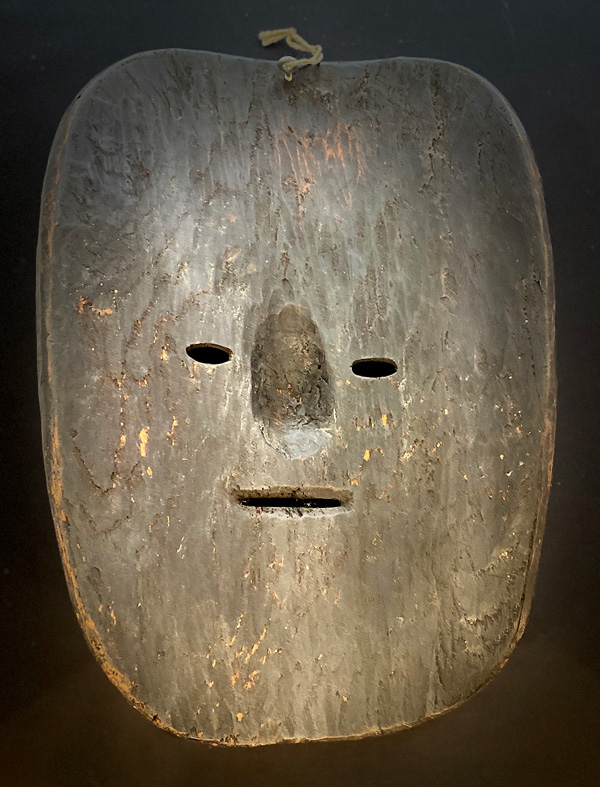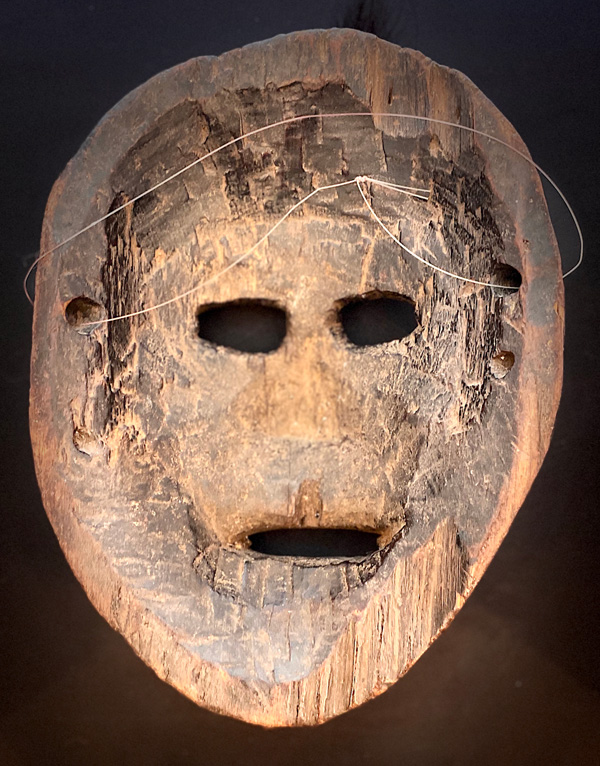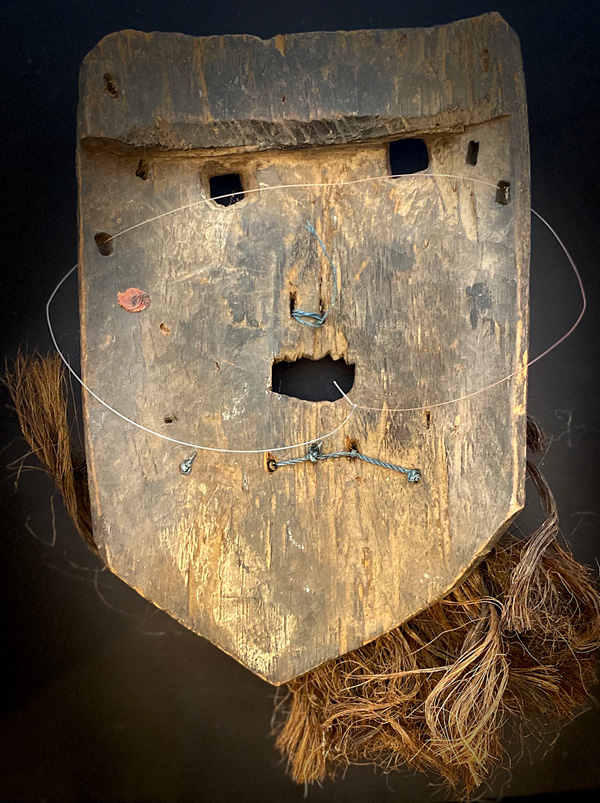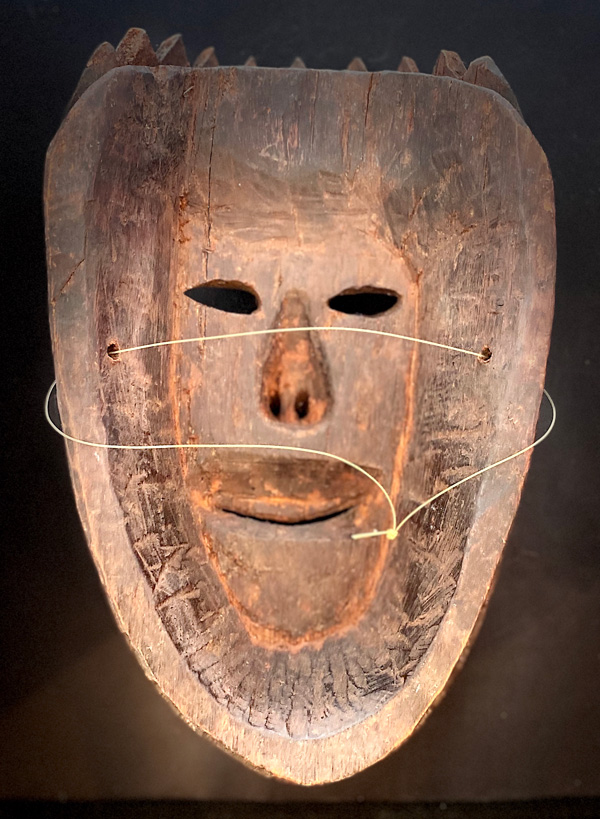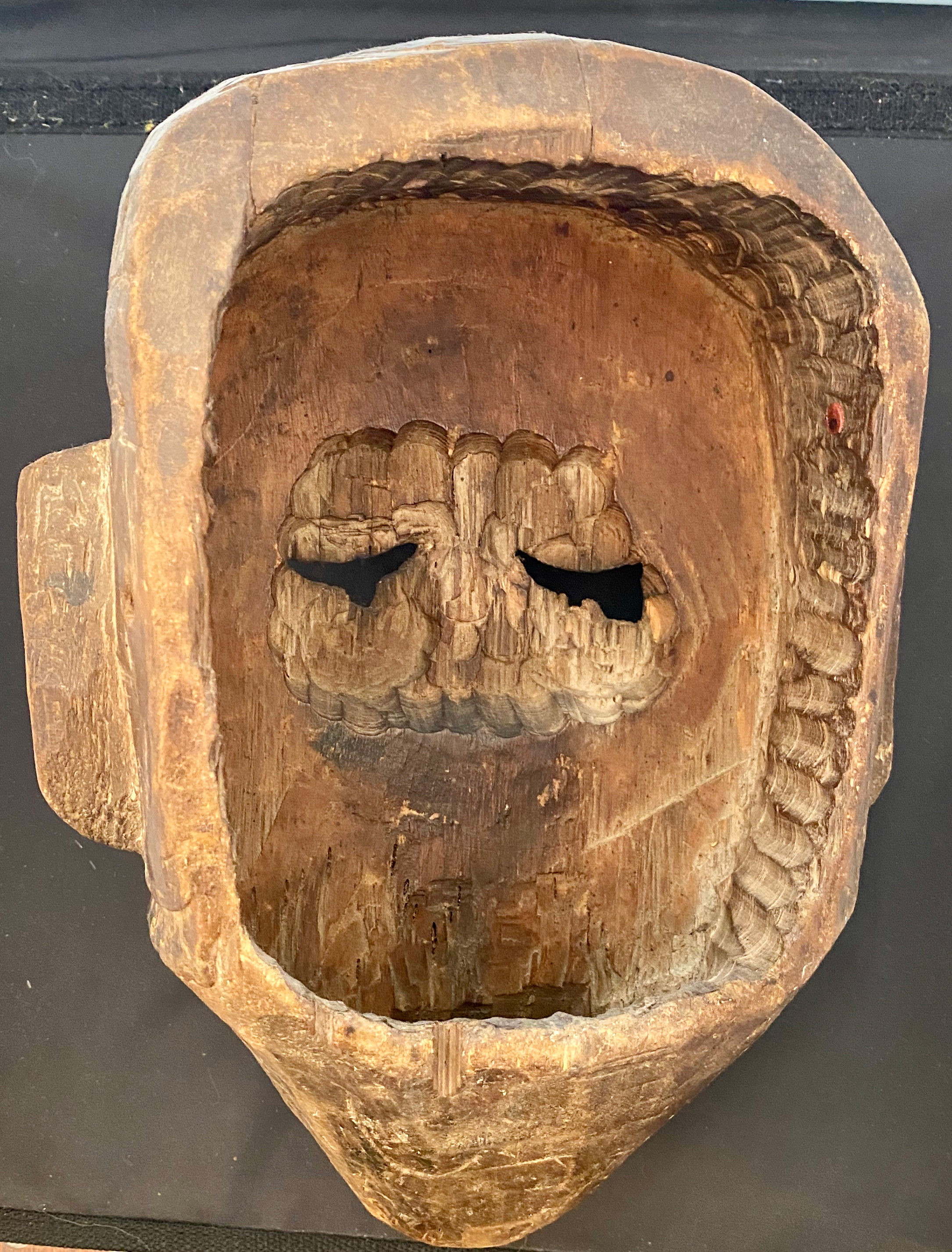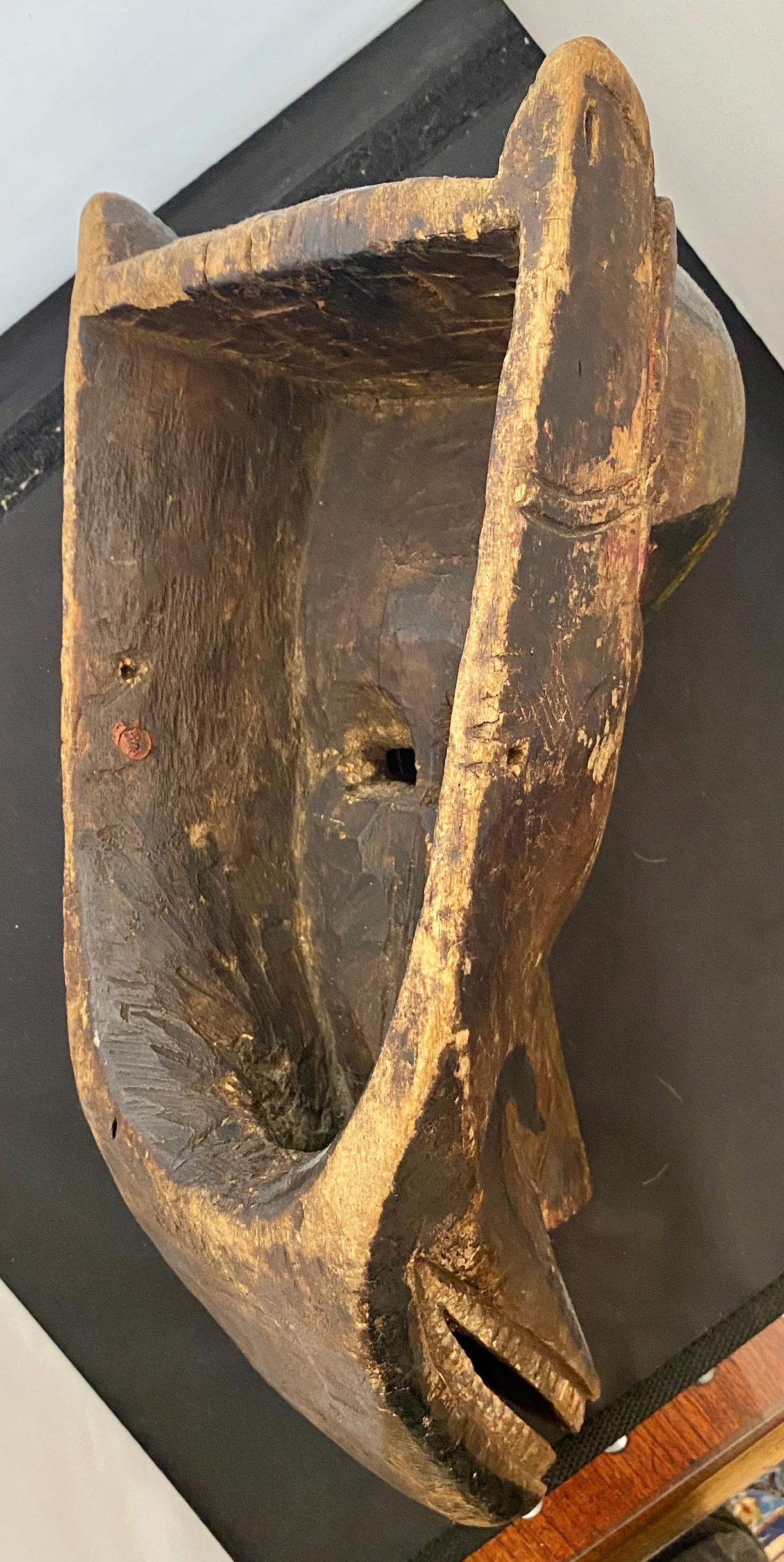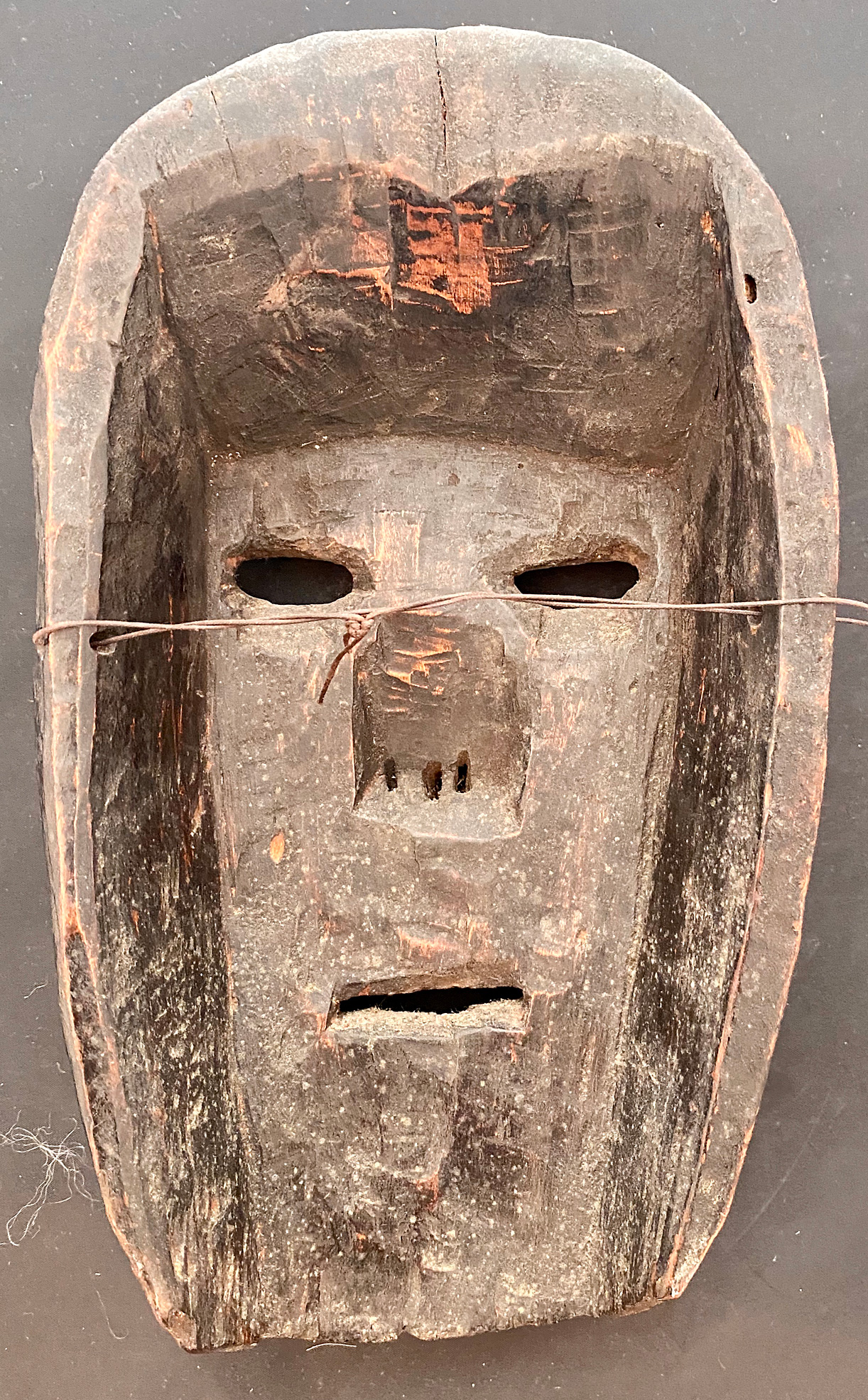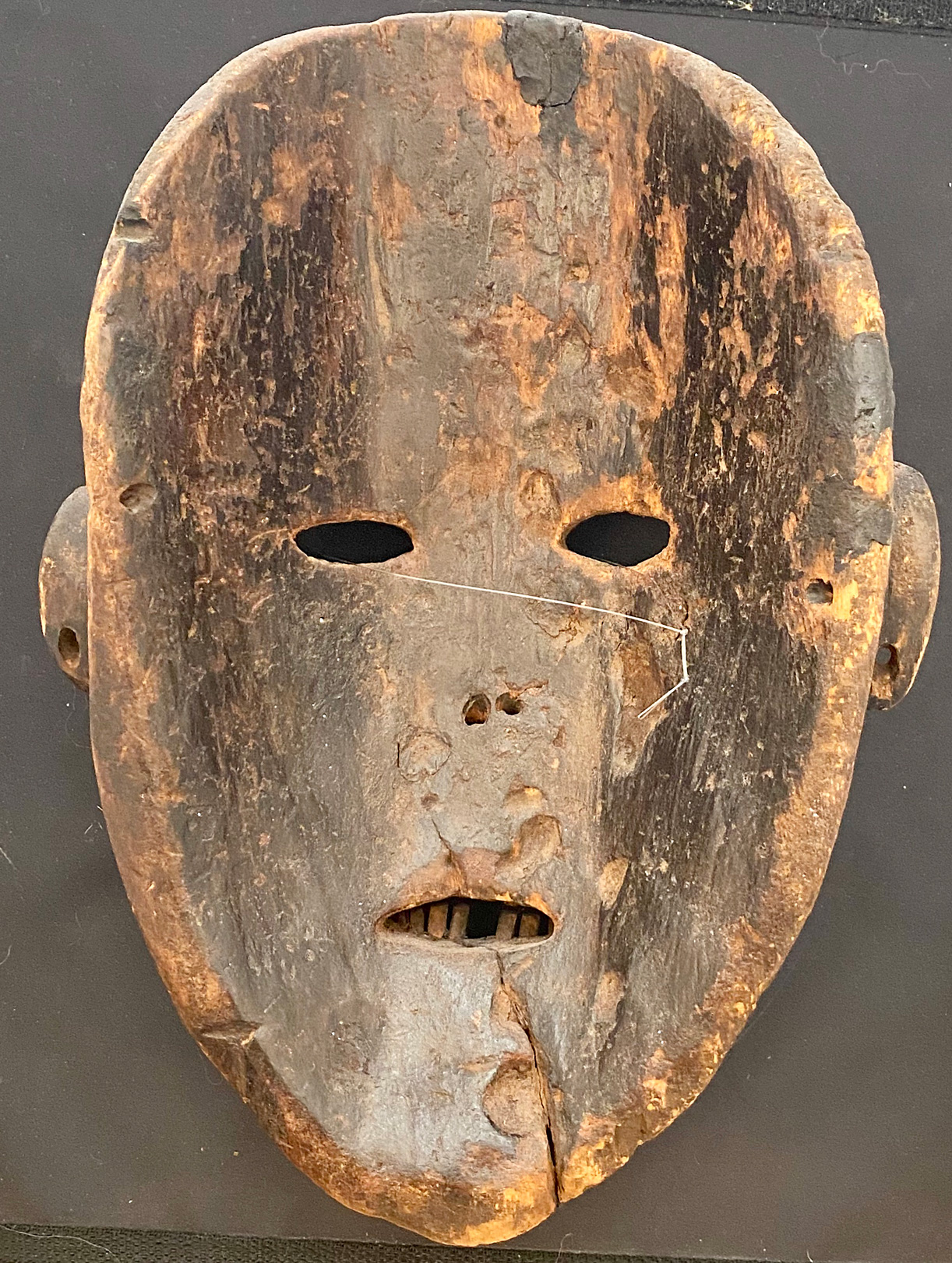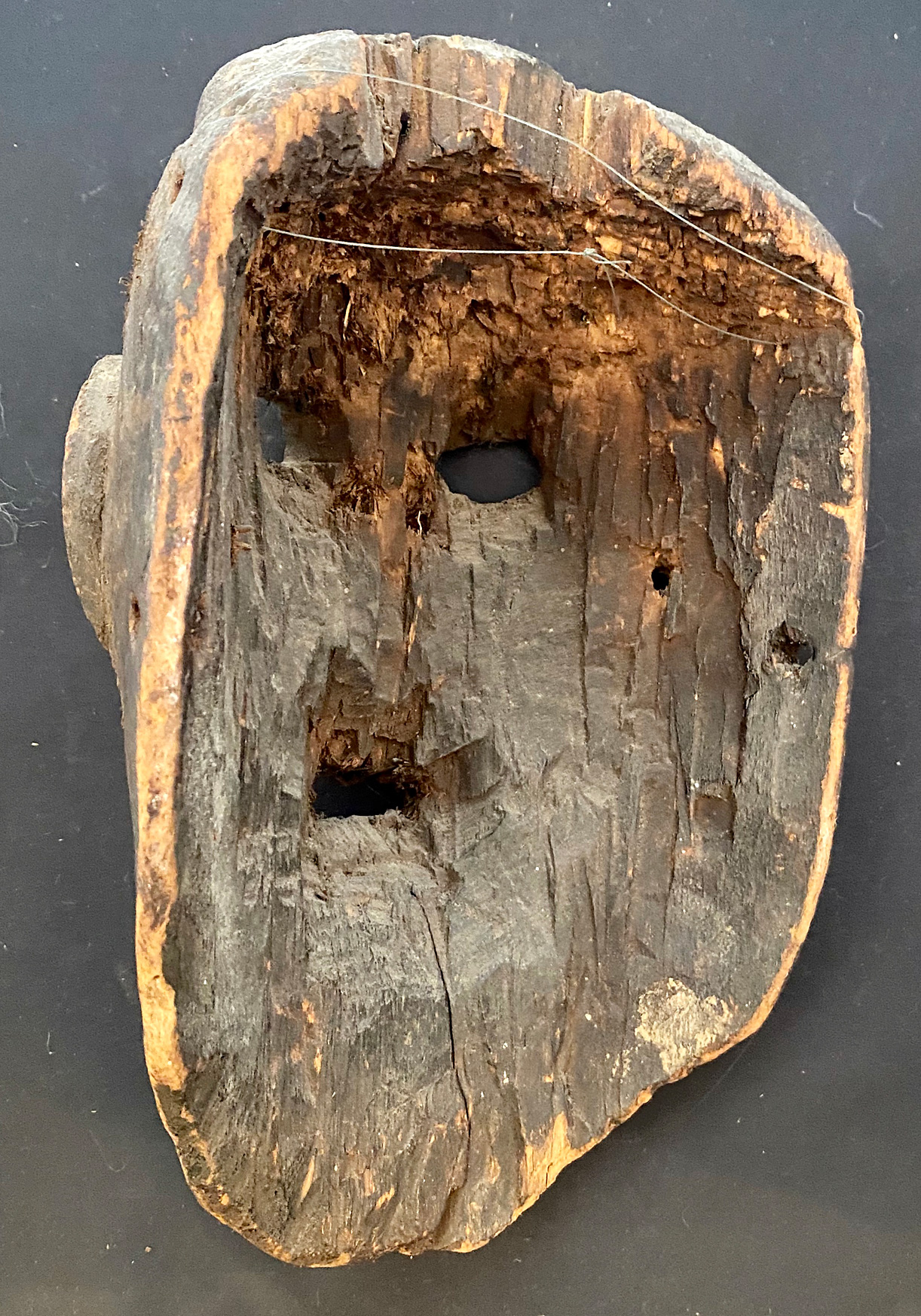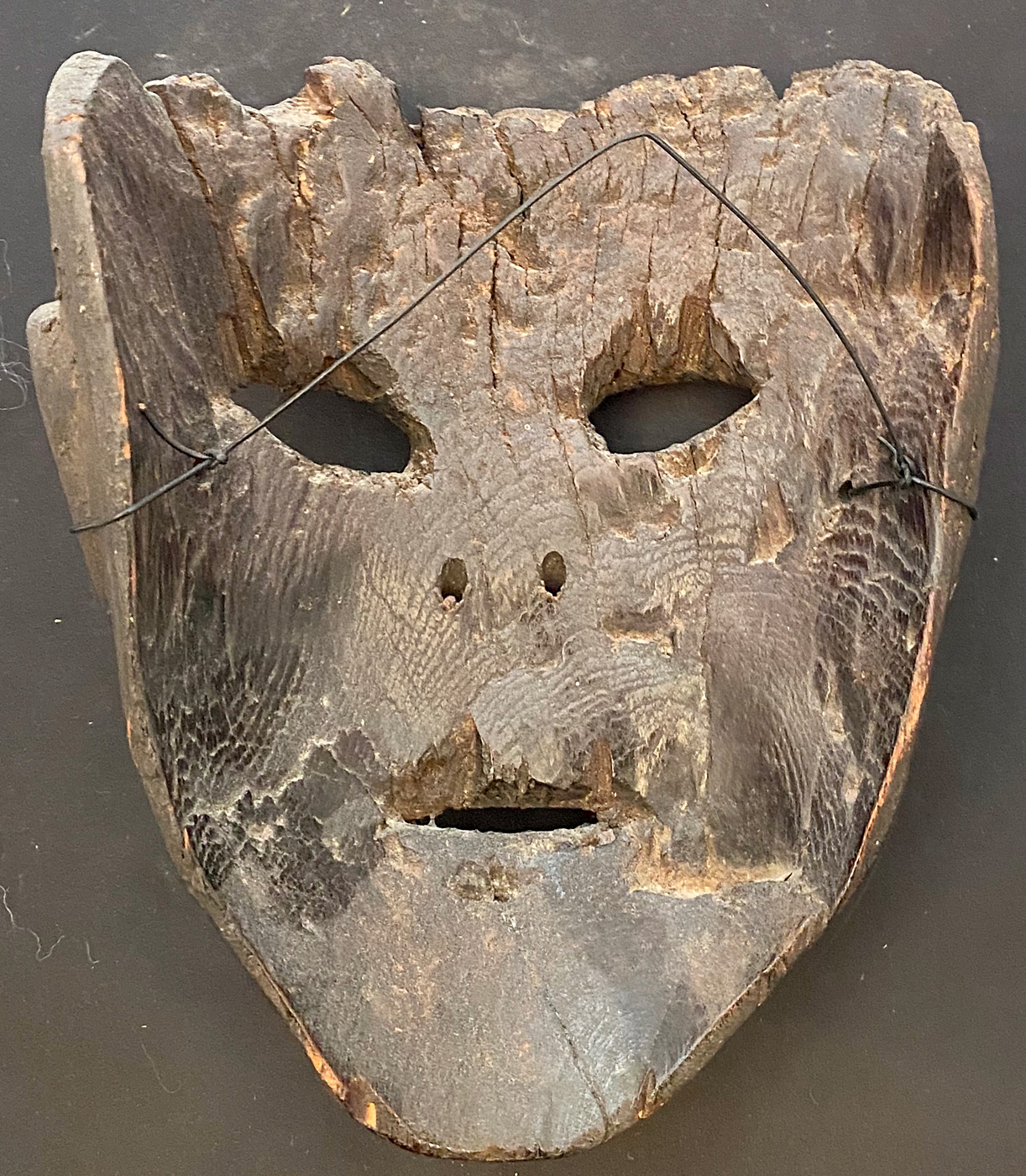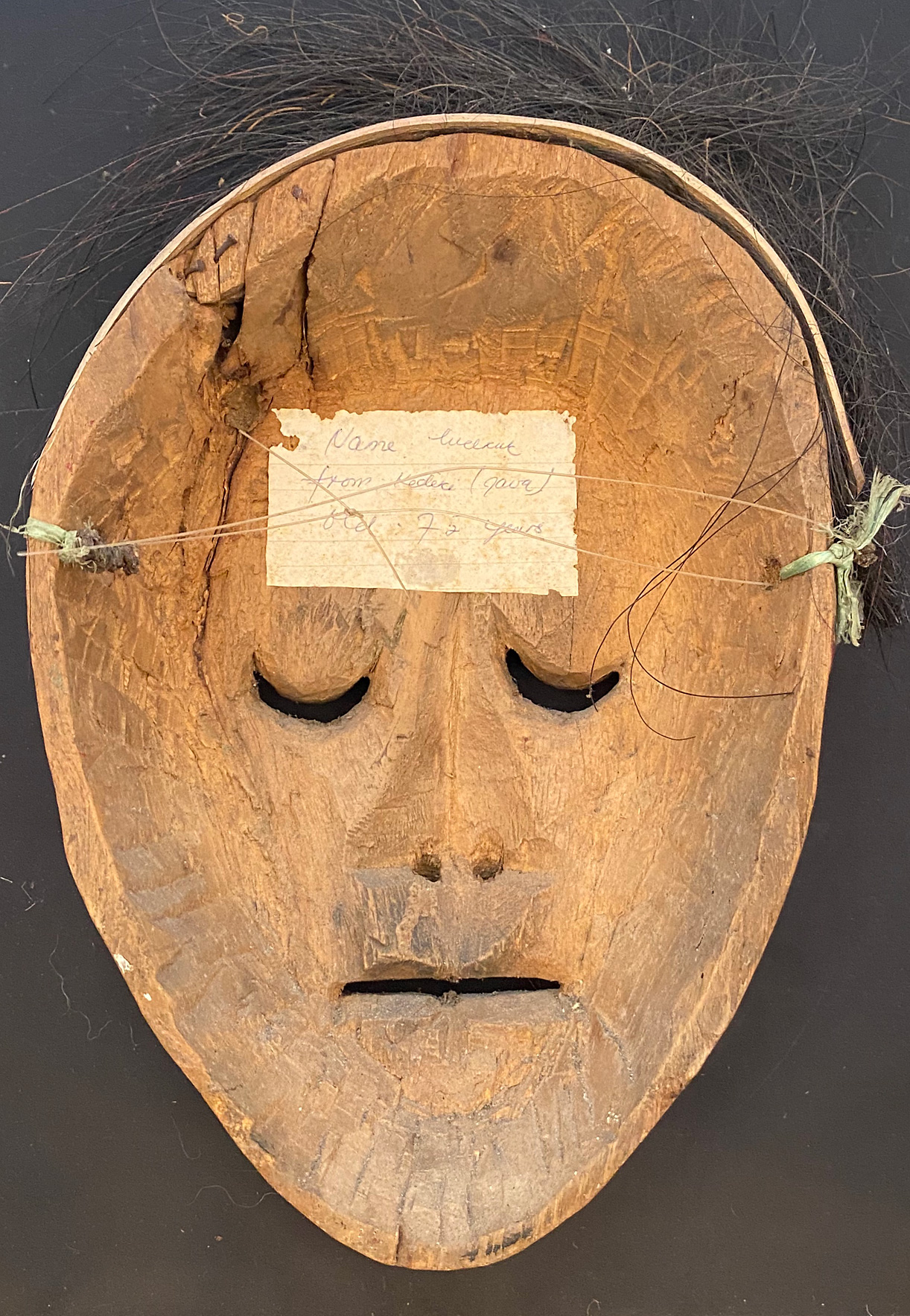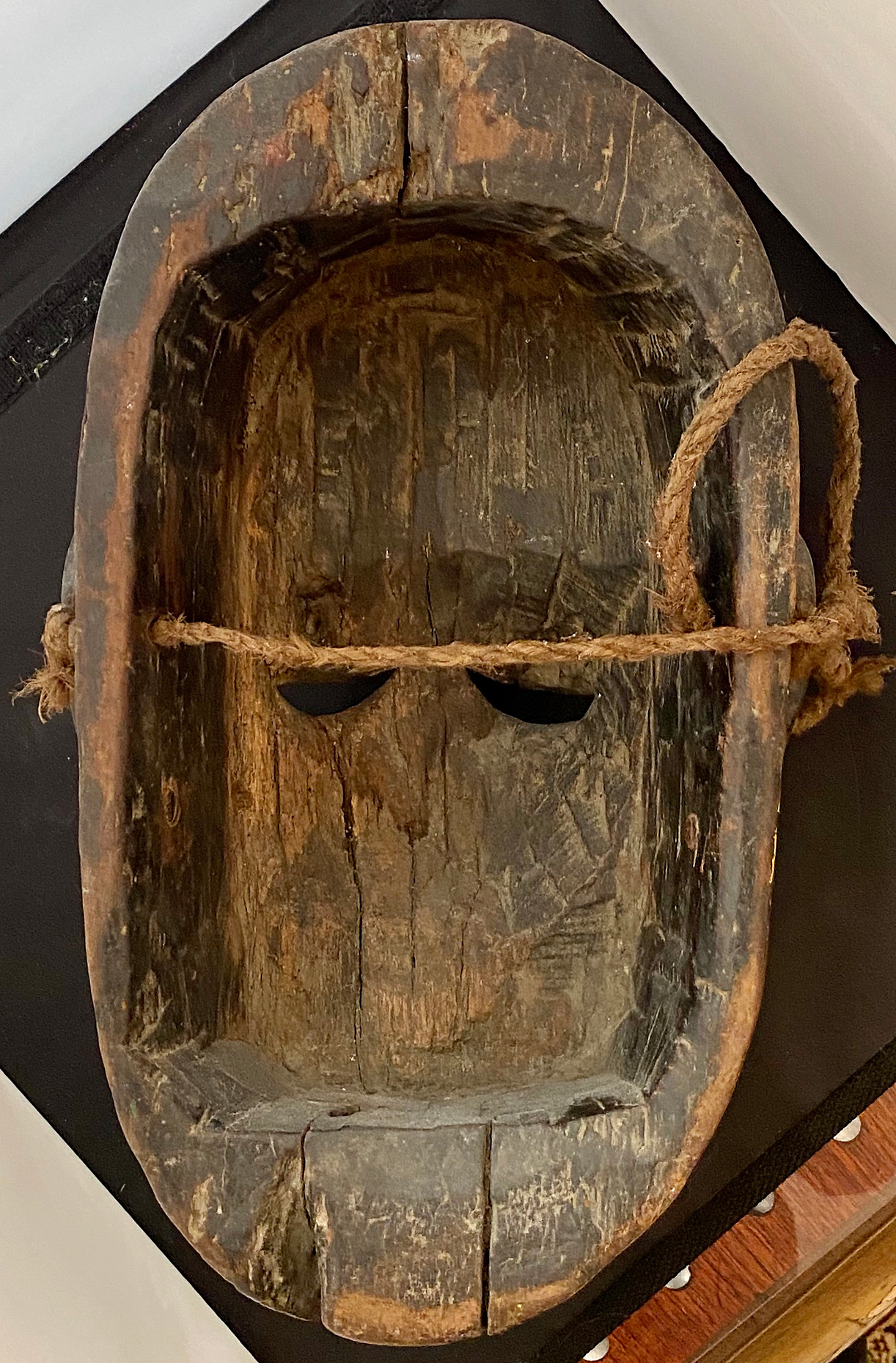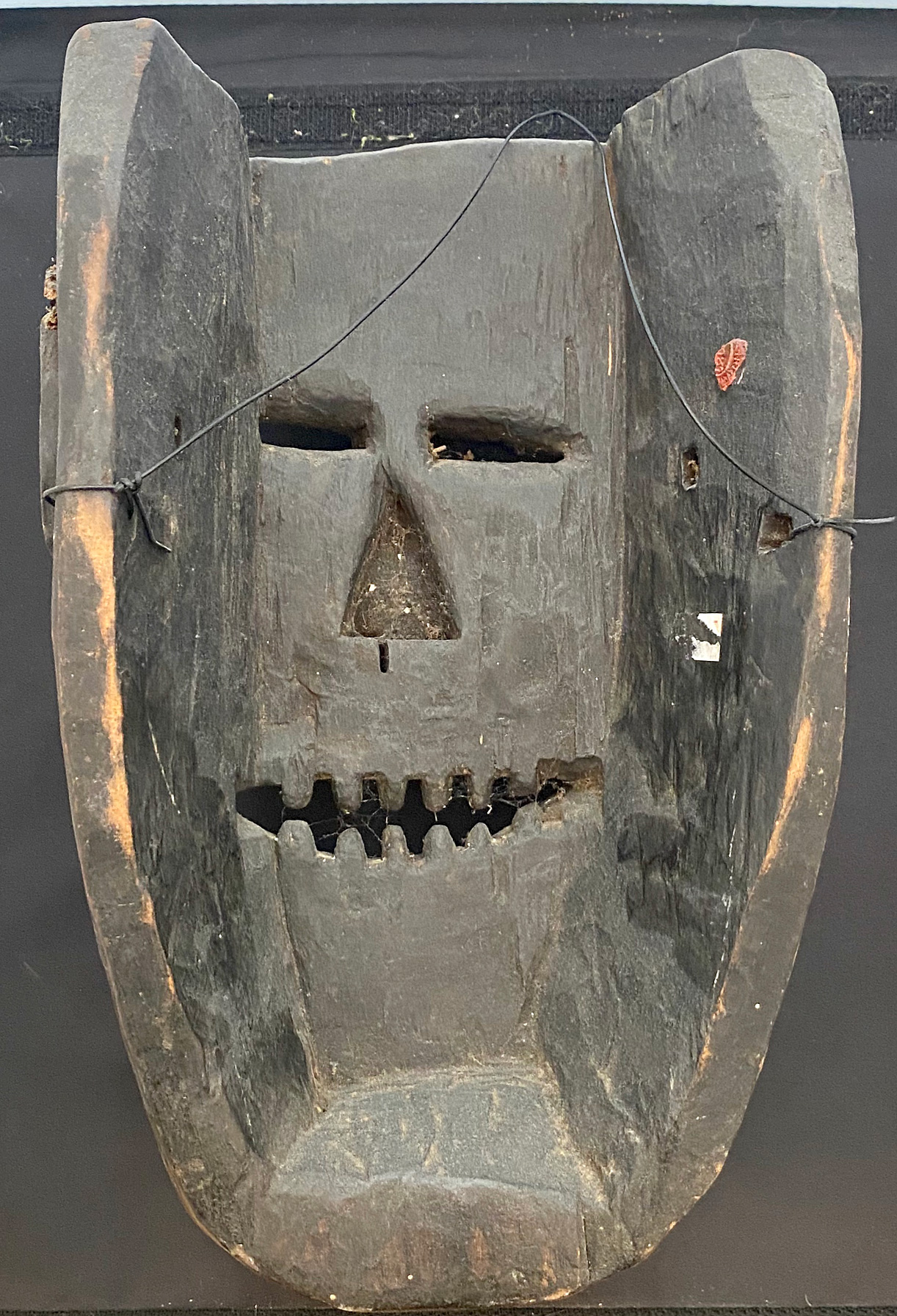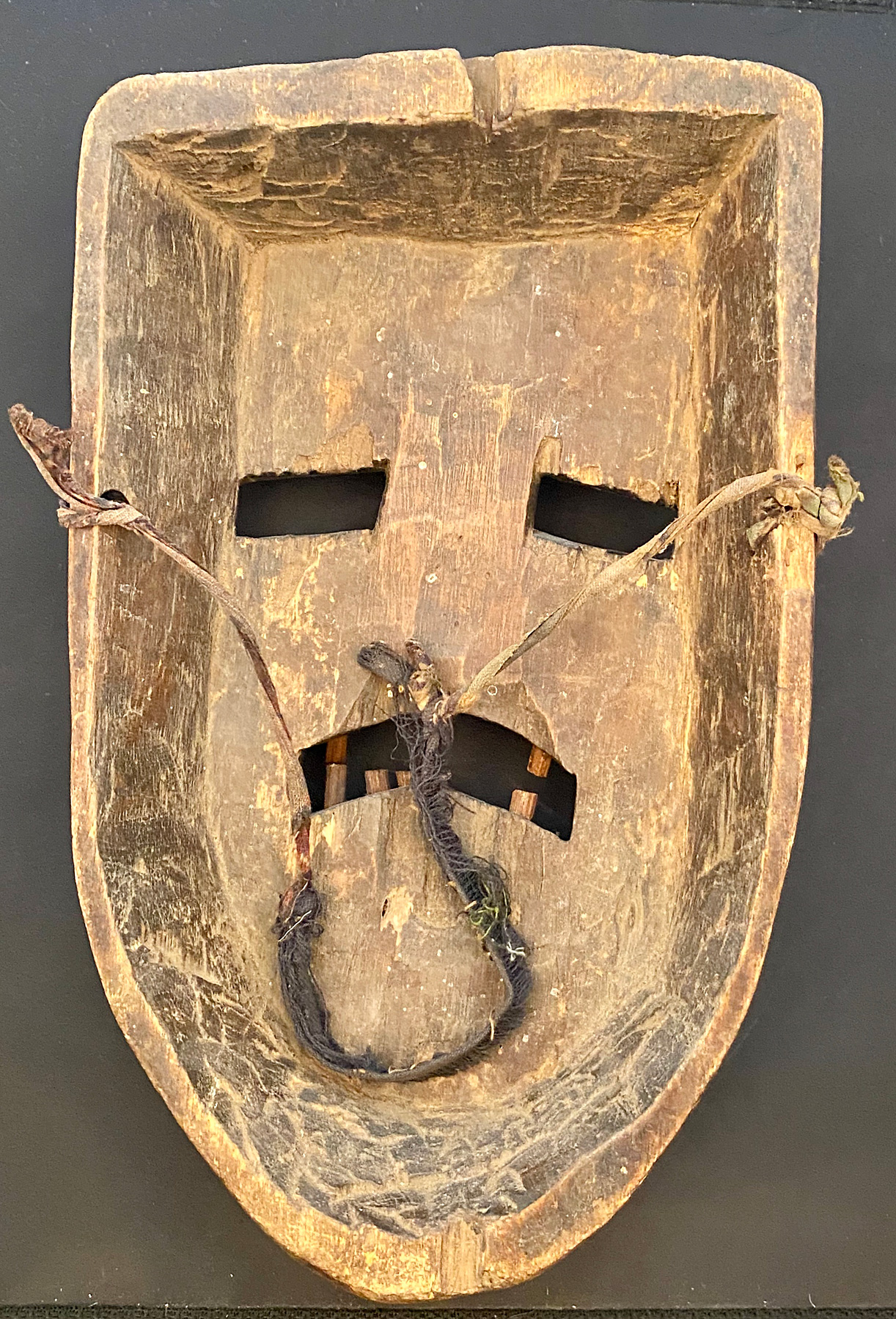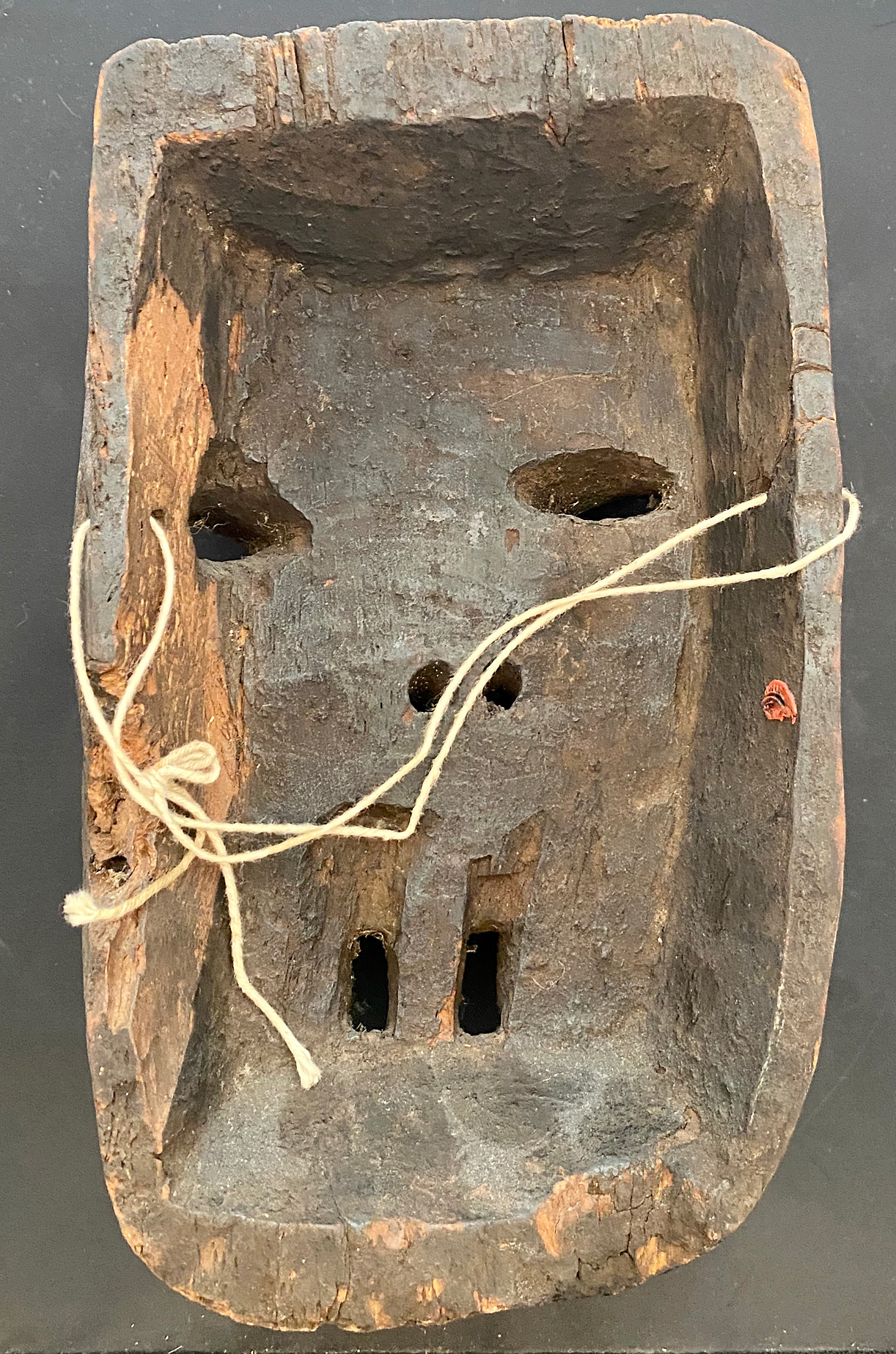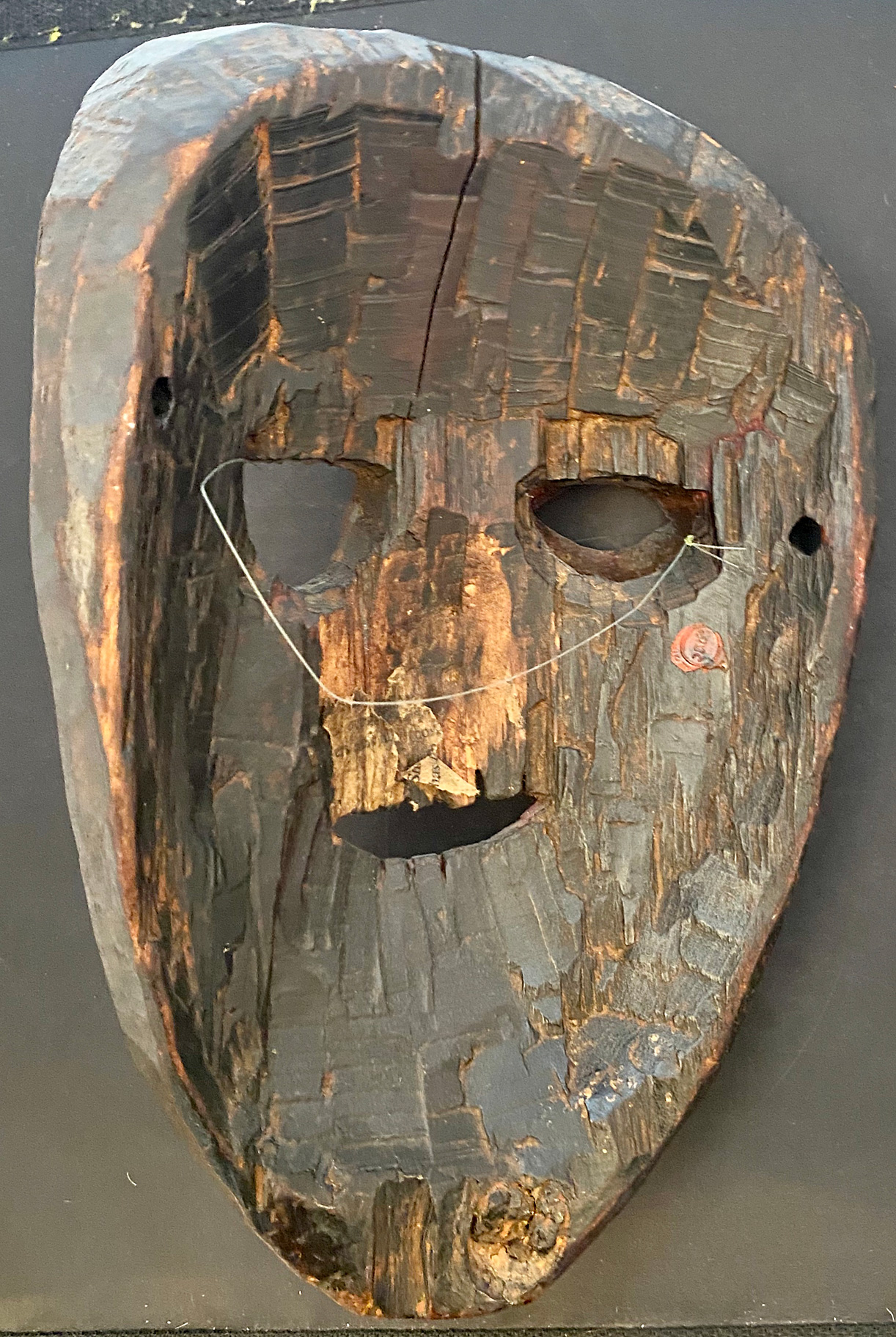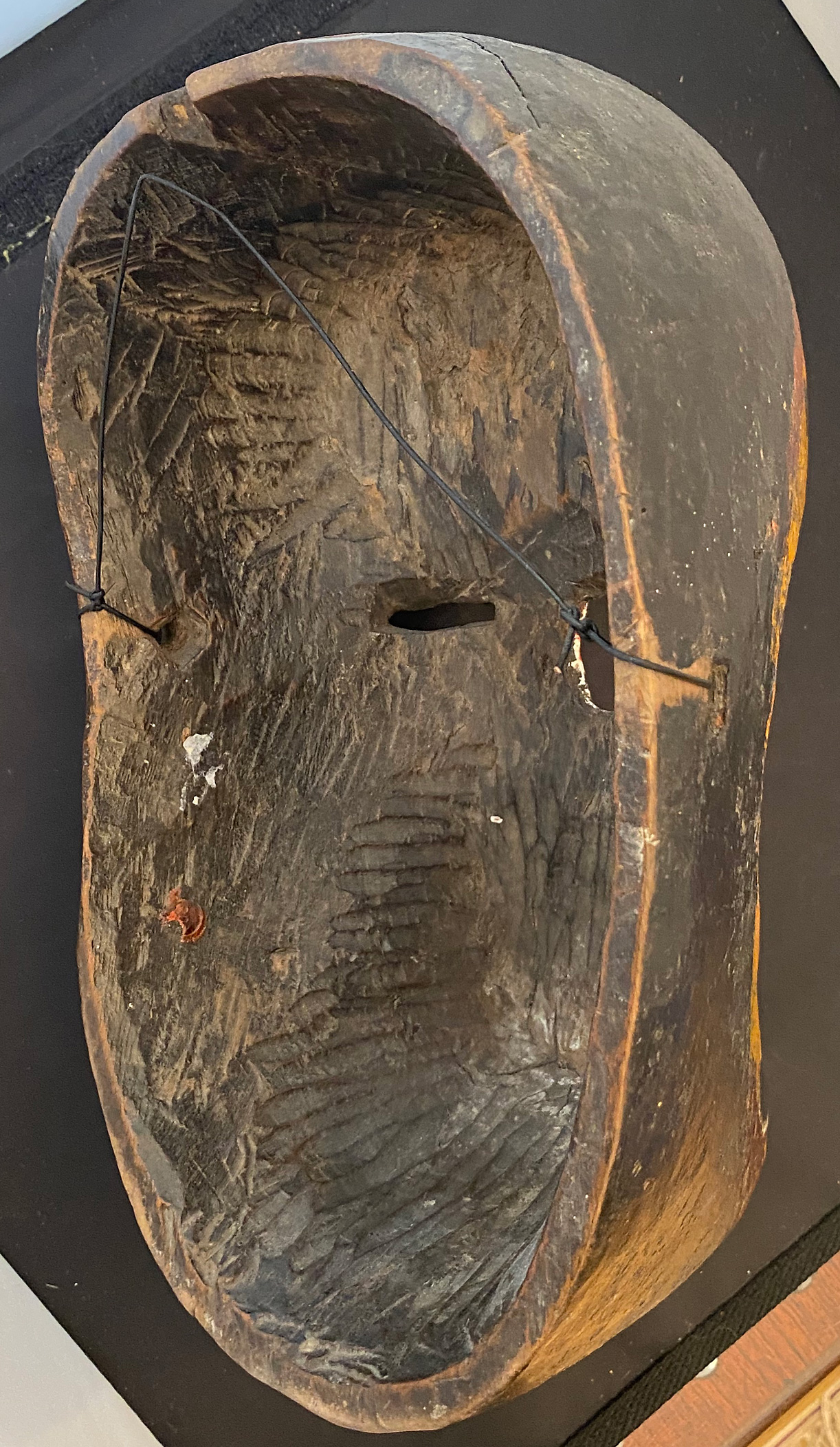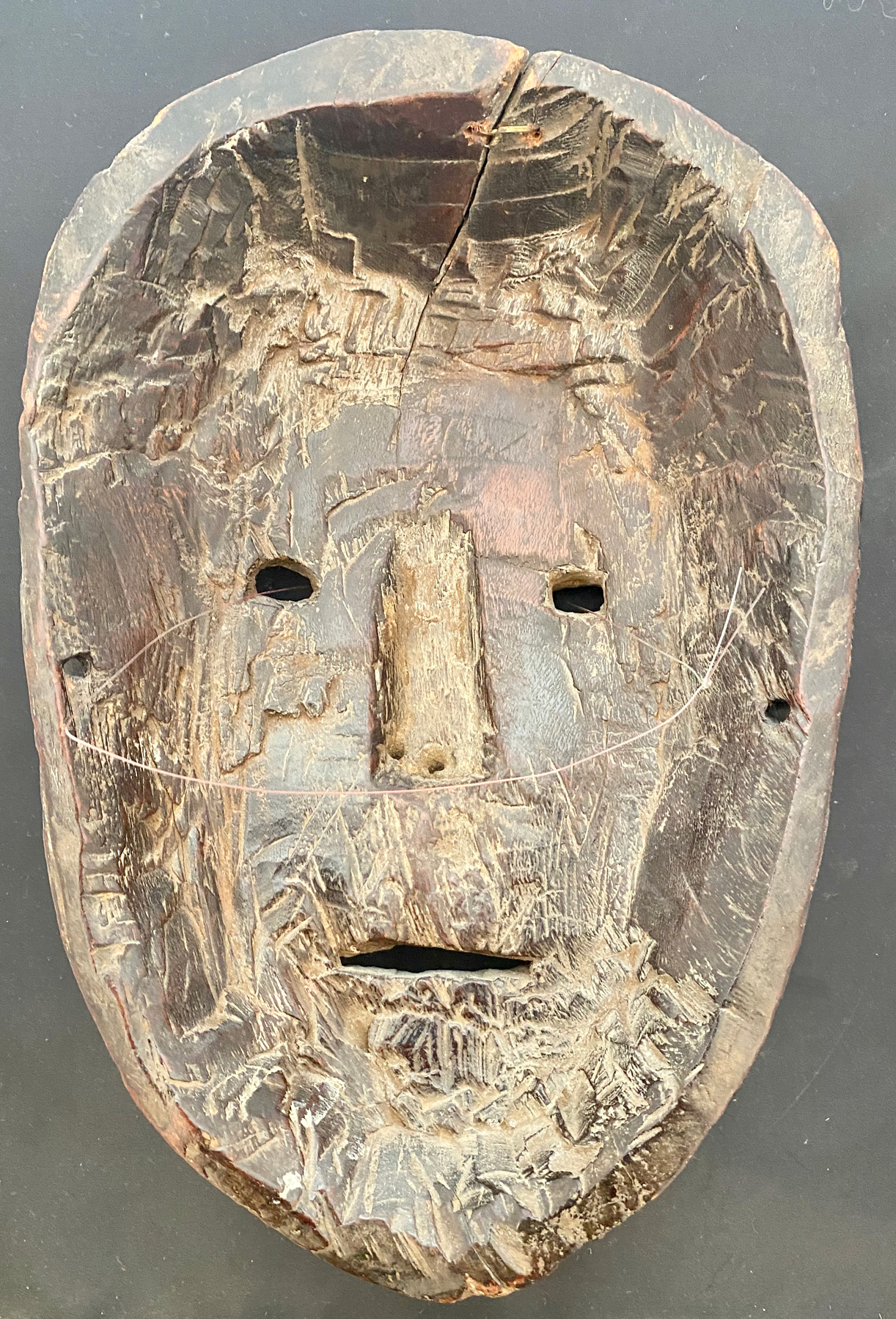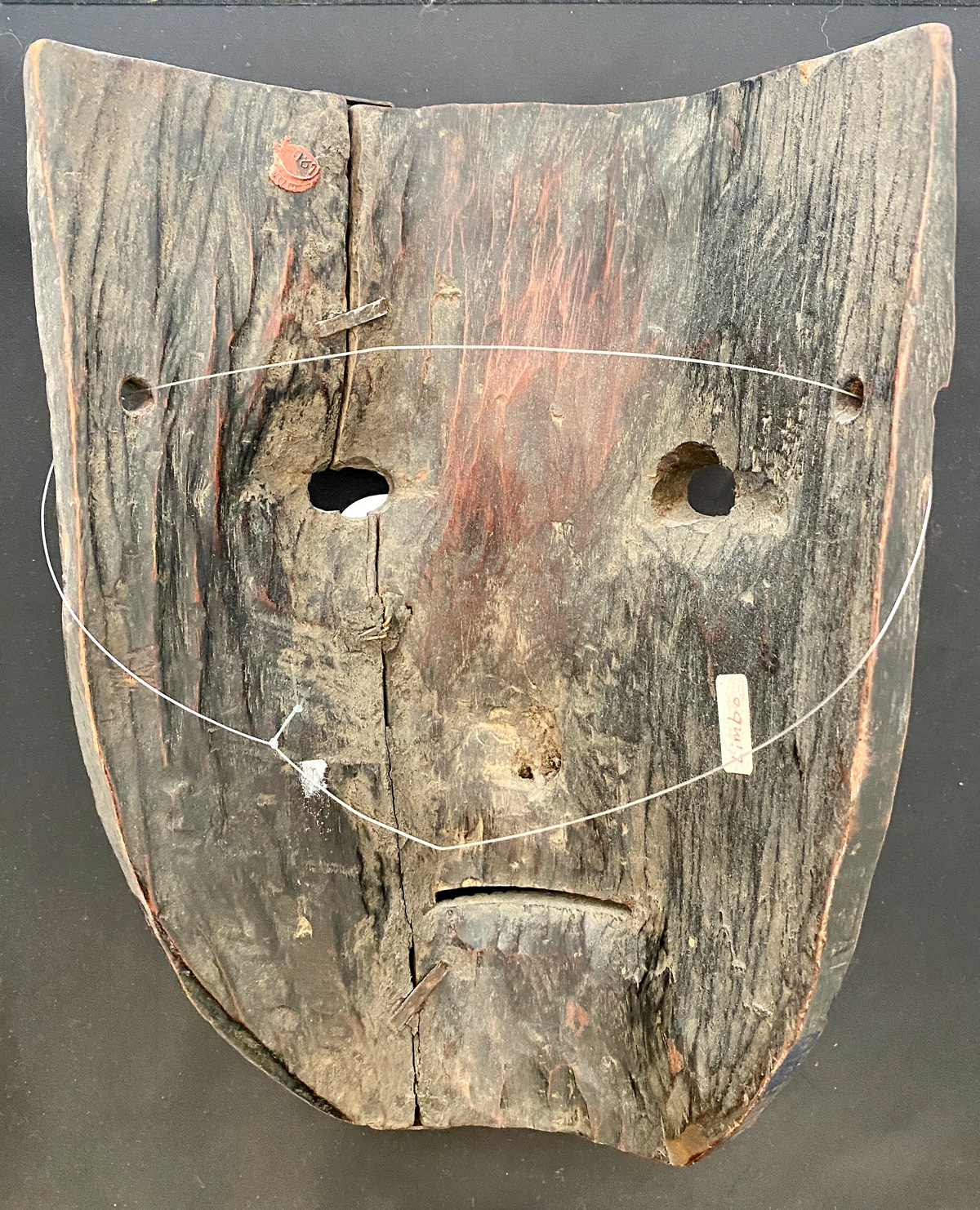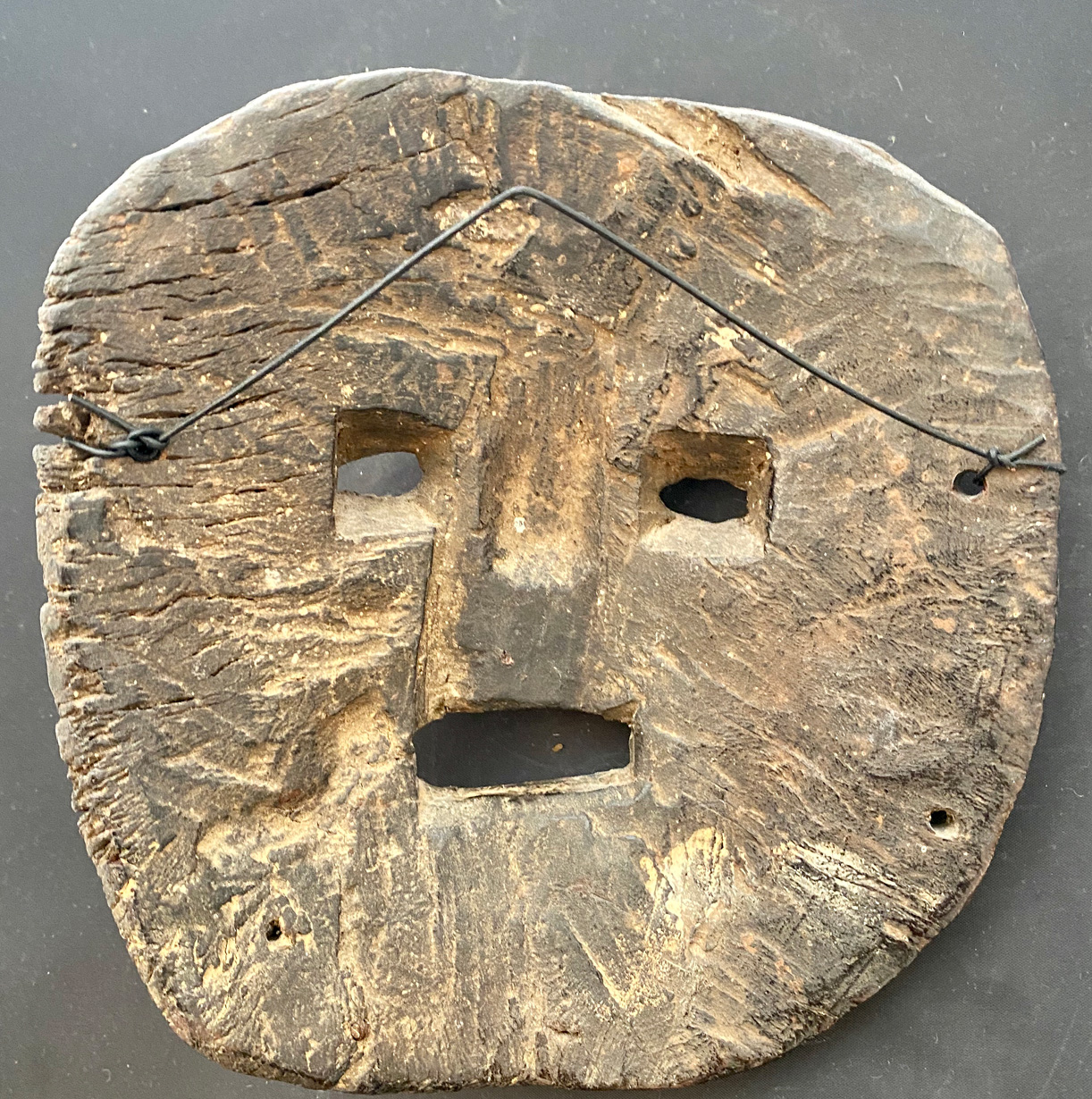
AUTHENTIC ANTIQUE MASKS FROM NEPAL
 
Nepalese masks are deeply rooted in the culture and religious beliefs of the country. These antique artifacts reflect a rich historical heritage, a complex mesh of various ethnicities, tribes, and castes that make up the fabric of Nepal. Masks, whether used for ritualistic purposes, festivities, or traditional theatre, play a crucial role in the social and religious lives of the Nepalese people.

Go directly 2 the MASKS


In the contemporary world, finding genuine antique masks from Nepal is like finding a needle in a haystack. Within the borders of Nepal itself, the prospect of acquiring an authentic aged mask has dwindled to near impossibility. The vast majority of Nepalese masks that currently saturate the online market, sadly, are far from genuine, most being cleverly crafted counterfeits.

With immense pleasure and a certain sense of privilege, I am thrilled to showcase a unique collection of unequivocally authentic, age-old Nepalese masks. This rare collection found its way to Denmark in the early 1980s, brought back by an adventurous Danish wanderer who made Kathmandu his home during the era of free-spirited exploration. At a time when these masks were abundant and openly available, he recognized their cultural significance and gathered this priceless collection, which has survived the test of time.


Nepalese culture is rich with a vibrant history of storytelling through the medium of theatre and entertainment, where masks play an integral role. They are used to convey a broad range of characters, emotions, and narratives, from sacred stories to folk tales, moral lessons to historical events. Masks serve not only as an artistic representation but also a visual aid to enhance the storytelling process.


Traditional Theatre and Performances
Gaijatra: A festival celebrated mainly by the Newar community, Gaijatra is known for its comedic and satirical performances. Masks are often used to impersonate political figures, influential individuals, or to satirically depict societal issues.

Nachauni Dance: This is a mask dance performed during different festivals, especially at harvest. It tells stories of ancient battles and heroic deeds. The performers wear wooden masks representing various characters from the tales.

Bhaktapur’s Bisket Jatra: This festival involves a drama called "Bhairav Naach" performed with masks in the New Year. The drama depicts the victory of Goddess Durga over a demon, symbolizing the triumph of good over evil.

History
The tradition of mask-making in Nepal dates back centuries. It's a fusion of influences from the indigenous Kirat, Tibetan-Buddhist, and the Indo-Aryan cultures. The earliest depictions of masks can be traced back to rock and cave paintings. The various dynasties that ruled Nepal, including the
Licchavi, Thakuri, Malla, and Shah, have all contributed to the development and sophistication of mask artistry.


Materials
Antique masks from Nepal were generally made of locally available materials. The most common of these is wood, specifically from the
Sal tree (Shorea robusta), because of its durability and malleability. Other materials used include metal, particularly for masks used in Buddhist ceremonies, clay, paper mache, and occasionally, stone.

Symbolism
Each Nepalese mask carries symbolic meanings, often rooted in religious and mythological beliefs. They are believed to channel deities, spirits, or mythical beings during religious and cultural ceremonies. For instance, the frightening Mahakala masks symbolize the power to ward off evil and protect the Dharma (Buddhist teachings), while the Bhairav masks portray Shiva's destructive and protective aspects.

Craftsmanship
Creating traditional masks is a painstaking process that requires patience and skill. The wood is first roughly hewn into the general shape of the mask, then the artisan gradually refines the shape, adding intricate details. Once the carving is completed, the mask is smoothed, and layers of paint are applied. The color selection is symbolic: red symbolizes life force and energy, white purity and knowledge, blue the infinity of the sky, and so on. Finally, the mask might be adorned with fabric, feathers, or other decorations.

TYPES OF MASKS
Mahakala Masks: In the Buddhist tradition, Mahakala is a wrathful deity that wards off evil. The Mahakala masks often have a terrifying aspect, with bulging eyes, a gaping mouth showing fierce teeth, and the presence of skulls or other symbols of mortality. They are usually carved from wood and intricately painted.

Kumari Masks: These represent the living goddess Kumari, a young girl worshipped in Nepal. These masks often have a serene and innocent facial expression, symbolizing purity.

Lakhe Masks: Used in the famous Newari Lakhe dance during the Indra Jatra festival, these masks portray a demon known as Lakhe. These masks have exaggerated features, like large teeth and bulging eyes, and are vibrantly painted.

Bhairav Masks: These represent Bhairav, the fierce manifestation of Lord Shiva. The masks depict Bhairav with multiple eyes and arms, an open mouth showing a lolling tongue, and a garland of skulls. They are particularly used during the Bhairav dances in festivals.

Preservation and Collection
Over time, Nepalese masks have become highly sought-after collector's items, and their preservation has become a matter of great concern. Many of these antique masks are preserved in museums around the world, while others are still in use in cultural festivals and religious ceremonies in Nepal. Efforts are underway to preserve the traditional skills of mask-making and promote the cultural significance of these art forms.


Entertainment for Kids
Masks are also used in storytelling and performances aimed specifically at children. These performances often include moral tales, stories of bravery and wisdom, or even renditions of popular global fairy tales. The use of masks in these performances makes the stories more visually engaging and helps children better understand the characters and narratives.


Educational Use
In an educational setting, masks are sometimes used to teach children about Nepalese culture, history, and mythology. Children might be encouraged to create their own masks as part of art classes, or they might participate in performances where they wear masks to depict historical or mythical characters.

Puppetry
Puppetry is another form of entertainment in Nepal where masks are widely used. These puppets, often sporting masks, are used to narrate popular folk tales and legends. Puppet shows are a common form of entertainment during festivals and are popular with children.
 

THE MASKS


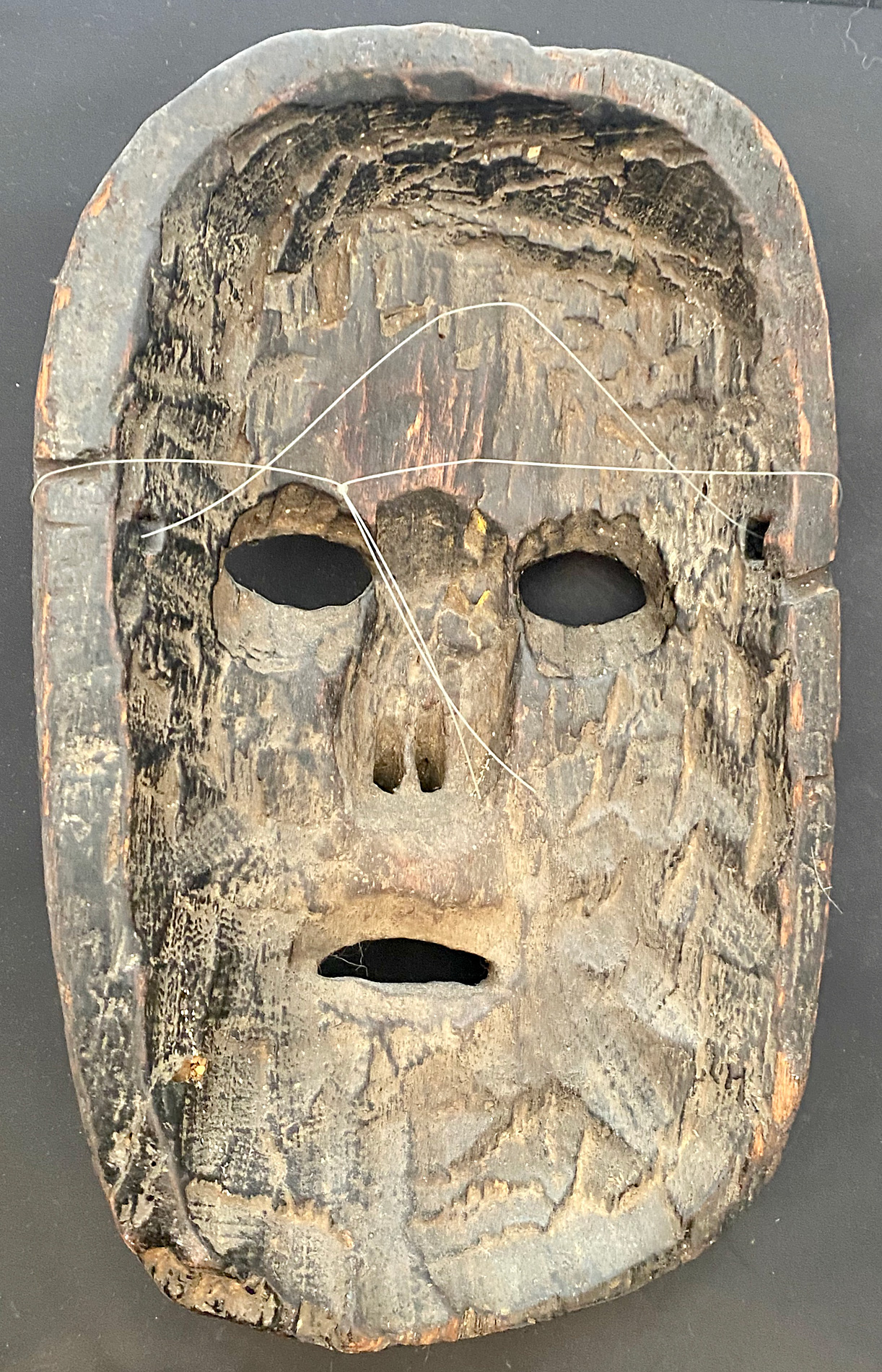
See the mask from the rear


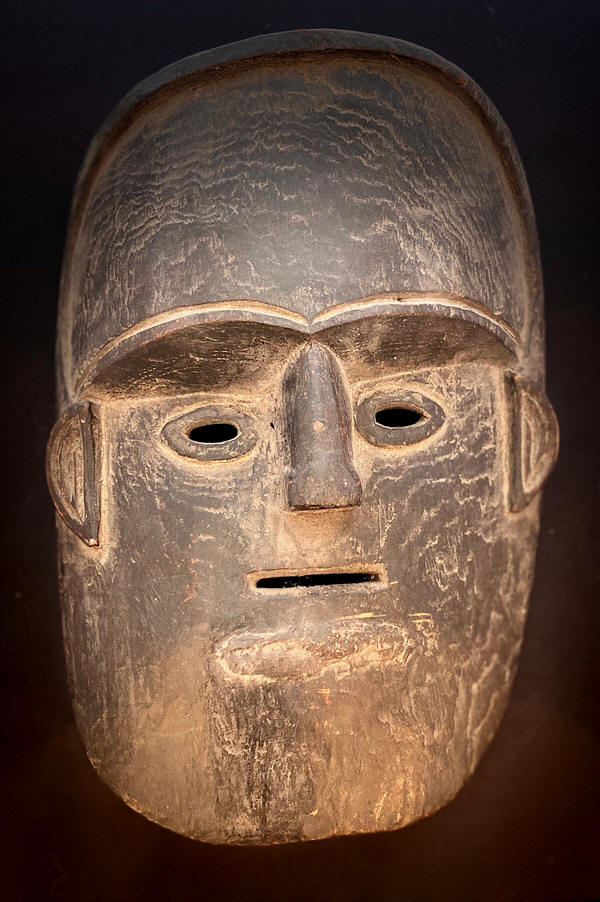
Nepali mask 1


Primal Ancestor Mask - Nepal, Early to Mid-19th Century
Minimalist Shamanic Face with Ancestral Attributes - Magar or Gurung Ethnic Group

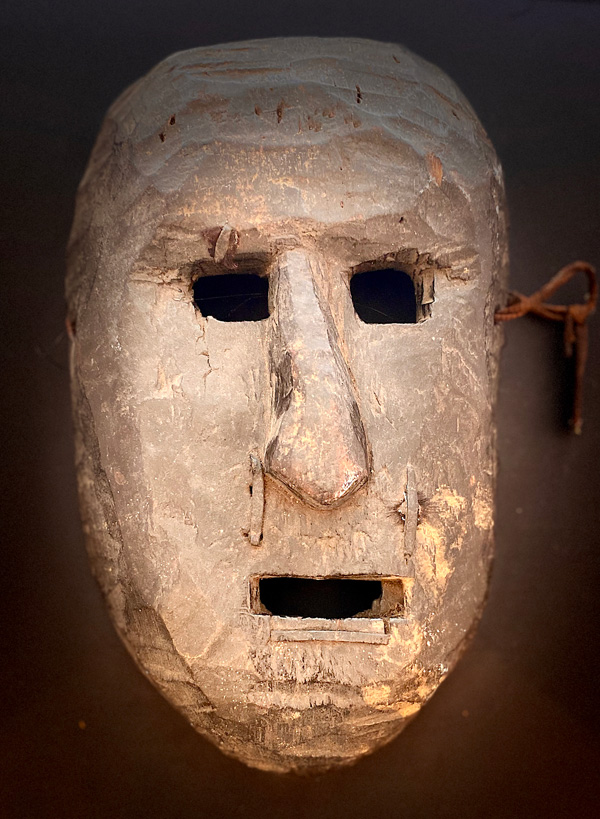
This powerful, archaic wooden mask from the Himalayan region of Nepal exemplifies the raw expressiveness of early ritual carving, emphasizing primal emotion over decorative refinement. The stark geometry of the features - a sharply projecting nose, rectangular eye and mouth apertures, and a nearly symmetrical oval face - suggests a deeply symbolic representation of an ancestral or spiritual presence rather than a literal human portrait.

Hand-carved from a single block of seasoned hardwood and bearing deep signs of use, this mask likely served in animist rituals or protective ceremonies led by shamans (jhankris) within isolated mountain communities. The minimalist form resonates with elemental archetypes found in both pre-Buddhist Himalayan traditions and early tribal ancestor worship. The flat planes, tool marks, and darkened surface patina evoke a mask that was not merely worn, but inhabited during trance possession or spirit invocation.

The weathered surface shows a rich accumulation of time-oxidized wood grain, abrasion from contact with skin and ritual garments, and insect traces - attesting to its authentic age and use. Subtle traces of red pigment around the edge hint at its role in ceremonial contexts, possibly blood sacrifice or fertility rites.

Material: Carved hardwood with age patina and ritual wear
Dimensions:
28 * 17 cm
Provenance: Private collection, Pokhara region, acquired in the early 20th century
Cultural Attribution: Likely Magar or Gurung origin
Estimated Date: Early to mid-19th century
Condition: Excellent for age; structurally stable with expected weathering, minor losses, and historic repairs
Note: A rare and emotionally arresting example of Himalayan minimalism in ritual mask carving. Comparable to early tribal masks held in collections such as the Musee du Quai Branly and the Rubin Museum.

Price: 2500 EURO


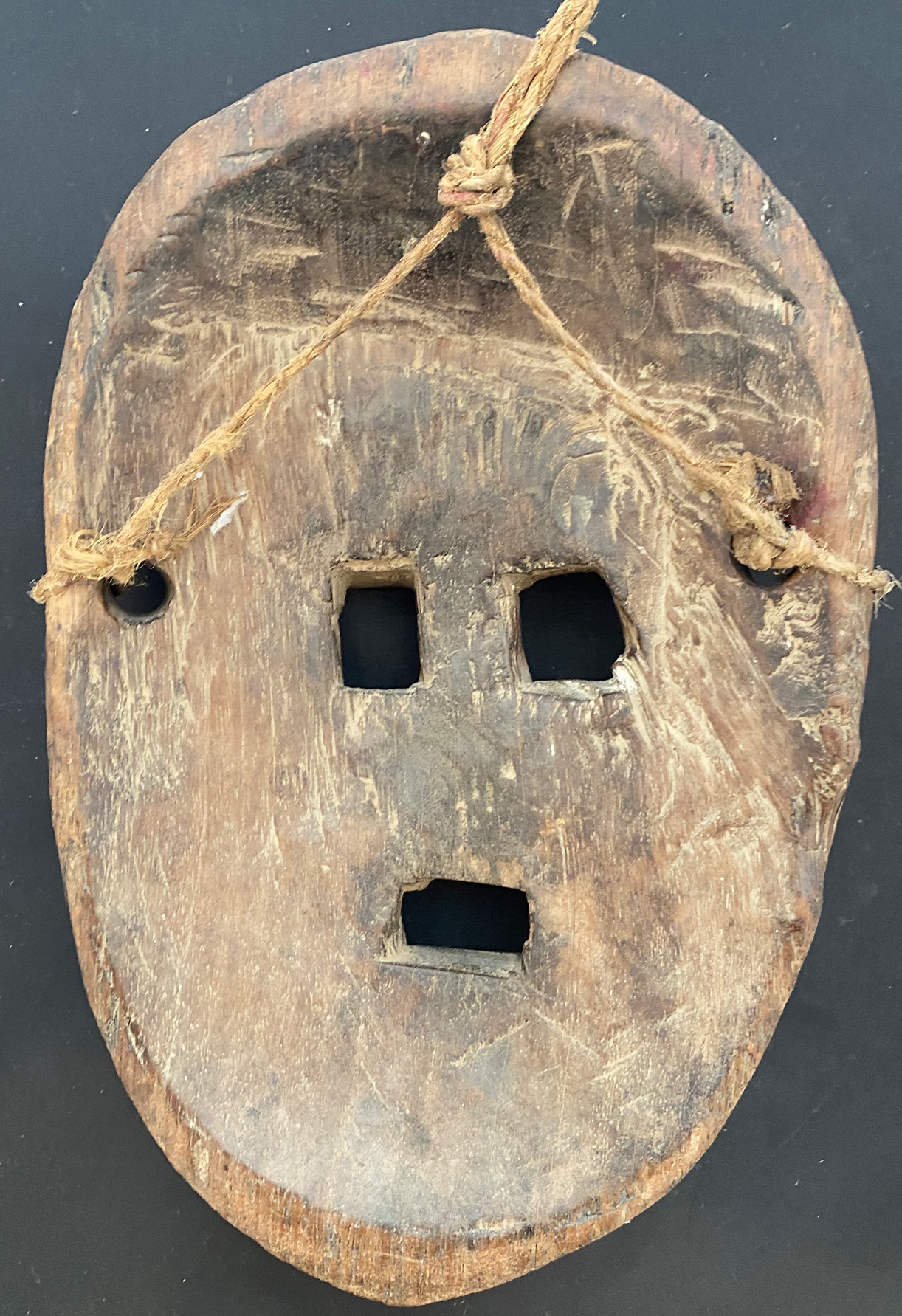
See the mask from the rear


Nepali mask 2 - SOLD


Primal Ancestral Mask - Nepal, Early to Mid-20th Century
Raw Folk Expression from the Himalayan Highlands - Tamang or Chepang Tradition

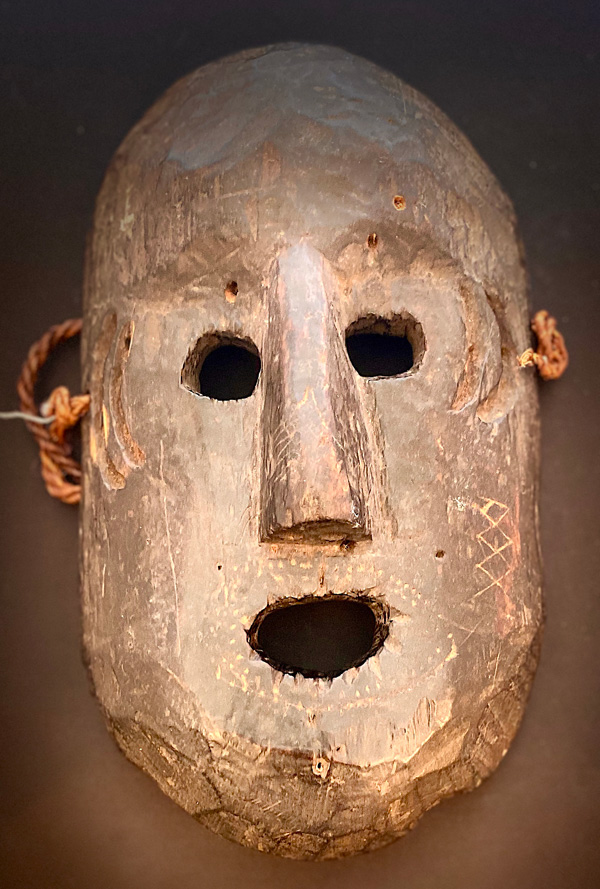
This deeply carved and powerfully understated wooden mask exemplifies the raw, elemental aesthetic of traditional Himalayan spirit masks. Likely created in the early to mid-20th century, it is shaped with minimal refinement but maximum presence, emphasizing spiritual force over naturalism - a hallmark of functional shamanic artifacts.

Carved from a single block of hardwood, the mask features a triangular nose, circular hollowed eyes, and a wide open mouth - possibly used for breath, chant, or vocalization during trance rituals. Small incised lines around the eyes suggest stylized hair or radiating energy, while faint pigment and geometric scratching (particularly at the cheek and chin areas) may denote tribal marks, ritual scoring, or cosmological motifs added after initial use.

The mask's simplicity and tool-marked surface suggest it was intended for ceremonial embodiment, not display. It may have been used in village exorcisms, funerary rites, or forest-spirit invocation - where masks became vessels for local deities or protective forces.

Aged rope ties remain on each side, further supporting its practical use in ritual dance or trance performance. Insect markings, edge chipping, and oxidation confirm its age and field usage, while its honest, unpolished character contributes to its ethnographic strength.

Material: Hardwood with traces of pigment and fiber ties
Dimensions:
23 *13 cm
Cultural Attribution: Likely Tamang or Chepang peoples, Nepal
Estimated Date: Early to mid-20th century
Provenance: Collected in situ in rural Bagmati Province, 1970s
Condition: Excellent structural integrity; ritual wear and surface abrasions consistent with use
Comparable Objects: Field masks in the Pitt Rivers Museum (Oxford) and Museo Nazionale Preistorico Etnografico Luigi Pigorini (Rome)


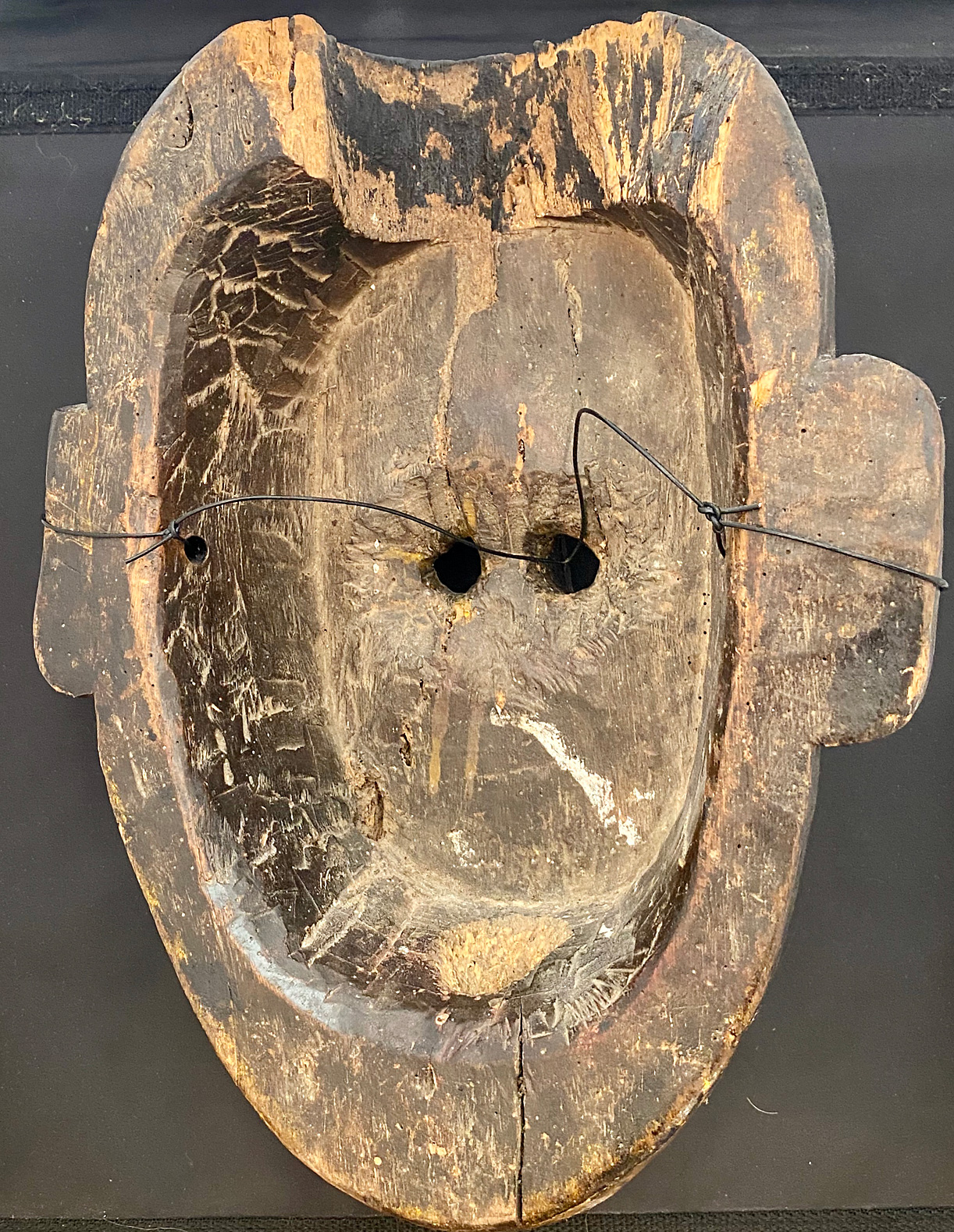
See the mask from the rear


Nepali mask 3  Price: 2000 EURO


Grinning Spirit Mask - Nepal, Late 19th Century (Remake of Earlier Form)
Chepang or Tamang Highland Tradition - Ritual Effigy with Exaggerated Features

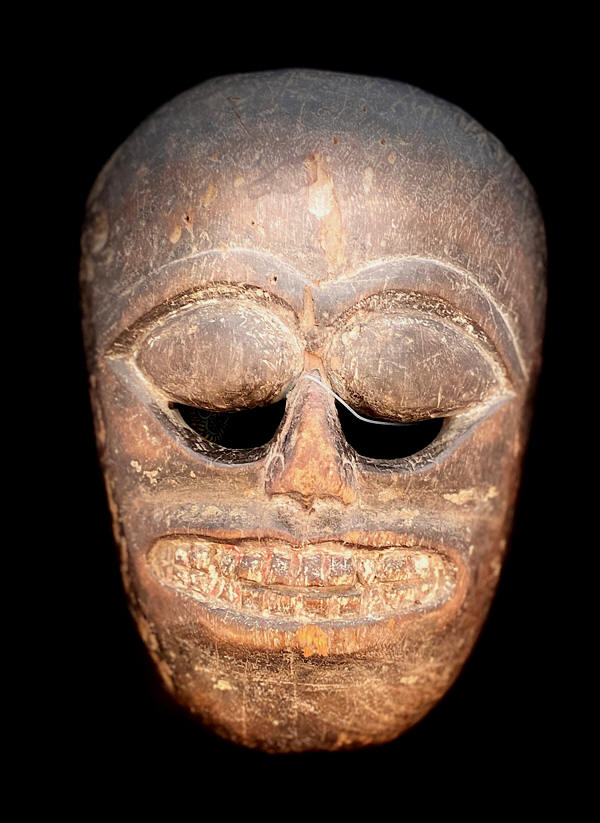
This compelling wooden mask, likely carved in the late 19th century, is a faithful remake of an older ancestral or exorcistic prototype from the animist traditions of Nepal's central highlands. It exhibits all the hallmarks of Himalayan shamanic masks: exaggerated features, symbolic distortion, and a raw, powerful presence intended to channel or repel spirits in ritual settings.

The mask's most distinctive element is the carved grimace of exposed teeth, forming a fixed skeletal grin beneath deep-set, crescent-lidded eyes. The heavy brow and narrow nasal bridge exaggerate emotional tension, while the expressive distortion serves its original function: to intimidate, protect, or personify powerful unseen forces during healing, funerary, or agricultural ceremonies.

Though produced in the 19th century, the mask preserves earlier stylistic lineages-likely inspired by masks from deeper animist roots. It may have been carved by a village elder or artisan-shaman familiar with sacred mask forms, still used in remote ritual contexts before the influx of modern influences. The surface bears traces of age-darkened pigment and long use, including signs of abrasion, soot deposits, and subtle cracking consistent with field-worn ceremonial masks.

Its grimacing expression and primal energy place it in the lineage of protective or wrathful masks, linked to the Himalayan understanding of spirits that must be respected, embodied, or expelled.

Dimensions: 22 * 15,5 cm

Price: 2000 EURO


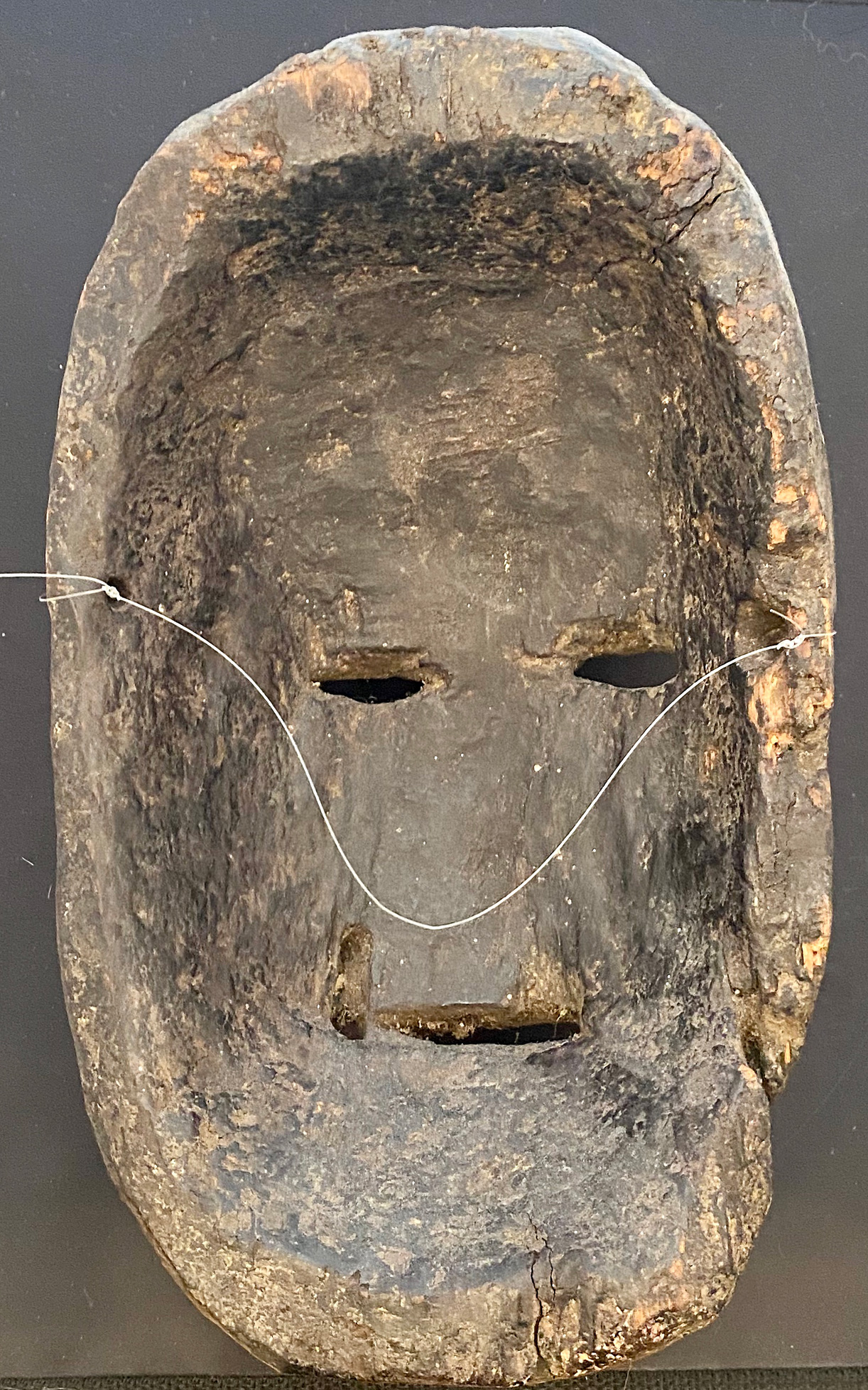
See the mask from the rear


Nepali mask 4

 
Shadow Ancestor Mask - Nepal, Late 19th Century
Minimalist Wooden Mask with Exposed Teeth - Tamang or Chepang Tradition

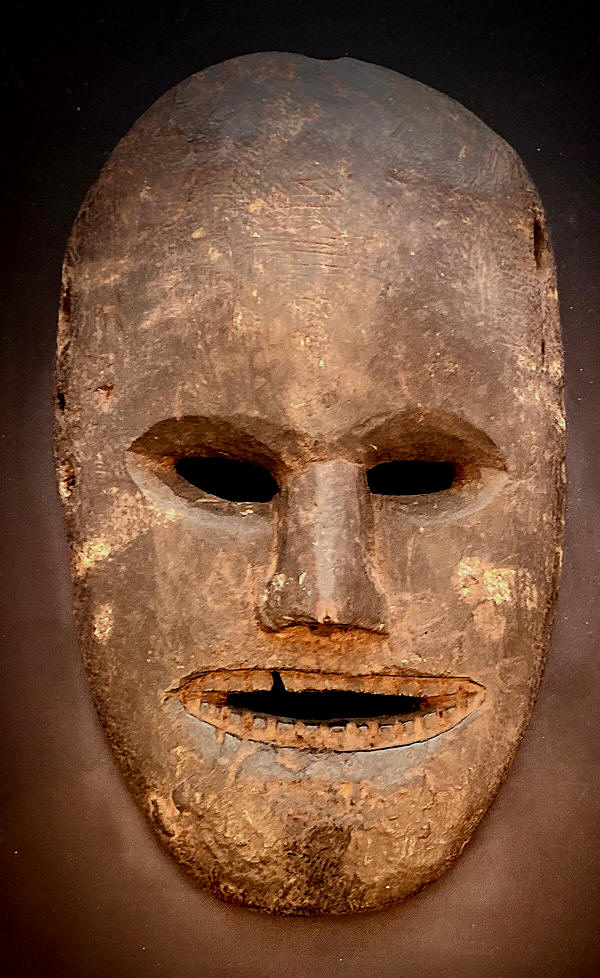
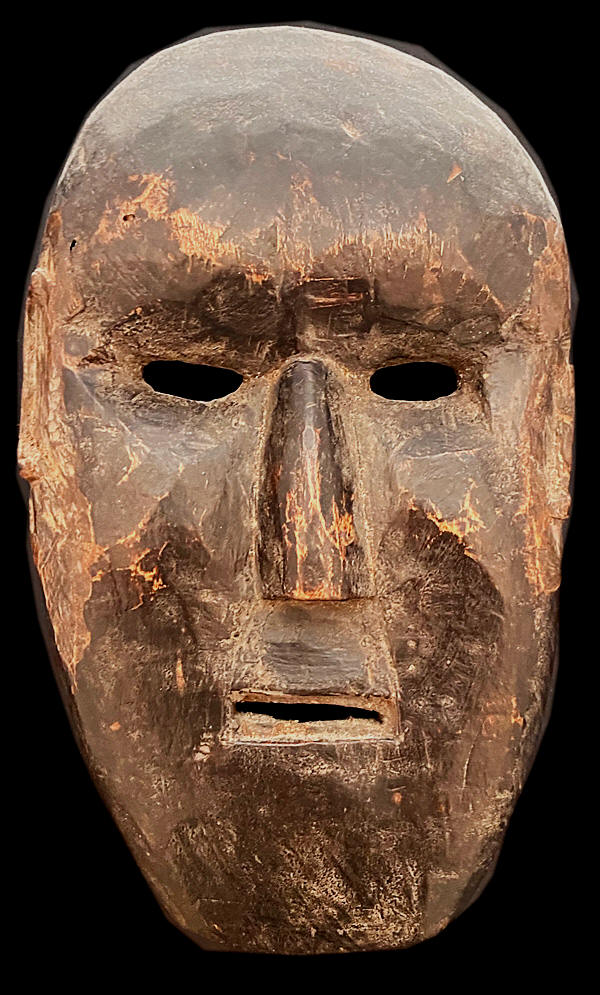
This austere and powerfully reserved wooden mask, carved in the late 19th century, comes from the central highland regions of Nepal. Its worn and unadorned surface, deep patina, and elongated proportions speak to its authenticity and ritual purpose. Unlike more overtly expressive or painted pieces, this mask exudes a quiet, haunting dignity, suggesting use in ceremonies involving death, ancestral communion, or protective invocation.

The form is stark and nearly anatomical: deeply recessed eyes, a long, naturalistic nose, and a rectangular open mouth revealing a subtle line of individually carved teeth - now weathered and eroded by time. The simplicity of the carving allows the material presence to speak for itself: aged hardwood, softened by smoke, breath, oil, and handling over generations.

This mask likely functioned in funerary rites, spirit mediumship, or night rituals, where subtler forces were invoked or acknowledged. The anonymity of its features may reflect its purpose: to act as a vessel for the dead or unseen, allowing the wearer to temporarily embody or confront what is usually hidden.

The surface shows heavy oxidation and material wear, with areas of flaking at the mouth and chin, reinforcing its genuine age and prolonged use. Its lack of decoration adds to its gravitas - it is not an object of display, but of ritual embodiment.

Material: Carved hardwood with natural soot patina and exposed wood grain
Dimensions: 24 * 15 cm
Cultural Attribution: Tamang or Chepang ethnic tradition, Central Nepal
Estimated Date: Late 19th century
Provenance: Field collected in the early 20th century, previously held in a European ethnographic collection
Condition: Very good for age; structurally sound, with erosion and surface wear consistent with long-term use
Comparable Examples: Comparable 'death masks' and spirit effigies in the Rietberg Museum (Zurich) and Musee de l'Homme (Paris)

Price: 2500 EURO


See the mask from the rear


Nepali mask 5 

 
Fanged Spirit Mask - Nepal, Late 19th Century
Wrathful Protective Deity or Demon Effigy - Tamang or Chepang Shamanic Tradition


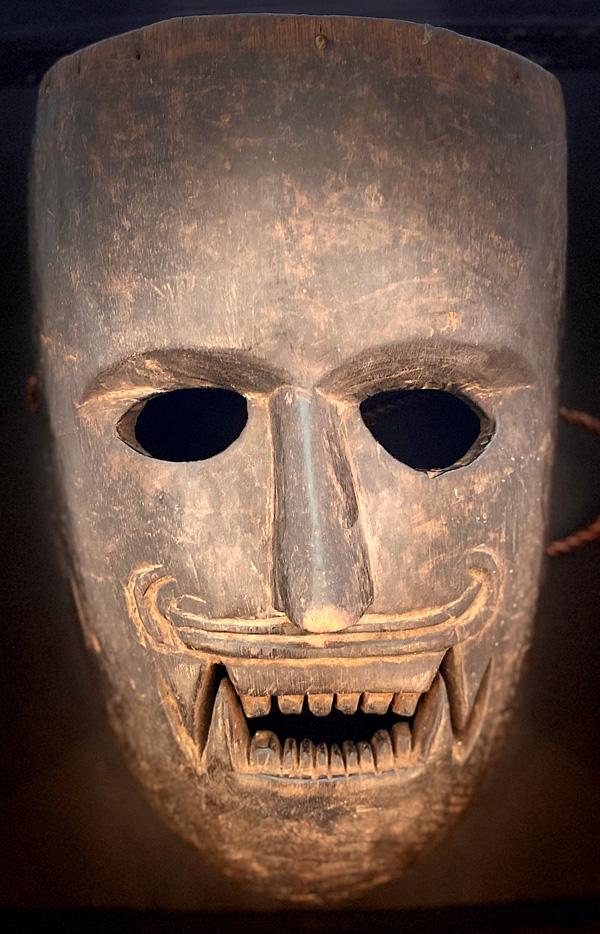
This powerful wooden mask from central Nepal depicts a ferocious spirit entity, likely modeled on a wrathful protector or guardian demon from Tamang or Chepang ritual cosmology. Dating to the late 19th century, it was most probably used in exorcistic ceremonies, trance rituals, or seasonal protection rites, where the embodiment of terrifying forces was required to ward off misfortune or malevolent energies.

The mask's defining feature is its deeply carved, stylized mouth filled with sharply exaggerated teeth and fangs - a visual language associated with both Himalayan demon figures and Buddhist protector deities (Dharmapalas). The upward curling lines framing the mouth suggest motion, aggression, and symbolic fire, while the rectangular, squared-off eye and brow forms deliver a blunt, arresting intensity.

The tall, nearly cylindrical format of the mask, combined with its minimal yet commanding surface detail, reinforces its visual authority. The patina is consistent with age and handling: smoke-darkened wood, ritual wear around the eye sockets and mouth, and softened carving edges, indicating prolonged ceremonial use.

While some masks represent beneficent ancestors or deities, this piece leans into the 'apotropaic' tradition - an object made not to soothe but to scare, to protect through visual and symbolic power.

Material: Hand-carved hardwood with natural soot patina and pigment traces
Dimensions: 31,5 * 20,5 cm
Cultural Attribution: Tamang or Chepang region, central Nepal
Estimated Date: Late 19th century
Provenance: Field-collected in the 1930s, from an eastern Bagmati village context
Condition: Excellent for age; stable with worn high points and softened carving from use
Comparative Examples: Related fierce-visage masks in Musee du Quai Branly, Paris and the Rubin Museum, New York; also referenced in Nepalese Shamanism: A Transcultural Study, by Reinhard and Muller

Price: 2000 EURO


See the mask from the rear


Nepali mask 6

 
Stitched Ancestor Mask - Nepal, Early 19th Century
Ceremonial Face with Ritual Sutures - Likely Gurung or Magar Tradition

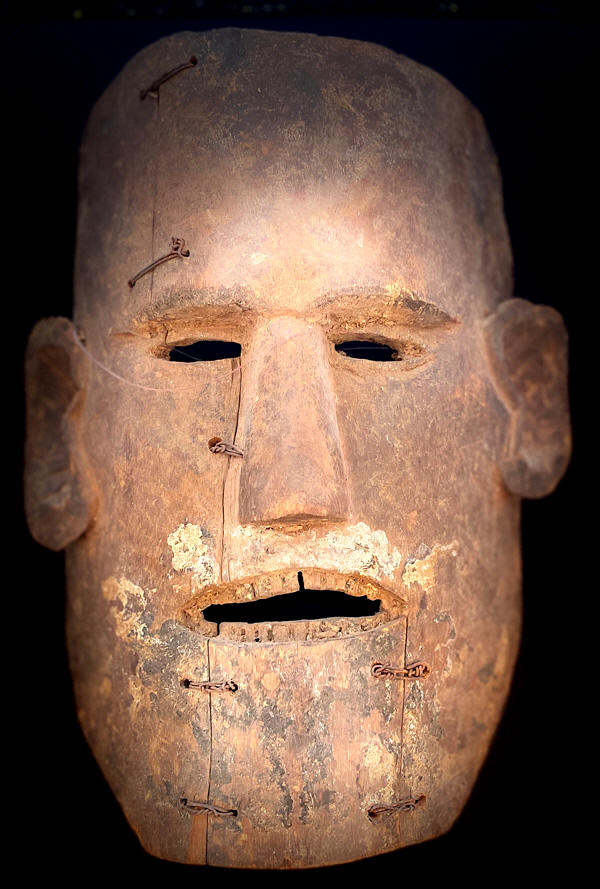
This hauntingly beautiful wooden mask, hailing from the central Himalayan regions of Nepal, stands as a powerful testimony to the living and ever-mended world of tribal ritual objects. Likely carved in the early 1800s by a village artisan, this mask presents a broad, flattened facial structure with a long triangular nose, recessed rectangular eyes, and a slit mouth - all bearing the minimalistic abstraction typical of Himalayan ancestral representations.

What makes this piece exceptionally rare and expressive are the ritual metal staples and twine repairs that run vertically down the mask's face - particularly across the mouth and brow. These are not simply utilitarian repairs but are imbued with spiritual significance, often symbolizing the restoration of power, continuity of the lineage, or healing after damage during ceremony. In Himalayan animist traditions, such 'sutured' masks are considered to accumulate spiritual energy, growing stronger with each mending.

The mask's ears are crudely carved but clearly delineated, suggesting it represented not a spirit, but an anthropomorphized ancestor or local deity. Heavy oxidation, pigment loss, and soot layering further attest to long-term ritual usage, likely in bhume puja (earth deity offerings), funerary rites, or agricultural protection ceremonies.

This object embodies the raw essence of tribal Nepalese carving - where function and spirit outweigh decorative elaboration, and where wear becomes a sacred narrative of use.

Material: Hardwood with iron staples, natural patina, and residual pigment
Dimensions: 28,5 * 23 cm
Cultural Attribution: Gurung or Magar people, central Nepal
Provenance: Private collection, collected in the field c. 1910
Estimated Date: Early 19th century
Condition: Structurally intact with historic ceremonial repairs and age-related wear. Superb ethnographic presence.
Comparable: Rubin Museum of Art (NYC); Musee Barbier-Mueller (Geneva)

Price: 4000 EURO


See the mask from the rear


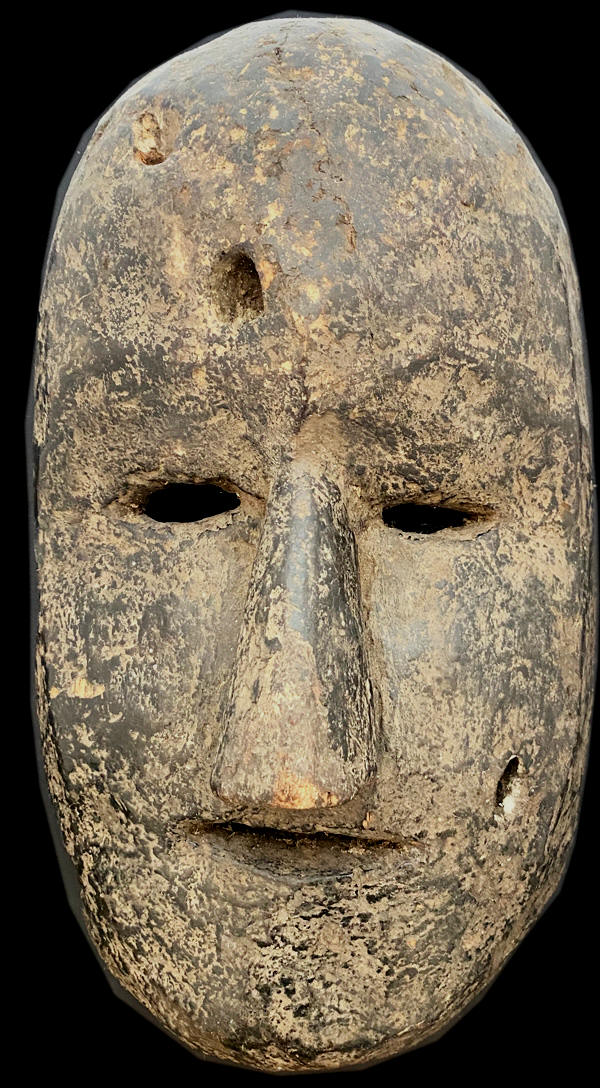
Nepali mask 7

 
Primal Spirit Mask - Nepal, Mid-19th Century
Minimalist Wooden Effigy with Ritual Damage and Repairs - Likely Chepang Origin

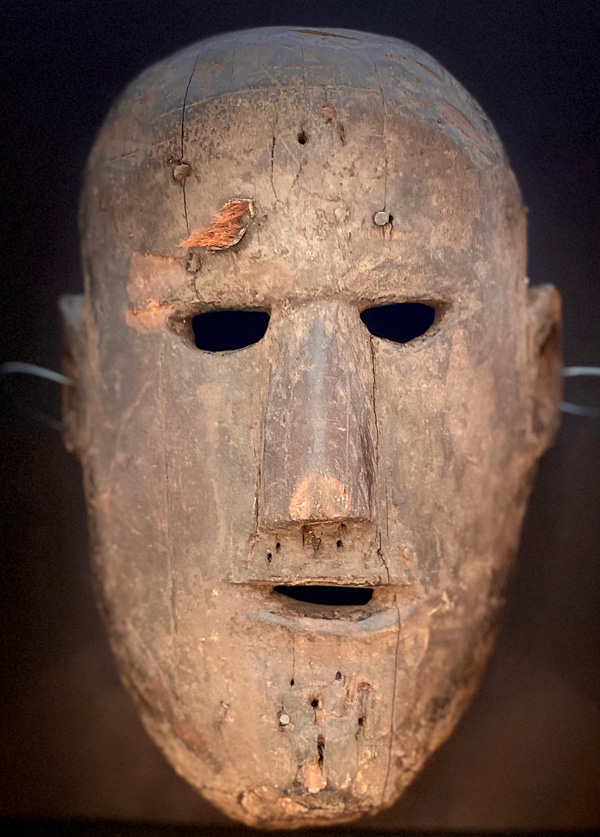
This raw, deeply timeworn wooden mask from central Nepal stands as a quintessential example of animist ritual minimalism - where the power of the object lies in its unfiltered presence rather than stylistic embellishment. Carved in the early to mid-19th century, it was likely created by a Chepang or Tamang village artisan-shaman for direct use in trance, funerary rites, or ancestral possession ceremonies.

The face is austere and geometric: two narrow, slanted eyes, a sharply ridged nose, and a small rectangular mouth slightly ajar - allowing for breath, chant, or invocation. The absence of expressive features adds to its stark impact, transforming the mask into a ritual conduit rather than a personality.

Several signs of age and use distinguish this as an authentic field mask:

Multiple nail holes, fiber damage, and deep vertical cracks from ritual handling and exposure.

A missing wood chip on the forehead, likely from ceremonial wear or symbolic destruction.

Surface abrasions, insect trails, and oxidation from long use in open-air shrines, smoky interiors, or humid forest environments.

The quiet intensity of this mask reflects its role not as spectacle, but as a spiritual threshold - where the unseen could be made tangible. Such masks often hung in village huts or sacred groves and were believed to absorb the presence of the spirits they housed.

Material: Hardwood with oxidized patina, ritual wear, and nail-pierced edge

Dimensions:
30 * 21 cm

Cultural Attribution: Chepang or Tamang tradition, central Nepal
Estimated Date: Early to mid-19th century
Provenance: Field collected in the Trisuli River region, 1930s
Condition: Structurally intact but heavily weathered; natural losses and tool marks reinforce authenticity
Comparative Notes: Stylistically and spiritually related to masks held in Musee Barbier-Mueller (Geneva) and Pitt Rivers Museum (Oxford), particularly those reflecting extreme simplicity and function over form

Price: 2500 EURO


See the mask from the rear


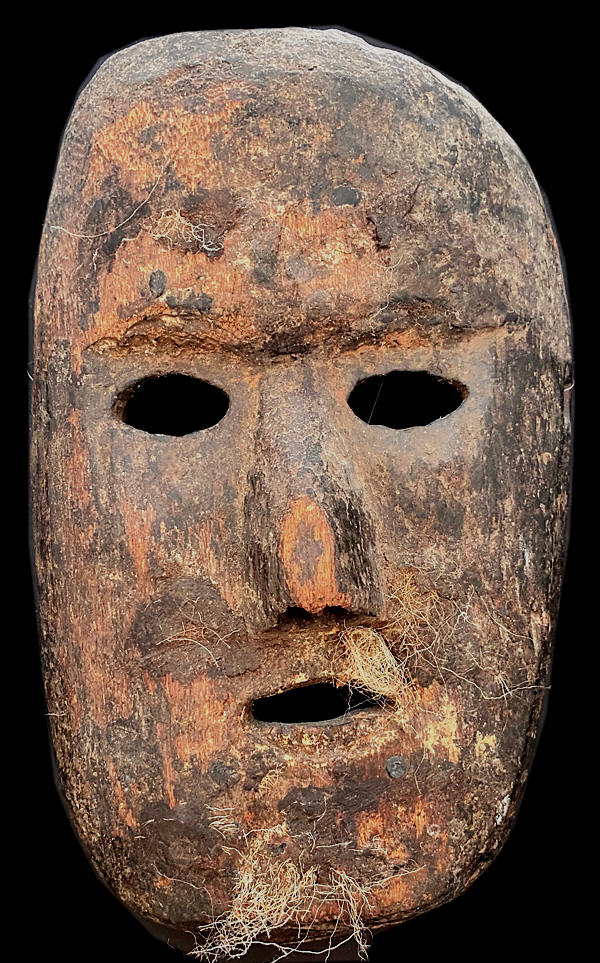
Nepali mask 8

 
Mustached Ancestor Mask with Hair - Nepal, Early 19th Century
Tamang or Chepang Highlands - Ceremonial Human Effigy with Fiber and Fur

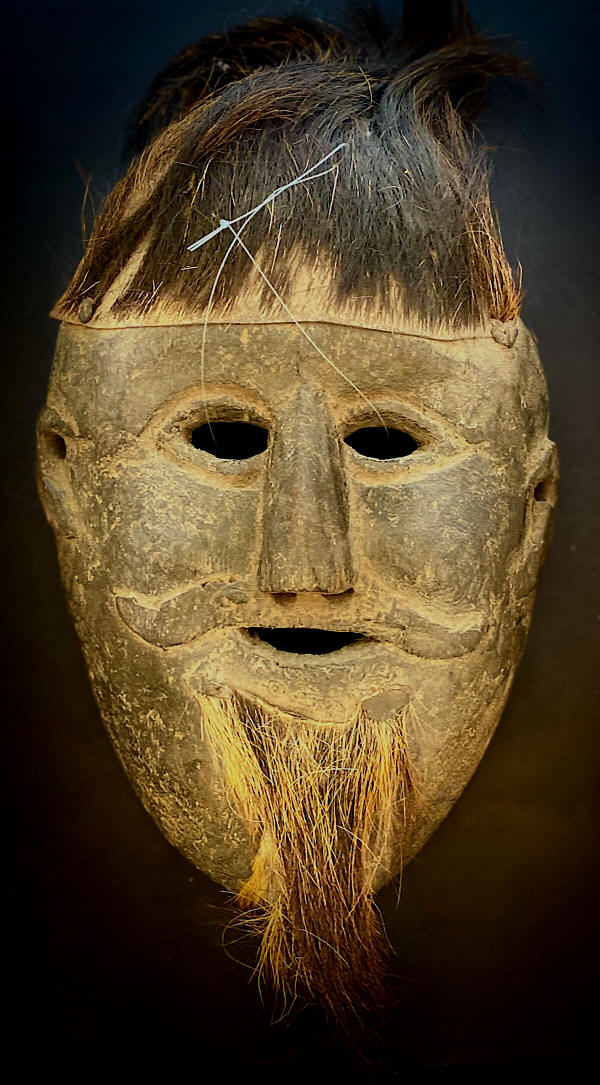
This unusually lifelike ritual mask from the central hill regions of Nepal combines stylized anthropomorphism with organic materials to create a vivid ancestral presence. Carved from seasoned hardwood, this early 19th-century piece features high-arched eyebrows, a pronounced T-shaped nose, and a subtly smiling mouth - all elements that reflect both reverence and animation. Most strikingly, the mask is adorned with natural fur 'hair' at the forehead and a long fiber beard and mustache, offering an unmistakable lifelike quality and ritual gravitas.

Such masks were likely used in seasonal fertility rituals or ancestral invocations, where the addition of hair or fiber was believed to 'complete' the spirit and allow its temporary embodiment by the shaman or ritual performer. The symmetry and care in facial rendering suggest the mask may have represented a venerated elder or guardian spirit - possibly worn during funerary ceremonies or rites of passage.

The surface patina is rich with age, including traces of oil, soot, and contact wear. Hair is inserted with wooden pegs or hand-braided cord, firmly affixed and fully intact - rare for an object of this age. The slight wear and cracks only enhance its authenticity, anchoring it deeply in Nepal's living shamanic heritage.

Material: Hardwood, natural fur (forehead), plant fiber (beard and mustache)
Dimensions: 23,5 * 17 cm
Cultural Attribution: Tamang or Chepang community, Central Nepal
Estimated Date: Early 19th century
Provenance: Collected in Ramechhap District c. 1915, held in private Danish collection
Condition: Very good for age; hair and fibers are well-preserved; structurally sound
Comparable Examples: Musee Barbier-Mueller, Geneva; Art Tribal Himalaya reference collections

Price: 2000 EURO


See the mask from the rear


Nepali mask 9

 
Guardian Ancestor Mask - Nepal, Late 19th to Early 20th Century
Tamang or Magar Origin - Minimalist Ritual Mask with Sculptural Balance

This superbly carved wooden mask from the central highlands of Nepal exudes a quiet, stoic dignity that distinguishes it from more expressive ritual counterparts. Likely created in the late 19th to early 20th century, it represents a high level of local craftsmanship with restrained geometry and purposeful symmetry - reflecting a spiritual function oriented more toward presence and protection than fear or drama.

The face is broad and slightly rounded, with deeply incised arched brows, narrow almond-shaped eyes, and a long, finely tapering nose. The closed, horizontal mouth slit and firm chin suggest an emotionally neutral or meditative character, perhaps representing a clan elder, watchful guardian spirit, or ancestral intermediary invoked in harvest, initiation, or boundary rites.

Unlike more aggressive or distorted masks used in exorcism, this piece belongs to a calmer visual tradition. Its proportions are almost architecturalcr - afted for clarity, weight, and balance. The thick walls and robust facial planes reflect an object made for longevity and ritual continuity, perhaps even fixed to the wall of a shrine or home after its performative use.

A soft, deep brown patina with minor abrasion and natural oxidation covers the surface, while subtle tool marks and edge wear confirm it was handmade, not a later tourist piece.

Material: Carved hardwood with aged patina
Dimensions: 27 * 18,5 cm
Cultural Attribution: Tamang or Magar community, Nepal
Estimated Date: Circa 1880 - 1920
Provenance: Private Himalayan collection; reportedly acquired near Dhading District, early 20th century
Condition: Excellent; stable surface with soft wear and original carving details intact
Comparative References: Similar masks of sober expression and balanced form can be found in the Rietberg Museum (Zurich) and National Museum of Nepal (Kathmandu)

Price: 1500 EURO


See the mask from the rear


Nepali mask 10

 
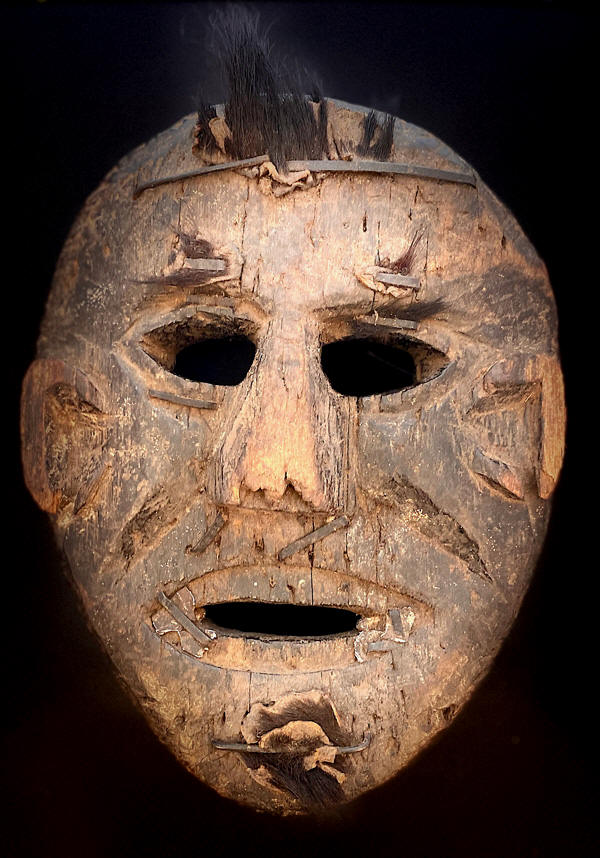
Healer's Mask with Sutures and Hair Tuft - Nepal, Early 19th Century
Chepang or Tamang Ritual Object - Scarred Spirit Effigy with Symbolic Repairs

This extraordinary mask is one of the most evocative and emotionally potent pieces in the Himalayan shamanic tradition. Carved in the early 19th century, it has been extensively used, repaired, and modified - transforming it into a living document of sacred function, wear, and healing. Its distressed surface, stitched repairs, and organic additions tell a visual story of spiritual endurance, ritual labor, and ancestral embodiment.

The mask features a sharply modeled nose, expressive oval eyes, and a wide open mouth framed by iron staples and wood reinforcements - a form of ritual mending common in shamanic practice. These 'sutures' are never merely practical; they are understood to restore the spiritual integrity of the mask itself, ensuring it can continue to house protective or healing forces.

A small tuft of black animal hair is inserted at the top of the forehead, further animating the mask during possession rites. The highly weathered surface and the deliberate incised lines radiating from the cheeks suggest its use as a spirit mask worn during trance, illness exorcism, or fertility rites. The jagged lines may represent lightning, tears, or energetic channels.

This mask is not only an ethnographic object - it is a spiritual survivor, visibly marked by the forces it was meant to channel and the rituals it once inhabited.

Material: Hardwood with animal hair tuft, iron wire staples, and hand-carved reinforcements
Dimensions: 25 * 19 cm
Cultural Attribution: Chepang or Tamang, Central Nepal
Estimated Date: Early 19th century
Provenance: Field collected in Makwanpur region, 1920s; private European collection thereafter
Condition: Worn but stable; heavy ritual wear with multiple repairs and sacrificial markings
Comparative Examples: Comparable 'sutured' masks in the Musee d'Ethnographie de Geneve and the Ethnographic Museum of Zurich; featured in Shamanism and the Mask (R. Muller, 1981)

Price: 3000 EURO


See the mask from the rear


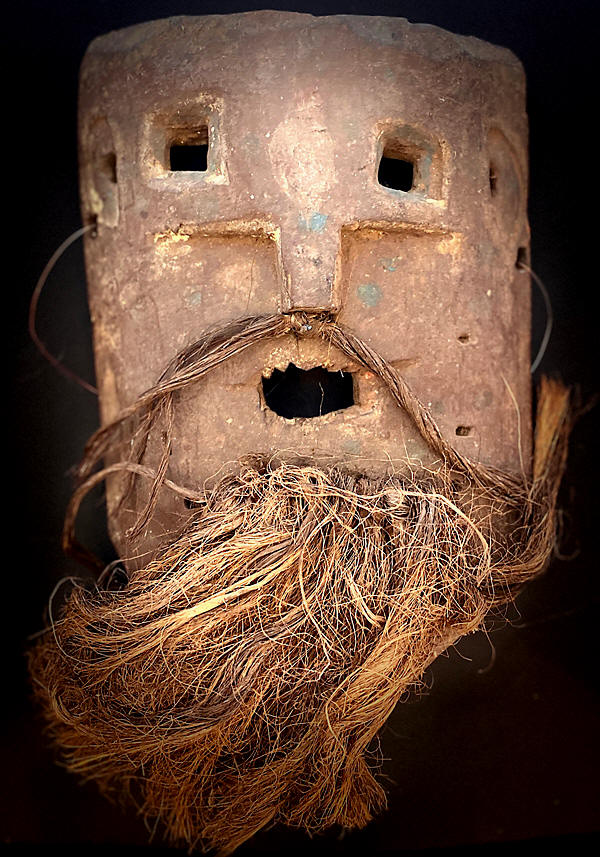
Nepali mask 11

 
Geometric Spirit Mask with Beard - Nepal, Early 19th Century
Chepang or Hill-Tribe Origin - Ritual Object with Facial Fiber Ornamentation

This bold and evocative mask from Nepal stands apart for its geometric abstraction and rich organic adornment, embodying both the elemental forces of Himalayan nature and the metaphysical imagination of indigenous ritual life. Believed to be carved by the Chepang or other Central Hill tribal group in the early 19th century, the mask features an architectural, almost cubist form with square eye apertures, a deeply chiseled T-shaped brow and nose, and a rectangular mouth.

Its most remarkable feature is the natural fiber mustache and voluminous beard, carefully affixed with plant twine and knotted at the edges. These fibers - likely from hemp or jute - animate the face with lifelike movement during dance and ritual performance, enhancing its presence in both physical and spiritual dimensions. Such masks were used in animist ceremonies, often worn by shamans (jhankris) invoking ancestral spirits, forest deities, or guardian entities.

The mask's weathered surface bears faded earth-tone pigment traces, embedded soot, and abrasion from handling - visible markers of extensive ceremonial life. The asymmetry and irregular cuts further affirm its hand carved authenticity, resisting modern replication.

Square eyes and a squared head may symbolically represent the 'dwelling' of the spirit or protective ancestors - where the mask becomes not a disguise, but a vessel.

Material: Carved hardwood with organic fiber (jute or hemp) beard and mustache
Dimensions:
26,5 * 17 cm
Cultural Attribution: Chepang or related central Nepalese tribal group
Estimated Date: Early 19th century
Provenance: Private collection, originally acquired in the Makwanpur District ca. 1920
Condition: Structurally solid; excellent ritual patina; fiber attachments original and complete
Comparative Context: Comparable masks exist in the Ethnographic Museum of Geneva and Pitt Rivers Museum, though this specimen's facial hair distinguishes it as an especially rare ethnographic treasure.

Price: 4000 EURO


See the mask from the rear


Nepali mask 12

 
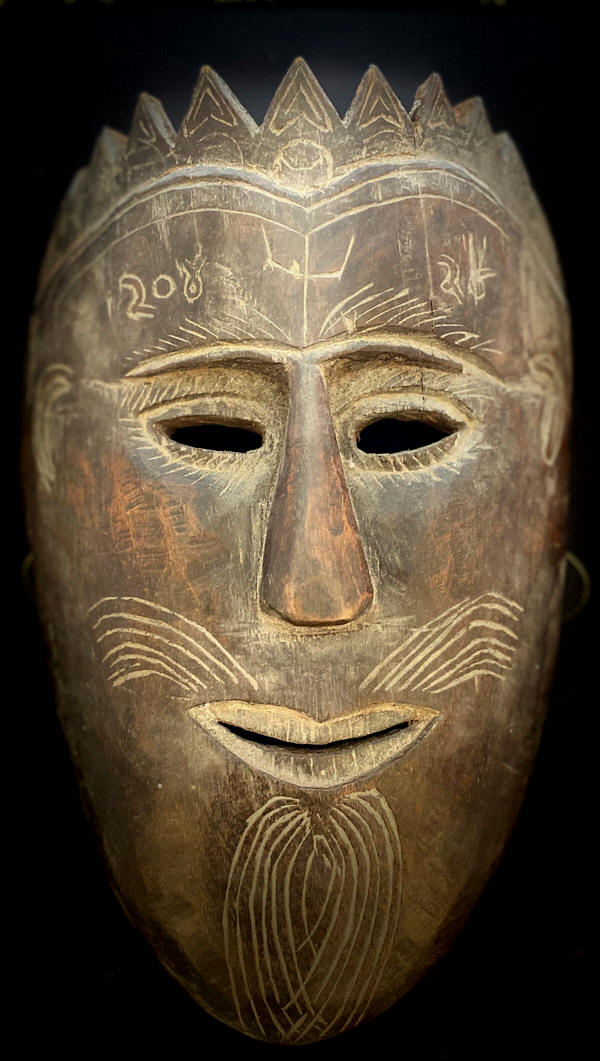
Vintage Himalayan Mask with Incised Crown and Beard Motifs - Nepal, Mid-20th Century
Folk-Ceremonial Face with Symbolic Carving - Possibly Tamang or Magar Tradition


This finely carved wooden mask from central Nepal likely dates to the mid-20th century and was created within the visual language of older ritual traditions. Although not as aged as earlier ceremonial masks, it retains a strong ethnographic presence and reflects the continuation of shamanic and animist symbolism in folk artistry well into the modern period.

Distinguished by its incised crown motif along the forehead - flanked by sacred geometric lines and symbolic numerals - this mask portrays a serene, dignified figure, possibly evoking a village elder, guardian spirit, or cultural hero. The detailed etching around the eyes, cheeks, and chin mimics facial hair and aura-like energy, suggesting a stylized ancestral or divine representation.

The deeply carved almond-shaped eyes and long vertical nose are hallmarks of Himalayan tribal style, while the warm patina and hand-incised surface designs lend it a rich visual texture. The smiling mouth and stylized beard may indicate the mask was used in non-aggressive rituals - such as seasonal blessings, theatrical storytelling, or initiation dances.

Though likely produced for continued ritual or performative use, this mask also reflects a growing mid-20th century aesthetic crossover - crafted by traditional artists, but during a time when such works began entering the ethnographic and tourist art markets as well.

Material: Carved hardwood with incised motifs, aged natural patina
Dimensions: - 27 * 17 cm
Cultural Attribution: Tamang or Magar, Nepal
Estimated Date: Mid-20th century (ca. 1940s-1960s)
Condition: Very good; age-related wear and oxidation consistent with decades of storage or light ceremonial use
Provenance: Private collection, acquired in Nepal in the 1970s
Comparative Examples: Later village ritual masks from the Solu-Khumbu and Rasuwa regions

Price: 750 EURO


Nepali mask 13


Bearded Spirit Mask - Nepal, Early 19th Century
Animist Ritual Mask with Natural Fiber Beard ' Possibly Tamang or Chepang Origins

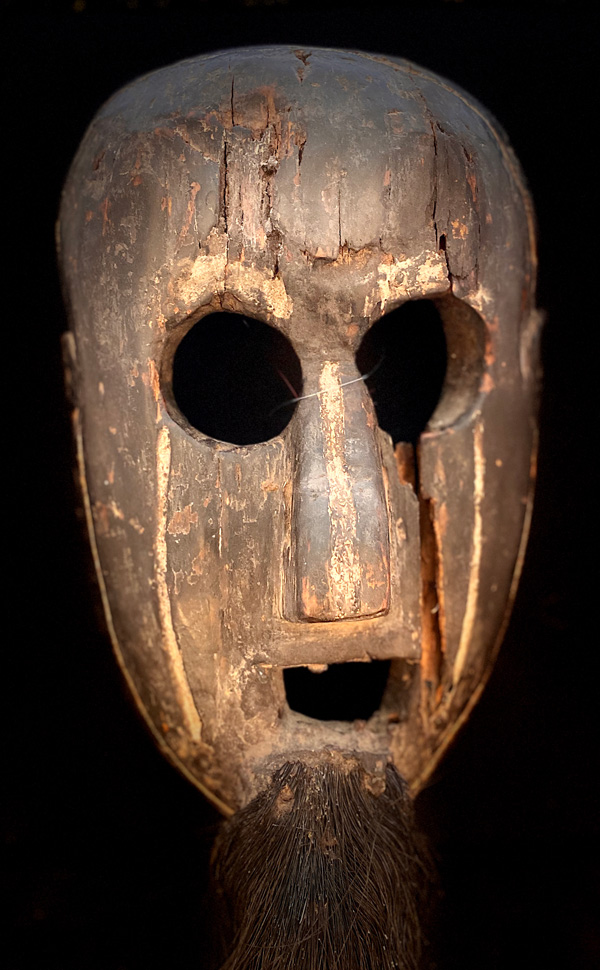
This dramatic and minimalist ritual mask from the central Himalayan foothills of Nepal exemplifies the primal force and sacred austerity of early animist carving traditions. Dating to the early 19th century, it is hand-carved from a single block of hardwood, darkened by age, soot, and elemental exposure. The most striking feature is its attached beard of coarse natural fiber, symbolizing age, wisdom, or connection to animal totems - often invoked during trance ceremonies.
 
The large, round eye holes and rectangular open mouth create a ghostly void, while the ridged nose and vertically incised facial lines echo the visual language of mountain spirits or ancestral guardians. Worn during ritual dance or possession rites, the mask's simplicity amplifies its shamanic potency, with cracked and flaked surfaces adding to its numinous presence.
 
The long vertical fissures and edge damage are consistent with genuine age and ritual use. This kind of wear is not a flaw but a mark of life, showing the mask was used, repaired, and revered - possibly worn by village shamans (dhami-jhankris) during communication with spirit realms or in protection rites for harvest and fertility.
 
The addition of the hair or fiber beard is rare and elevates the piece from a typical face mask to a charged ceremonial avatar.
 
Material: Hardwood with natural pigment traces and vegetal or animal fiber beard
Dimensions:
31 * 19,5 cm 
Cultural Attribution: Likely Tamang or Chepang ethnic group, Nepal
Estimated Date: Early 19th century
Provenance: From an old Kathmandu collection; field-collected prior to 1925
Condition: Structurally stable with extensive ritual wear, cracks, and surface weathering. The beard remains intact and attached.
Comparative Notes: Strong stylistic parallels with masks in the Musee du Quai Branly (Paris) and National Museum of Nepal; prized for its rawness and sculptural restraint.

PRICE: 2500 EURO


See the mask from the rear


Nepali mask 14


Sugriva Mask - Nepal, Early to Mid-19th Century
Himalayan Theatrical or Ritual Representation - Likely Tamang or Newar Tradition

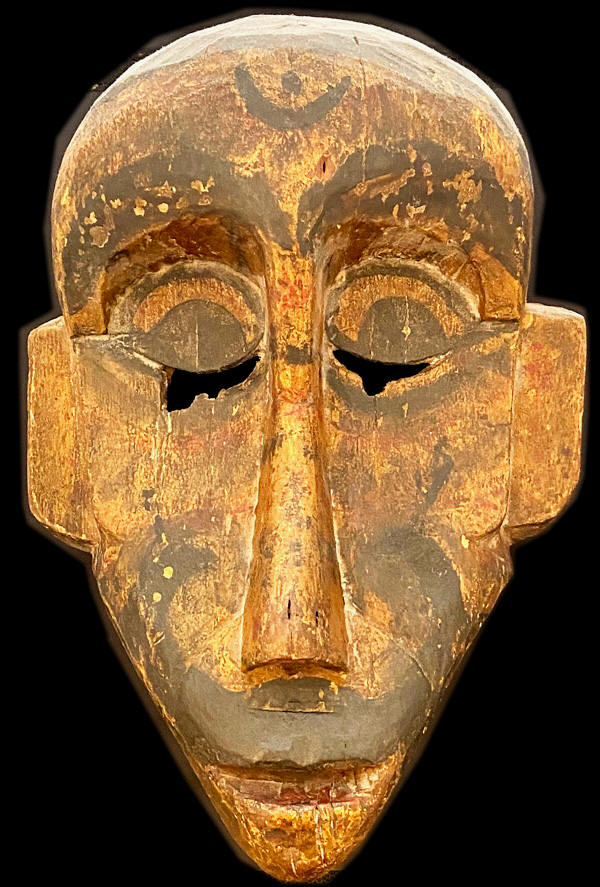
This striking carved wooden mask depicts a stylized anthropomorphic figure and is believed to represent Sugriva, the monkey-king ally of Rama from the Hindu epic Ramayana. Though traditionally linked with Indian iconography, the figure of Sugriva found its way into Himalayan folk theatre, shamanic performance, and Ramleela enactments, often with local reinterpretation.

Here, Sugriva is rendered with broad, simplified features, arched and painted eyelids, and a long tapering nose - evoking both simian and human characteristics. The crescent symbol on the forehead may allude to spiritual sight or lunar alignment, connecting the figure to tantric or cosmic associations found in Himalayan ritual systems.

This mask would have been worn during ritual storytelling, trance performance, or village drama, where gods, demons, and animal-spirits were invoked through dance and song. The stylized ears and closed-eye carving suggest a character in meditation or deep inner vision - traits associated with divine monkey heroes like Sugriva and Hanuman.

The wood is richly aged, with visible layers of pigment (reds, yellows, blacks) now oxidized and partially worn, and a darkened patina from smoke, oils, and use. There are surface abrasions, old chips, and hairline cracks consistent with a ritual object well over 150 years old, adding to its authentic, time-worn dignity.

Material: Hand-carved hardwood with mineral and vegetal pigments
Dimensions:
 34 * 23 cm
Cultural Attribution: Tamang or Newar artisan tradition, Central Nepal
Date: Early to mid-19th century
Provenance: Private Kathmandu Valley collection, acquired before 1930
Condition: Excellent ethnographic condition; stable surface with expected ritual wear
Comparative References: Sugriva and Hanuman figures in Ramayana theatre masks from both Indian and Himalayan folk traditions; parallels in the Lalitpur Mask Museum and Musee Guimet (Paris).

PRICE 2000 EURO


See the mask from the rear


Nepali mask 15


Tiger Spirit Mask - Nepal, Early 19th Century
Zoomorphic Ritual Mask with Painted Eyes - Possibly Chepang or Tamang Origin

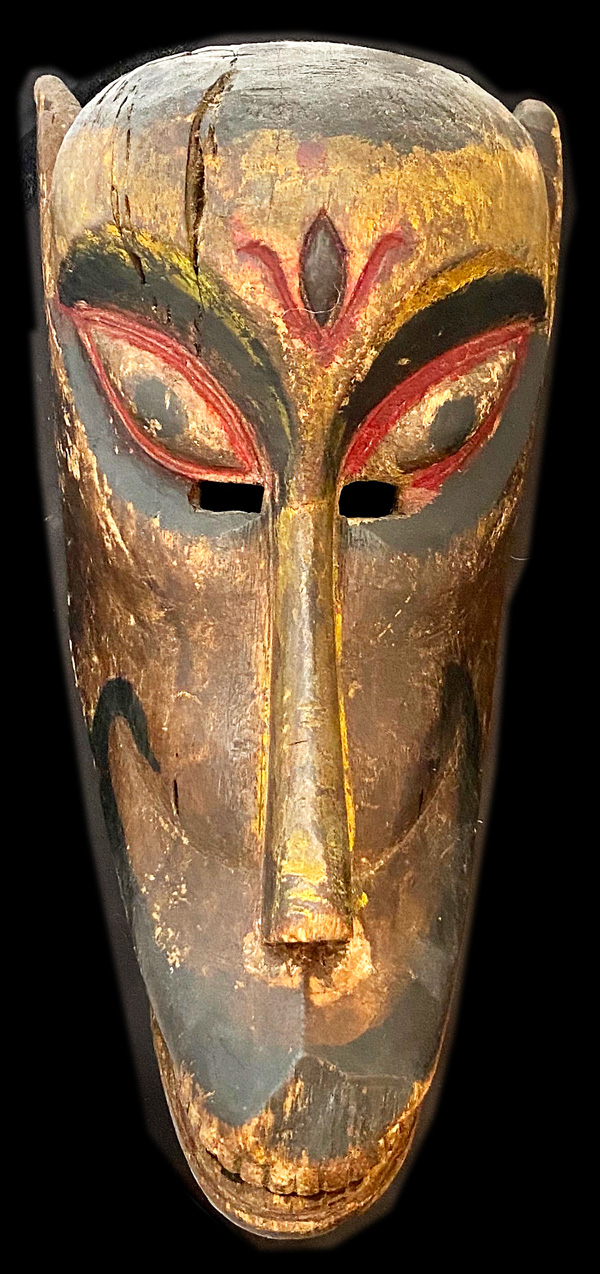
This elongated, narrow wooden mask represents a stylized tiger or feline spirit, an archetype found throughout Himalayan animist and shamanic traditions. Its highly abstract formfe- aturing dramatically arched and painted eyes, a narrow, pointed snout, and faintly incised teeth - signals its identification not with a human ancestor, but with a non-human protector or predator figure. Carved from a single piece of dense hardwood, the mask exhibits rich surface wear and deep ritual patina, dating it confidently to the early 19th century.

Tiger and leopard spirits were often invoked by shamans (jhankris) for protection, power, or healing. In Chepang and Tamang traditions, such masks would be worn during possession rituals, trance dances, or agricultural blessings. The facial paint - red, yellow, and black - is symbolic of elemental forces (blood, earth, and shadow) and also emphasizes the ferocity and liminal power of the spirit being represented.

A prominent forehead motif resembling a third eye or flame marks the mask as charged with spiritual force, possibly related to tantric cosmology or forest deities. The long vertical crack and pigment loss are consistent with heavy use and natural aging. The stylized fangs subtly carved at the base of the mouth reinforce the animalistic identity, while the hypnotic painted eyes lend it an almost otherworldly presence.

Material: Hand carved hardwood with mineral pigments in red, yellow, and black
Dimensions:
40 * 18 cm
Cultural Attribution: Tamang or Chepang highland traditions, Nepal
Estimated Date: Early 19th century
Provenance: Acquired from a private Kathmandu collection, documented before 1930
Condition: Excellent ritual condition; visible cracks and pigment loss consistent with age and use
Comparable Examples: Musee du Quai Branly (Paris), Ethnographic Museum of Geneva; tiger and feline spirit masks in Himalayan trance traditions


PRICE 2500 EURO


See the mask from the rear


Nepali mask 16


Silent Sentinel Mask - Nepal, Early 19th Century
Monolithic Wooden Ancestor Effigy - Tamang or Chepang Shamanic Tradition

This profoundly carved mask - minimalist, weathered, and elemental - embodies the primordial gravitas of Nepalese animist ritual art. Likely created in the early 19th century, it would have been used by Tamang or Chepang shamans as a spiritual conduit - possibly an ancestor figure, forest guardian, or embodiment of unseen forces called upon during rites of protection, transition, or healing.

Its deeply recessed rectangular eyes, long angular nose, and tightly closed rectangular mouth all signal withdrawal, containment, and spiritual vigilance - a mask not meant to express emotion, but to embody presence. The absence of surface decoration and the rough, adze-scarred texture affirm its role as a function-first ritual object, not made for show, but to be inhabited.

Cracks, burnishing, and edge chipping reflect long-term ritual use and exposure. The thick, almost megalithic structure of the mask implies it was not worn for performance alone, but likely fixed to shrines or used in trance states, where the mask served as a spiritual threshold between human and spirit realms.

Its monolithic energy and pared-down abstraction mark it as one of the most powerful works in the Himalayan ritual tradition - close in spirit to sacred sculpture more than theatrical prop.

Material: Heavily patinated hardwood with smoke exposure and deep carving marks
Dimensions:
26 * 15 cm
Cultural Attribution: Tamang or Chepang peoples, central Nepal
Estimated Date: Early 19th century
Provenance: Field collected before 1920 in the Solu-Khumbu region; private European collection since
Condition: Heavy ritual wear, minor cracking, oxidized surface, structurally solid
Comparable Works: Rare ancestor masks of similar form can be found in the Barbier-Mueller Museum (Geneva), Rietberg Museum (Zurich), and selected Himalayan ethnographic archives


PRICE: 2500 EURO


See the mask from the rear


Nepali mask 17


Tattooed Spirit Mask with Inlaid Teeth - Nepal, Early 19th Century
Tamang or Chepang Shamanic Tradition - Ancestral Face with Ritual Markings

This evocative and symbolically rich mask from the central Nepalese hills likely represents a ritually tattooed ancestor or tribal guardian, carved in the early 19th century and used in ceremonies involving healing, protection, and ancestral communion. It stands out for its incised scarification motifs, punched facial marks, and a highly expressive mouth featuring inlaid or pegged 'teeth', possibly crafted from horn, bamboo, or animal bone.

The facial markings - triangular radiations from the center forehead, an X over the cheek, and vertical chin incisions - closely resemble ritual tattoos or clan scarification patterns, suggesting this mask once embodied a specific tribal archetype or revered spirit. The double ear holes, once strung with cords or amulets, confirm it was worn in trance rituals or displayed in sacred shrines.

The eyes are narrow, with gently flared contours, carved with extreme sensitivity despite the rugged surface. The incised crown-line around the skull suggests hair, headgear, or a sacred division between earth and sky. The patina is mottled, soot-darkened, and worn - an authentic witness to decades of ceremonial handling, village fires, and atmospheric exposure.

The barred mouth is particularly powerful. It may symbolize:

The containment of speech in trance states

The boundary between living and ancestral voices

A protective motif invoking silence, restraint, or taboo

Material: Carved hardwood with soot patina and tooth inlays (likely horn or wood); facial incisions
Dimensions:
31 * 22 cm
Cultural Attribution: Tamang or Chepang, Central Himalayan region
Estimated Date: Early 19th century
Provenance: Acquired from a private European ethnographic collection, original field documentation dates to 1926
Condition: Strong and intact; inlays secure, surface worn and stable; minor cracking from age
Comparative Context: Closely related to tattoo-marked shamanic masks in the Rubin Museum of Art (New York) and the Museum of Cultures (Basel)
 

 PRICE: 4000 EURO


See the mask from the rear


Nepali mask 18


Ancestral Mourning Mask
Western Nepal or Northern India, ca. Early to Mid-19th Century
Shamanic Lineage Object with Rare Mouth Detailing and Perforation Rites

Carved with a raw spiritual intensity, this rare mask likely belonged to the ritual paraphernalia of a Western Nepalese shamanic tradition, possibly among the Chepang, Magar, or Tharu ethnic groups. The angular form, high cheek walls, and tormented mouth imbue it with a primordial and sorrowful expression, suggesting its use in rituals of mourning, exorcism, or trance communication with the dead.

What sets this piece apart is its exceptional surface corrosion and mouth zone, deeply pierced and worn down over generations of ritual use. The mouth bears what appears to be ritual incising or fire-tool shaping, creating a jagged, serrated effect -possibly symbolic of suffering, silence, or restrained howling in funerary rites.

The deep eye cavities with heavy edge wear indicate prolonged wearing or transport. Two drilled holes above the lips suggest earlier attachment of facial ornaments - possibly bone, cloth, or symbolic teeth. Similar puncture patterns can be seen in masks documented by the [Museo delle Culture, Lugano] and older Himalayan field surveys.

Features & Notes:

Material: Hardwood with deep soot and oil patina, evidence of smoke curing, charcoal rubbing, and field repairs

Date: Early to Mid-19th Century

Dimensions:
26 * 14 cm

Condition: Cracked, worn, stable - surface erosion fully consistent with age and field use; museum-quality authenticity

Provenance: From a longstanding private Belgian collection with records tracing back to c. 1940s missionary fieldwork

Comparative Examples: Comparable to pre-1900 Nepalese ritual masks in the Barbier-Mueller Collection and Nepalese tribal archives

Scholarly Context:
This mask likely served both as a transformative identity and a protective amulet for its wearer, who might have entered trance or lamented ancestral suffering through performance. The flattened head design and vertical facial symmetry hint at cultural ideals of solemnity, silence, and ancestral authority.

Its stark form is best appreciated under soft lighting, which reveals the micro-erosions, soot layering, and incised tool marks - silent traces of its long journey through Himalayan ritual landscapes.

 PRICE 2500 EURO


See the mask from the rear


Nepali mask 19


Primal Guardian Mask with Serrated Teeth
Possibly Chepang or Tharu, Western Nepal, Early to Mid-19th Century

Ferocious in expression yet primitive in execution, this mask confronts the viewer with a mouth of sharpened fangs, gouged with crude intensity - either by blade, fire, or ritual tool. The deep orbital cavities and flattened skull dome suggest an early tradition of protective or apotropaic masks, possibly used to scare off malevolent spirits or disease-bearing entities in liminal village rituals.

The symmetry of the forehead band, with its chiseled upper ridge, implies some degree of stylization - perhaps even ancestral reverence. But everything else about this object screams immediacy and purpose: no polish, no refinement, just spirit power rendered in wood. One might speculate its usage by a local jhankri (shaman) invoking fearsome forest entities or animistic guardian beings.

Key Characteristics:

Material: Dense hardwood, extensively aged and cracked, with insect wear and root dye oxidation

Mouth Detail: Triangular 'fangs' carved in reverse - evocative of demons or warning figures

Eye Form: Rounded gouges with decayed edges; asymmetry adds to its primal force

Date: ca. 1800 - 1850

Dimensions: 24 * 16 cm


Provenance: Private Danish Collection; believed to have passed through missionary hands before 1950

Comparable Examples: See similar fierce-toothed guardian masks in the Musee du Quai Branly (Paris) and the Rubin Museum archives

Commentary:
If one were to imagine the earliest mask ever carved, it might look like this: not a theatrical object, but a functional amulet, shaped in haste, steeped in earth and fire, and worn to stand between the human realm and the forest of spirits. It is perhaps the most animalistic in your collection - its violence still palpable.


 Price: 2500 EURO


See the mask from the rear


Nepali mask 20

 
Silent Sentinel Mask with Split Crown
Western Nepal (likely Gurung or Magar traditions), ca. 19th Century

Carved from dense, iron-rich hardwood, this mask presents a calm, stone-faced presence - its power lying not in ferocity, but in an austere, silent watchfulness. The vertical crack running through the center of the brow, extending to the crown, suggests age and use, yet the form remains remarkably intact, almost geometric in symmetry.

Unlike many Himalayan masks that lean into expressionism, this one offers a classical composure, with angular cheeks, a trapezoidal nose, and an unemotional mouth. Its aesthetic leans closer to Neolithic or Cycladic abstraction than to theatrical distortion - making it ideal for contemporary collectors or galleries seeking minimalist tribal art.

Key Characteristics:

Material: Hardwood, oxidized with deep surface pitting; blackened edges around eye and mouth sockets

Distinctive Feature: Central frontal split suggesting ritual stress or burial exposure

Date: Estimated mid-to-late 1800s

Dimensions:
22 * 19 cm

Region: Western Nepal, potentially Magar or Gurung use

Function: Ancestral vigil or village perimeter protector

Provenance: Private collection, Denmark

Comparable: Cf. British Museum (acc. no. AS1972.01), simpler guardian masks from Karnali Zone


Minimal yet monumental. This mask embodies a raw, tribal modernism - its sharp lines and battered surface making it equally at home in a contemporary design space or ethnographic cabinet. A rare convergence of folk ritual object and abstract sculpture.


Price: 4000 EURO


See the mask from the rear


Nepali mask 21


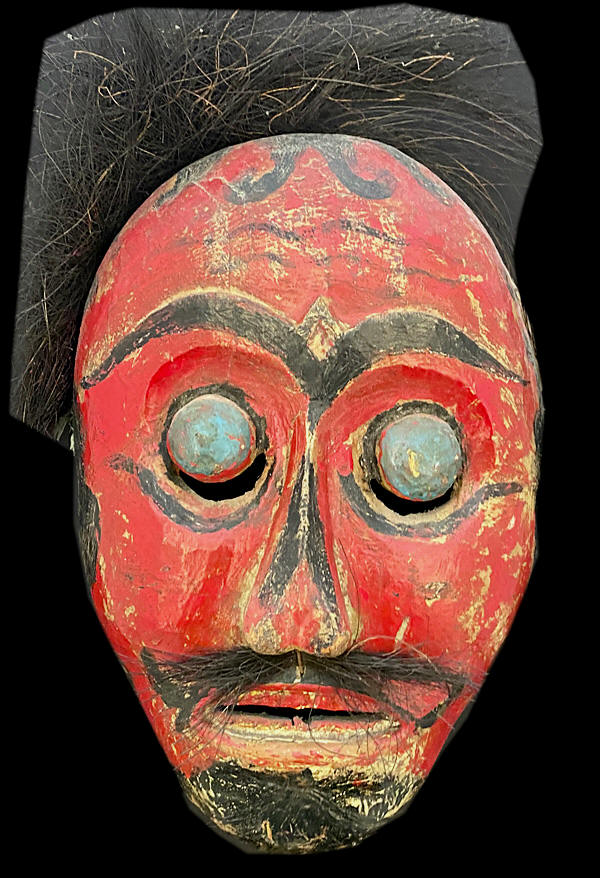
Red Spirit Mask with Moustache and 'Glass' Eyes
Terai Region, Nepal  - Bengali Settler Folk Craft, ca. 1880 - 1920

This boldly painted mask belongs to a unique regional genre in the southern Terai plains of Nepal, likely crafted by Bengali artisans who migrated northward during the 19th century. The exaggerated turquoise-glass eyes, black moustache made of coarse hair, and blood-red background give the piece a hypnotic, almost psychedelic presence - straddling the line between ritual use and folk theatre.

Unlike the austere Himalayan mountain masks carved in raw hardwood, this one reflects the colorful, dramatic aesthetic of Bengali devotional storytelling, possibly linked to Ramayana performances, village exorcisms, or ancestral ceremonies.

Key Characteristics:

Material: Lightweight softwood with original red and black pigment; strong blue color inlays for eyes; human or animal hair for moustache and eyebrows

Style Influence: Bengali folk art meets Himalayan ritual tradition

Function: Possibly exorcistic, theatrical, or related to rural guardian worship

Provenance: Terai region (border zone near Bihar, India), private Danish collection

Dimensions:
25 * 17 cm

Comparable: Village masks in Biratnagar and Bhadrapur; cf. Assamese and Bengali Shitala Puja masks


A hypnotic mask from the Nepali Terai - Bengali craftsmanship meets Himalayan animism. Rare survivor of a cross-cultural folk tradition.


 PRICE: 3500 EURO


See the mask from the rear


Nepali mask 22


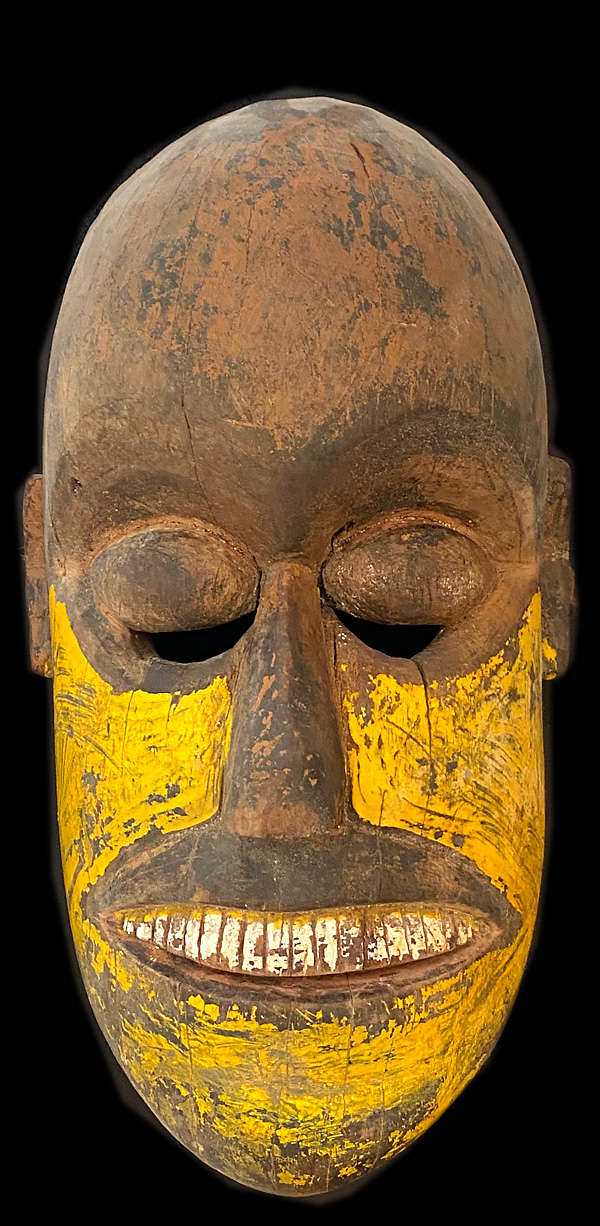
Grinning Yellow Guardian Mask
Terai Region, Nepal - Folk Ritual, ca. 1920 - 1950

This mask features heavily stylized features and a luminous yellow pigment, still vivid despite decades of use. The closed, almond-shaped eyelids and the exposed teeth create a dual expression - serene yet mischievous, possibly representing a trickster or protector spirit.

The bold yellow may symbolize divine presence, vitality, or purification, common in both Hindu and indigenous Terai cosmologies. This type of mask is often associated with village exorcism rituals, seasonal festivals like Maghi, or performances linked to Bhuwa and Jhankri healing traditions.

Key Features:

Material: Softwood with ochre and black pigment, inset cowrie-shell teeth or painted carvings

Style: Hybrid of Bengali folk theatrical masks and Tharu tribal forms

Condition: Surface wear consistent with age and repeated ceremonial use

Dimensions:
35 * 21 cm

Function: Possibly danced by shamans, masked actors, or festive guardians in community rituals

Comparable: Santal and Maithili masks from northern Bihar and eastern Terai belt

Rare yellow Terai mask with a trickster's smile - ceremonial, mysterious, and radiating warmth. A gem of syncretic folk spirituality.

 
 PRICE: 3500 EURO


See the mask from the rear


Nepali mask 23


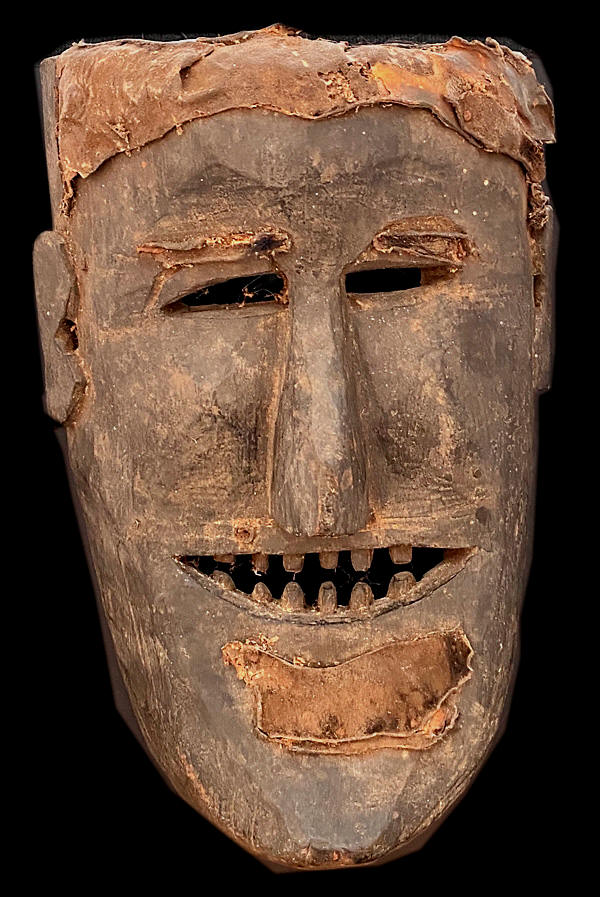
Hill Mask with Bark Headdress and Toothy Grin
Western Nepal or Lower Himalaya - ca. 19th to early 20th century

This mask has an unmistakable raw presence. The naturalistic but exaggerated facial form, deeply recessed narrow eyes, prominent triangular nose, and mouth lined with individually carved teeth all hint at protective or exorcistic ritual functions. Of particular note is the leather or bark band affixed to the crown - suggesting symbolic hair, fire, or possibly divine wrath.

Key Indicators:

Material: Dense hardwood with dark aging patina; vegetable bark or hide remnants above

Style: Crude yet expressive, typical of isolated tribal workshops in highland zones (Dolpo, Bajura, or Himachal)

Function: Possibly used by shamans (jhankris) in spirit-channeling or sickness-expelling ceremonies

Condition: Original, unrestored; sacred grime intact

Dimensions:
32 * 21 cm

Symbolism: The worn look and the smiling mouth with jagged teeth may point to deceptive spirits, playful deities, or mockeries of illness-bearing demons


Rare hill-tribe exorcist mask, smiling with wild confidence - authentic, old, and full of shamanic mystery. One of a kind.


 PRICE: 2500 EURO


See the mask from the rear


Nepali mask 24


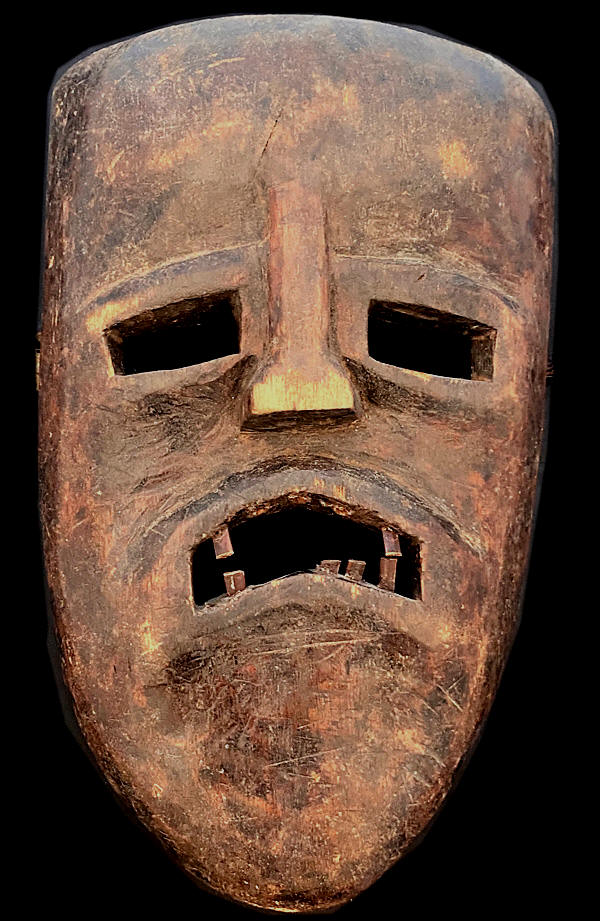
Exorcist Mask with Anguished Expression
Western Nepal - 19th or early 20th century

This mask is a classic example of an exorcistic hill tribe face, likely from western Nepal, possibly Karnali or Bajura region, carved in a stark, expressionistic mode.

The forceful mask embodies the raw, emotional expressiveness of Himalayan ritual aesthetics. The bitter grimace, marked by upturned brows and a sharply carved, tooth-filled mouth, appears designed to both intimidate malevolent spirits and mirror the psychic pain being expelled in healing rites. The square-cut eye holes and deeply recessed facial lines lend it a sculptural severity bordering on modernist abstraction.

Attribution & Features:

Origin: Western mid-hills, likely Khas or Magar shamans' tradition

Material: Dark hardwood with aged patina

Carving Style: Primitive/ritualistic - expressive distortion emphasized over anatomical realism

Mouth: Possibly represents screaming, vomiting, or laughing - all common features in masks used for spirit expulsion

Condition: Beautiful wear from handling and possible fire exposure; some original pigment traces may be faintly visible.

Dimensions:
28 * 17 cm

Rare 19th c. Himalayan exorcist mask with tortured expression. Brutal, raw, and strangely modern in presence. A powerful artifact.

 Price: 2500 EURO


See the mask from the rear


Nepali Mask 25


Powerful Ritual Mask - Nepal, Early 19th Century
Shamanic Protective Spirit Representation - Tamang or Magar Peoples


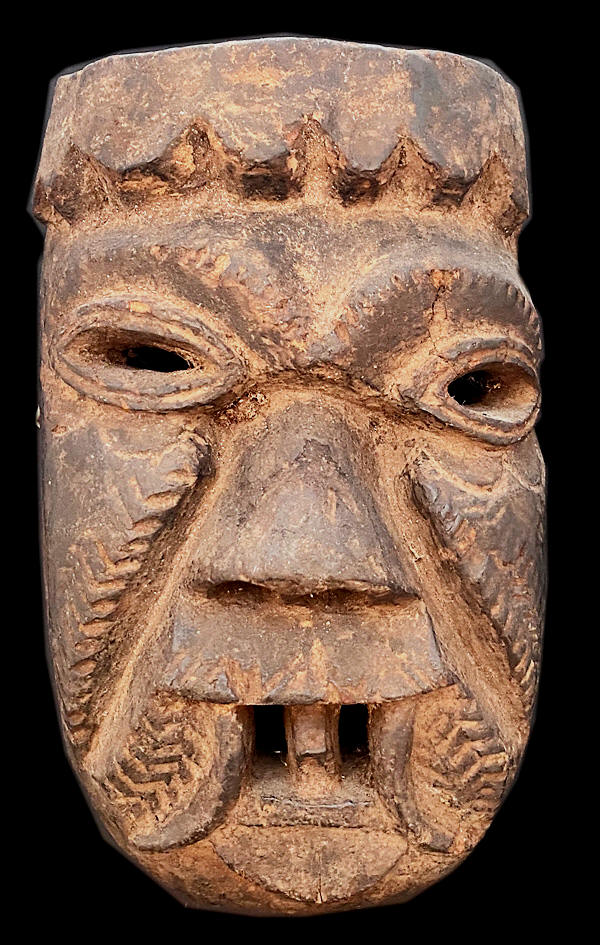
This striking and finely aged ritual mask originates from the Himalayan highlands of Nepal and dates to the early 19th century, a rare survivor of a deep-rooted animistic and shamanic tradition. Carved from a single block of dense native hardwood, the mask features bold, expressive sculptural lines: an angular, sharply modeled nose, protruding lips with two squared incisor teeth, and large almond-shaped eye apertures that once guided the wearer's vision during trance dances and ceremonial processions. The forehead is crowned with a distinctive sawtooth or flame like crest - likely signifying a deity, wrathful spirit, or protective mountain guardian.

Incised geometric patterns on the cheeks and around the mouth are typical of tribal iconography, and may symbolize ancestral markings or energy flows. The back of the mask reveals significant wear and age: deeply patinated wood, soot-blackened cavities, and original stringing holes suggest long-term ritual use, possibly by village shamans or spirit-mediums in exorcisms, fertility rites, or seasonal festivals. The open mouth holes allowed the wearer to chant or breathe while in motion - typical of masks used in performance rather than decorative use.

This piece embodies the fierce, elemental energy of Himalayan mountain rituals. Unlike many later tourist oriented carvings, this mask retains its raw spiritual presence, enhanced by a rich surface patina built up over generations of use.

A highly collectible and museum worthy piece, this mask stands as a rare ethnographic object with strong provenance and clear signs of authentic ritual function. It would make a remarkable addition to any serious collection of Himalayan tribal art, shamanic objects, or early ritual masks.

Material: Hand-carved hardwood with natural darkening from soot, oil, and age
Dimensions:
30 - 26 * 16 cm
Origin: Nepal, most likely from the Tamang or Magar ethnic groups
Date: Early 19th century
Condition: Excellent structural integrity with expected ritual wear, minor cracking, and age-related patina.
Provenance: Private collection, Kathmandu Valley; documented acquisition before 1920

PRICE: 4000 EURO


See the mask from the rear


Nepali mask 26


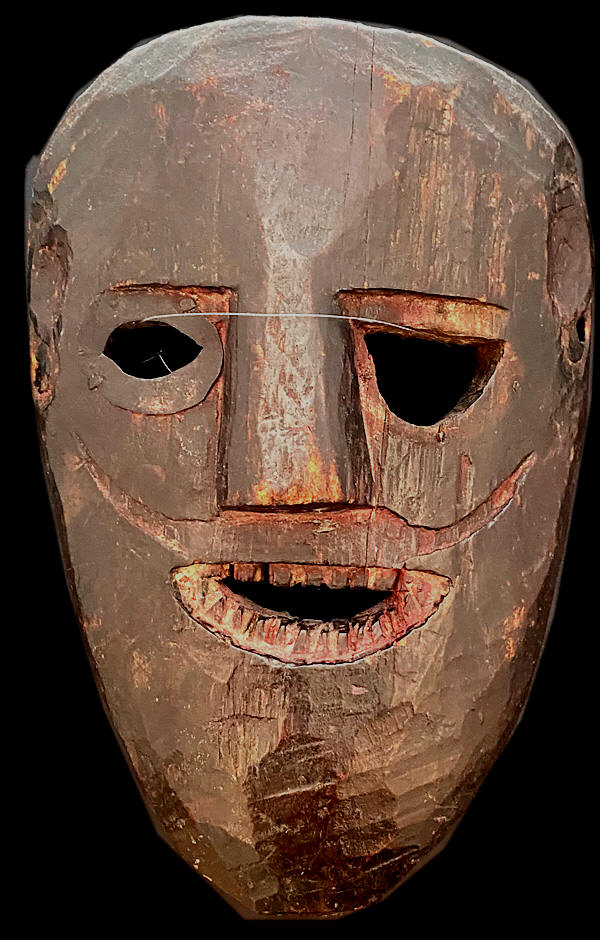
"Crooked Smile" Exorcist Mask - Western Nepal, 19th century

This deeply worn wooden mask features a distorted yet comical smile, partially broken teeth, and an uneven, off-kilter gaze. The left eye is carved larger and rougher than the right, creating an unsettling expression that may have mirrored either a malevolent spirit or a healer's theatrical persona.

This kind of facial exaggeration was often used in healing ceremonies or ritual dramas to scare off disease-bringing demons or mock their presence. The damage and natural darkening suggest heavy field use, possibly over generations. The wire string still affixed indicates it was likely worn in recent decades before being retired.

Features & Analysis:

Region: Likely Karnali zone, or mid-western hill districts

Material: Soft to medium hardwood with natural patination and traces of red pigment

Style: Exorcistic, leaning toward caricature - possibly inspired by human suffering or animal mimicry

Teeth: Deeply cut, roughly symmetrical, with damage consistent with age

Provenance Guess: Local shamanic traditions, possibly Magar or Kham origins

Age Estimate: Mid to late 19th century

Dimensions:
28 * 20 cm

Rare exorcist mask from western Nepal with dramatically skewed eyes and a crooked smile. Dark, comic, and eerie. 19th century, hardwood with deep patina.


PRICE: 2500 EURO


See the mask from the rear


 Nepali mask 27


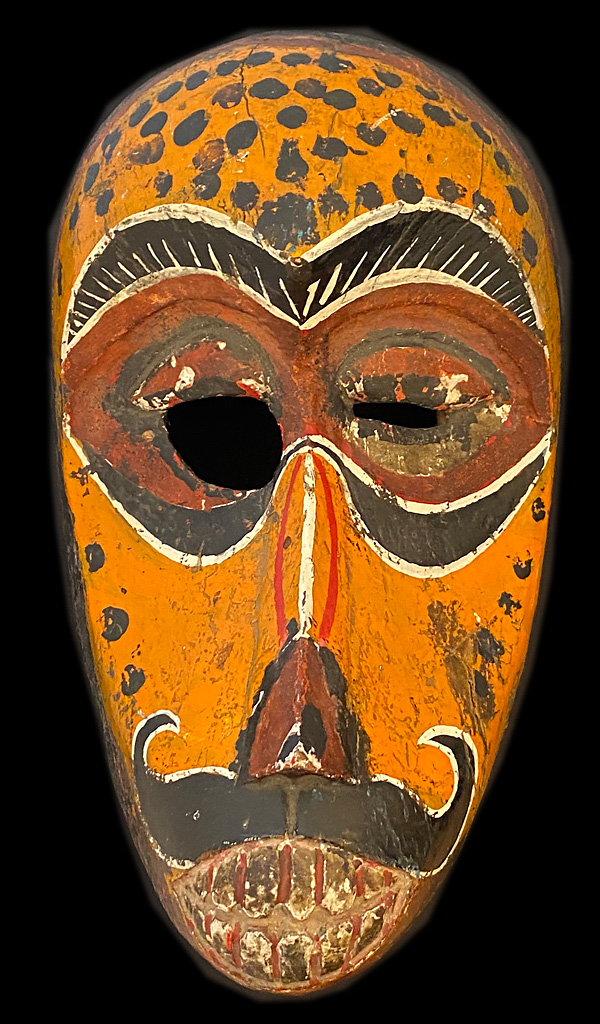
This vividly painted mask is a rare example of Bengali-Terai hybrid folk art, blending animal symbolism, folk theater traditions, and ritual shamanic use.

"Leopard Spirit with Mustache" Ritual Mask
Terai region, influenced by Bengali settlers - early 20th century


This striking mask, painted in bright ochre-orange with black leopard-like spots, portrays a character that straddles the line between animal and man. The wild patterning across the scalp and cheeks suggests a leopard spirit, while the curled mustache, eyebrows, and exposed teeth speak to human identity and theatricality.

Likely used in folk dramas, animal spirit ceremonies, or harvest rituals, the style of this mask hints at the village performance traditions of Bengali settlers in the Nepalese Terai. The single open eye, contrasted with a sealed or painted-over right socket, may symbolize partial vision - perhaps the limited perception of the animal world merging with human consciousness.

Features & Analysis:

Region: Terai lowlands, Nepal; stylistically influenced by Bengali folk masks

Material: Lightweight wood with thick, flaking tempera paint

Design: Anthropomorphic-animal hybrid with exaggerated teeth, feline dots, and theatrical eyebrows

Use: Possibly for seasonal performances, shamanic impersonation, or animal deities invocation

Age Estimate: Early to mid-20th century (ca. 1920 - 1940)

Condition: Structurally stable with vibrant pigment preservation; surface cracks and wear consistent with ceremonial use

Dimensions:
30 * 18 cm

Bold leopard-spirit mask from the Terai region, showing a fusion of animal and human traits. Rare hybrid form influenced by Bengali folk tradition. Tempera on carved wood. Early 20th c.

 Price: 4500 EURO


See the mask from the rear


Nepali mask 28


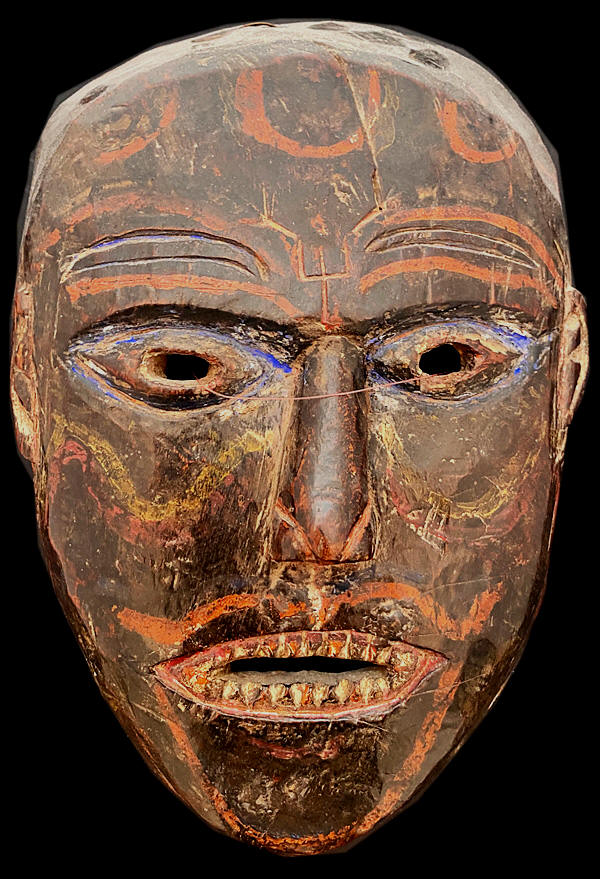
This dramatic and richly patinated mask is a mid-20th century ritual face from the southern Himalayan Terai, possibly Tharu or Bengali settler origin, likely used in healing ceremonies, exorcism, or spirit possession rituals.

"Fierce Ancestor with Painted Eyes" Ritual Mask
Terai lowlands (Nepal/India border), ca. 1940s–60s


This mask bears a fierce expression with carefully carved teeth, incised and painted eyebrows, and highlighted eyes in deep blue pigment, giving it an almost trance-inducing gaze. The reddish ochre symbols on the scalp may represent ritual markings or tribal insignia, and the worn surface suggests prolonged use in shamanic practices or community dramas involving deity impersonation or ancestral spirit invocation.

Features & Analysis:

Region: Terai region (possibly Tharu ethnic group, with Bengali influence)

Material: Carved hardwood with mineral/vegetal pigments

Pigmentation: Traces of indigo, ochre, and cinnabar-red, especially around the eyes, mouth, and forehead

Teeth: Individual incised and highlighted teeth for enhanced expressivity

Function: Ceremonial, possibly for ghost pacification, initiation, or ritual dance

Age Estimate: 1940s - 50s

Condition: Excellent patina, some minor wear and chipping on rim, consistent with ritual use

Dimensions:
27 * 19 cm

Sales Description (short version):
Powerful Terai ritual mask with fierce features, incised teeth, painted eyes, and red ceremonial marks. Likely Tharu-Bengali fusion, mid-20th century. Superb expressive energy and shamanic character.


 PRICE: 2000 EURO


See the mask from the rear


Nepali mask 29

 
This striking mask exudes raw primitivism and age, and is likely from the southern Himalayan Terai region, possibly Tharu, though it might also reflect proto-hill tribal craftsmanship from bordering forest groups.

"Ancestor with Moss Beard" Ritual Mask
Terai Forest Fringe / Tharu or Magar-Hill Tribe Region, early to mid-20th century

This is an exceptionally weathered ceremonial mask, characterized by its coarse facial carving, fibrous plant-root hair remnants around the mouth and chin (possibly original jute, sisal, or bark fiber), and a crusty, oxidized surface patina that may indicate prolonged outdoor or shrine exposure.

Features & Analysis:

Region: Terai forest edge or hill tribe borderlands (Tharu/Magar zone)

Material: Hardwood, heavy grain; oxidized surface

Fibers: Beard and moustache remnants made from natural fibers, now mossy and degraded

Age Estimate: Early to mid-20th century (possibly 1920s - 1950s)

Function: Possibly an ancestral guardian mask, used in seasonal or funerary rites, or even left in a sacred outdoor space

Expression: Silent, withdrawn - evokes ancestral silence rather than theatrical energy

Condition: Stable, but deeply eroded; possible insect or fungal wear adds to authenticity

Dimensions:
27 * 17 cm

Rare early Terai tribal mask with original plant fiber hair and deep oxidized crust. Evocative of ancestral shrine use, likely 1920s - 50s. Unrestored and powerful.

PRICE: 3000 EURO


See the mask from the rear


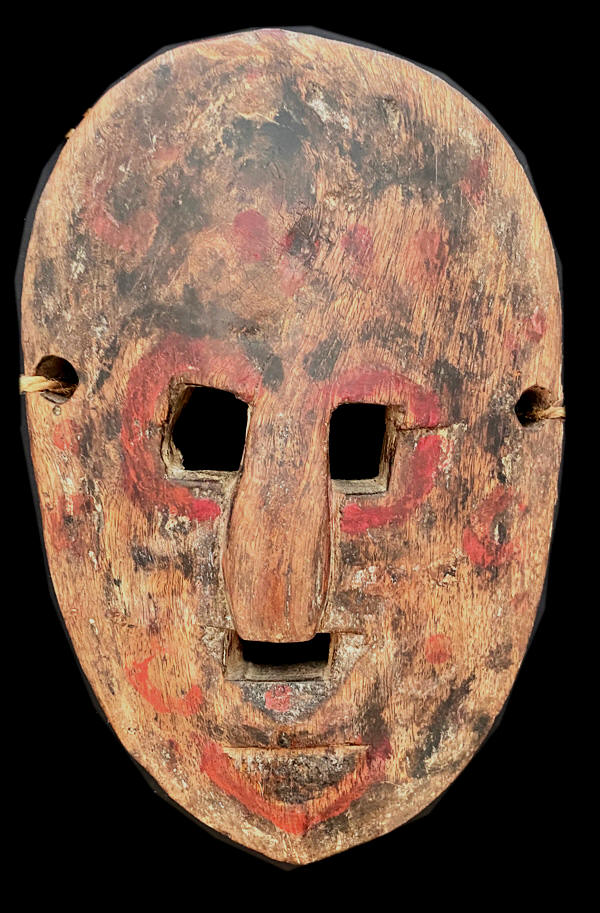
Nepali mask 30


Heavily Carved Ritual Mask - Terai Border or Bhutia Influence
Possibly Nepalese Terai-Hill Transition Zone or Far Eastern Uttar Pradesh / mid-20th century or earlier


Notable Traits:

Material: Exceptionally thick hardwood, possibly sal or teak, showing deep natural aging and wear

Paint: Minimal but potent red pigment - mostly finger-dabbed dots and circles, which is characteristic of shamanic use in ancestor or spirit invocation rituals

Eye & Mouth Cutouts: Carved square, raw and functional - intended more for presence than for theatrical expression

Nose: Bold and prominent, similar to several Bhutia-linked tribal masks, though the lack of elaborate color points more toward lower-caste ritual craft than performance art

Form: Oval face with slightly pointed chin - primitive anthropomorphism, possibly referencing a guardian spirit rather than a human

Cord Holes: Side-drilled and worn, suggesting long-term use in actual ritual context

Dimensions:
25 * 16 cm

Interpretation:
This mask may have served as a guardian effigy, either hung near threshing grounds, attached to village trees, or worn in seasonal processionals. The layered red paint strongly suggests it was periodically re-activated with blood or pigment, as seen in Tharu, Magar, or Santal traditions. Its weight and construction make it less likely for frequent performance wear.

Final words:
Impressively heavy ancestral mask with primitive painted symbols and thick hardwood body. Likely early to mid-20th century, Terai or forest border zone origin. Authentic and powerful presence.

 PRICE: 5000 EURO


See the mask from the rear


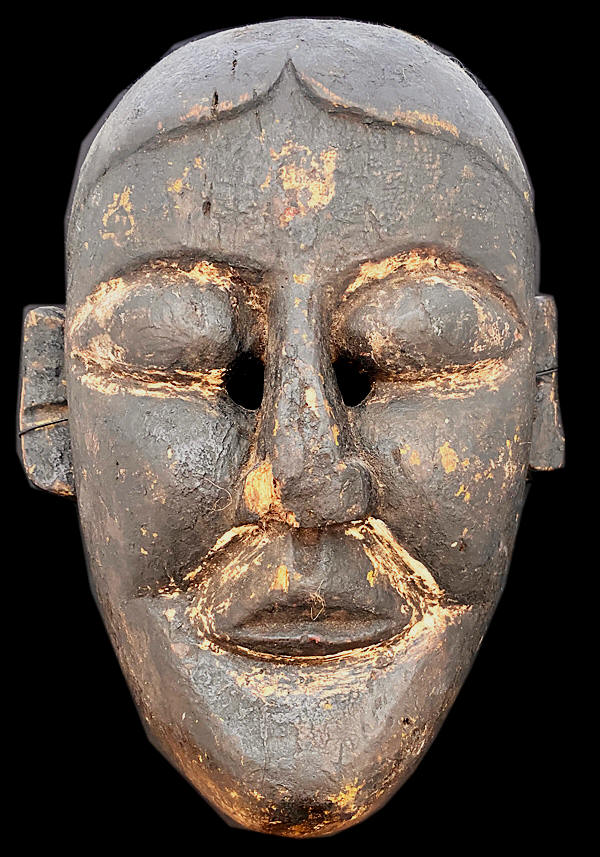
Nepali mask 31


This is an elegant and unusually serene mask, likely not from the Terai plains, but possibly from the mid-hill regions of Nepal or Darjeeling/Sikkim area - border zones where Tibeto-Burman and Indo-Aryan cultures converge.

Wooden Ritual Face Mask - Hill Origin (Possibly Bhutia, Limbu, or Magar)
Late 19th to early 20th century


Key Characteristics:

Material: Smooth, moderately dense wood, possibly alnus or walnut

Surface: Deep patination with soft black-brown lacquer, now weathered, revealing a long period of handling or use

Eyes: Thin vertical slits - indicative of masks used in ceremony rather than theater

Styling: The delicate carved hairline, symmetrical features, and peaceful expression suggest ancestral or protective significance, not a demonic or humorous role

Mouth and Mustache: A slight smile with a faint mustache motif, subtle and reverent

Overall Impression: A calm, humanized visage - this is more ancestor or elder effigy than spirit or animal form.

Dimensions: 33 * 24 cm

Contextual Use:
This kind of mask could be used in funerary rites, ancestral festivals, or ritual dance dramas where respected figures from the community or spirits of the past are invoked. The Bhutia and Limbu cultures of eastern Nepal and north Sikkim often produce such styles, though they are rarer than the more famous demon or tiger masks.
 
Ancestral wooden mask with deeply worn surface and gentle expression. Likely used in highland rituals honoring elders or spirits. Black lacquer over aged wood with traces of sacred pigment.

PRICE: 3500 EURO


See the mask from the rear


Nepali mask 32


This mask stands out for its monumental simplicity and extreme age patina, evoking a quiet reverence. It's quite likely from the mid-hill tribes of eastern Nepal - possibly Rai or Limbui.

Ancestral Spirit Mask - Rai or Limbu Region
Possibly mid 18th century


Notable Features:

Material: Extremely old, heavy hardwood - perhaps sal or rhododendron, worn smooth over time

Patina: Darkened by age, oil, and oxidized smoke - possibly from long use in household altars or shamanic rites

Form: Simplified geometric structure - narrow slits for eyes, elongated triangle nose, thin horizontal mouth

Dimensions:
28 * 16 cm

Surface Damage: The pitting, holes, and nicks suggest it was kept either outdoors or in ritually exposed contexts, maybe even burial proximity or ancestor shrine

Aura: Stoic, timeless, deeply meditative

Function:
This was likely an ancestral effigy mask, placed in or near a lineage altar, used by a shaman or elder for rites of protection, invocation, or ancestral contact. The lack of paint or decoration implies either:

It predates pigment-based ritual aesthetics, or

Was specifically meant for invisible spiritual functions - a face to be felt, not seen.
 
Primal and raw ancestral mask from the Rai/Limbu regions of eastern Nepal. Worn surface, hand-hewn contours, and mineral-dark patina suggest 19th century or earlier. Deeply spiritual object likely linked to long-standing familial ritual practice.


 PRICE: 5500 EURO


See the mask from the rear


Nepali mask 33


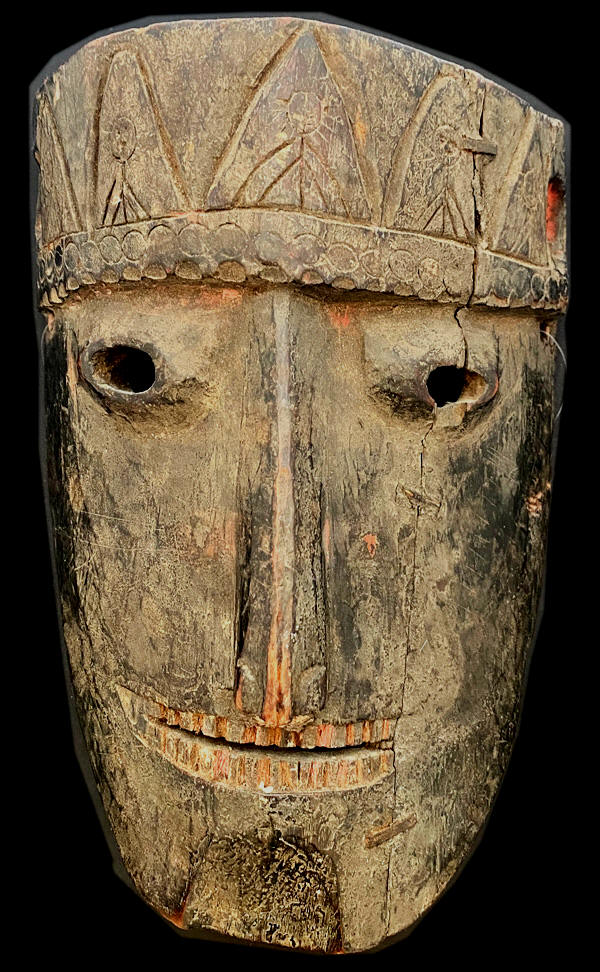
This is an extraordinary piece - rarely do we see such detailed symbolic crown carving atop a Himalayan mask. This is not simply a ritual mask - it borders on being a royal or divine effigy.


Shamanic King Mask - Eastern Himalayas (Likely Limbu or Rai)
Mid to late 19th century

Key Features:

Crown Motif: Triangular 'mountain' shapes with radiating lines - possibly representing ancestral spirits, solar deities, or sacred peaks. This iconography aligns more with shamanic cosmology than Hindu or Buddhist imagery.

Carving Detail: Incised ring-and-dot and sunburst motifs -indicate intentional spiritual engraving, not just decorative.

Mouth & Nose: Carefully articulated teeth, elongated nose - suggest it was meant to be expressive, possibly even interactive in ceremony.

Patina & Cracks: Intense use, vertical age cracking, softened edges - confirm long ritual use, likely as a household or clan spirit image.

Dimensions:
26 * 19 cm

Interpretation:
This mask likely belonged to a ritual specialist or clan head - a figure that symbolized both earthly authority and ancestral contact. The crown suggests a cosmic role, echoing the Himalayan belief that certain shamans ascend sacred mountains spiritually.

Categorization:

Function: Ancestor / Deity interface

Origin: Limbu or Rai (possibly borderlands with Bhutan or Sikkim)

Material: Dry-weathered hardwood, probably local oak or sal

Stylistic Group: Royal-Ancestral type with solar/celestial symbolism


 PRICE: 3000 EURO


See the mask from the rear


Nepali mask 34


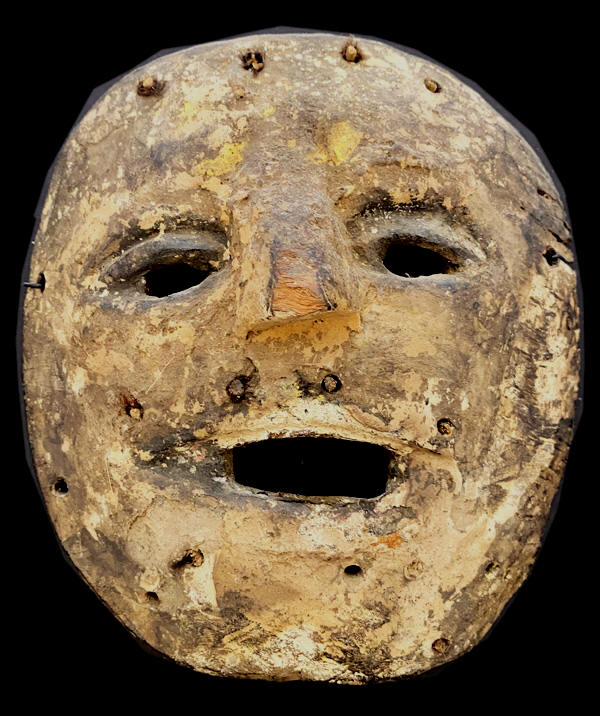
This mask stands out as one of the most unsettling and raw in your collection - a true shamanic object of power, likely from the central Himalayas, possibly Tamang or Magar origin.

Ritual Healing or Exorcism Mask - Central Himalayas
Estimated late 19th century

Description & Features:

Material: Coarse, fibrous wood covered in a mixture of mud, whitewash, or ritual clay, which has since chipped and aged dramatically.

Dimensions: 17 * 16 cm

Studded Face: Dozens of embedded pegs or nails - likely symbolic 'protection points,' intended to trap or pierce malevolent spirits.

Open Mouth & Empty Eyes: Wide, blunt-cut openings amplify a visceral emotional impact, possibly used for exorcism ceremonies or spirit displacement.

Facial Topography: Carved in an aggressively anthropomorphic yet decaying manner, accentuating decay, sickness, or transformation - perhaps symbolizing a soul between realms.

Use & Symbolism:
This mask likely functioned as an apotropaic device - used in healing, funerary, or spirit-banishing rituals. The face is evocative of suffering, illness, or even possession, suggesting it may have served to embody the disease spirit itself, helping a shaman remove it from the afflicted.

The nails and punctures are especially significant - they represent a containment field, a common belief among Himalayan shamans that pain or illness could be 'nailed down' or 'trapped.'

Closely aligned with Tamang healing traditions of Nepal's middle hills, it reflects a functional aesthetic seen in comparable examples published by Thomas Murray (1995) and in the Lanfranchi Collection (2017).


This is a highly expressive and authentic ritual piece, highly desirable for collectors seeking masks with:

Unrestored patina, Field use traces, Rarity of symbolic modifications, Strong ethnographic presence


PRICE: 4500 EURO


Home

Contact: Gunar Muhlman - Gunnars@mail.com